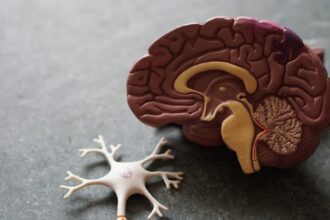
Researchers have made a landmark discovery in understanding anxiety disorders: a shared neurochemical signature that transcends diagnostic boundaries. A meta-analysis of 25 brain imaging studies, published in Molecular Psychiatry this September, reveals that individuals with generalized anxiety disorder, panic disorder, social anxiety disorder, and phobias all exhibit approximately 8% lower cortical choline levels compared to healthy controls.
This transdiagnostic finding suggests that despite the distinct clinical presentations of different anxiety subtypes, they may converge on a common underlying neurometabolic pathway. The prefrontal cortex—a brain region critical for emotional regulation—showed the most consistent deficit across all anxiety conditions. Choline plays a vital role in maintaining neuronal membrane integrity and synthesizing neurotransmitters, indicating that chronic anxiety may place heightened metabolic demands on neural tissue. The discovery opens new avenues for understanding the biological basis of anxiety and potential therapeutic targets.
Read the full article on GMJ Newsroom.
Was this article helpful?