By using this site, you agree to the Privacy Policy and Terms of Use.
Accept
GMJ NewsGMJ NewsGMJ News
  • Latest News
    • GMJ Briefs
  • Podcast & Media
    • Podcast Episodes
    • GMJ Audio
    • GMJ Videos
  • Research Digest
    • New Studies
    • Georgian Research
    • Data & Numbers
  • Policy & Systems
    • Health Policy
    • Quality & Safety
    • Migration & Health
    • Global Health
  • Practice
    • Clinical Updates
    • Case Discussions
    • Pharmacy & Prescribing
    • Ingredients A-Z
  • Perspectives
    • Editorial
    • Explainers
    • Voices
    • Letters
  • GMJ Articles
    • Vol. 1 Issue 2 (2026)
    • Vol. 1 Issue 1 (2026)
    • Pre-Launch Articles (2025)
  • Read the Journal →
  • About GMJ News
Notification Show More
Font ResizerAa
GMJ NewsGMJ News
Font ResizerAa
  • Latest News
    • GMJ Briefs
  • Podcast & Media
    • Podcast Episodes
    • GMJ Audio
    • GMJ Videos
  • Research Digest
    • New Studies
    • Georgian Research
    • Data & Numbers
  • Policy & Systems
    • Health Policy
    • Quality & Safety
    • Migration & Health
    • Global Health
  • Practice
    • Clinical Updates
    • Case Discussions
    • Pharmacy & Prescribing
    • Ingredients A-Z
  • Perspectives
    • Editorial
    • Explainers
    • Voices
    • Letters
  • GMJ Articles
    • Vol. 1 Issue 2 (2026)
    • Vol. 1 Issue 1 (2026)
    • Pre-Launch Articles (2025)
  • Read the Journal →
  • About GMJ News
Follow US
GMJ News > Research Digest > New Studies > Meta-analysis reveals shared neurochemical signature across anxiety disorders
New StudiesResearch Digest

Meta-analysis reveals shared neurochemical signature across anxiety disorders

GMJ
Last updated: 12/07/2026 13:29
By
GMJ Research Desk
Share
9 Min Read
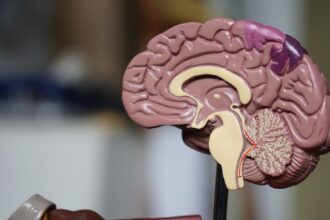
Illustration of prefrontal cortex brain region showing lower choline levels in anxiety disordersIllustrative image · Photo by Marta Branco on Pexels (Pexels License)
A meta-analysis of 25 brain imaging studies has identified a consistent neurochemical pattern across anxiety disorders: individuals with anxiety show approximately 8% lower cortical choline levels, particularly in the prefrontal cortex. This transdiagnostic finding spans generalized anxiety, panic disorder, social anxiety, and phobias. — Photo by Marta Branco on Pexels (Pexels License)
SHARE
🎧 Listen to this article7:24 min · 1,084 words · GMJ Audio
5 min read|1,084 words
✓ Medically reviewed by Prof. Giorgi Pkhakadze, MD, MPH, PhD · ORCID 0000-0001-7609-4515

🟠 Moderate Evidence

Contents
    • Key takeaways
      • Study at a Glance
      • Choline deficit across anxiety disorder subtypes
  • First transdiagnostic neurochemical pattern identified across anxiety subtypes
  • Choline’s role in neural membranes and anxiety regulation
  • Limitations: association versus causation and dietary interpretation
    • What this means
  • Frequently asked questions
    • Does this mean I should take choline supplements if I have anxiety?
    • Why does anxiety lower choline levels?
    • Will this discovery lead to new anxiety treatments?

A meta-analysis published in Molecular Psychiatry in September 2025 has identified a consistent neurochemical pattern across different anxiety disorders: individuals with anxiety show approximately 8% lower cortical choline levels compared to those without anxiety. This finding represents the first transdiagnostic brain chemistry signature identified across generalized anxiety, panic disorder, social anxiety, and phobias, suggesting that despite their clinical differences, these conditions may share a common underlying neurometabolic pathway.

Key takeaways

  • Individuals with anxiety disorders show ~8% lower cortical choline levels across multiple brain regions, particularly the prefrontal cortex
  • This neurochemical deficit appears consistently across four distinct anxiety disorder subtypes, indicating a transdiagnostic biological pattern
  • Choline is essential for neuronal membrane integrity and neurotransmitter synthesis, suggesting chronic anxiety increases metabolic demand on these neural pathways
  • This is an association study based on brain imaging; it cannot establish whether dietary choline intake or supplementation would reduce symptoms

Study at a Glance

Source Molecular Psychiatry
Study type Meta-analysis of magnetic resonance spectroscopy studies
Sample size N = 712 (370 with anxiety disorders, 342 controls)
Population Individuals with generalized anxiety, panic disorder, social anxiety, and phobias
Regions analysed Multiple cortical regions; prefrontal cortex showed most consistent deficit
8%
Lower cortical choline levels in individuals with anxiety disorders, compared to controls, as reported in the Molecular Psychiatry meta-analysis (September 2025)

Choline deficit across anxiety disorder subtypes

Cortical choline levels relative to controls (%), meta-analysis of 25 magnetic resonance spectroscopy studies

Generalized Anxiety Disorder
−8%
Panic Disorder
−8%
Social Anxiety Disorder
−8%
Specific Phobia
−8%
Control group
0%

Source: Molecular Psychiatry meta-analysis, September 2025 | Georgian Medical Journal News

Submit Your Paper
GMJ_Submit_Banner

First transdiagnostic neurochemical pattern identified across anxiety subtypes

The meta-analysis examined 25 magnetic resonance spectroscopy (MRS) studies, comparing brain chemistry in 370 individuals with anxiety disorders to 342 control participants without anxiety. Researchers quantified cortical levels of choline-containing compounds—markers of neuronal membrane turnover and cellular metabolic stress—across multiple brain regions.

🎙️ Related Podcast Episodes
🎧 #53 | GMJ Podcast | Palliative Care in Georgia — Health System Gaps, Access Barriers, and Policy Implications · 16m

The consistency of findings across disorder subtypes is the study’s key innovation. Rather than identifying unique biochemical signatures for each anxiety type, the analysis revealed a unified neurometabolic pattern: approximately 8% reduction in cortical choline spanning generalized anxiety, panic disorder, social anxiety, and phobias. This suggests that despite their distinct clinical presentations and triggers, these conditions converge on a shared neurochemical pathway.

Choline’s role in neural membranes and anxiety regulation

Choline is an essential nutrient that neurons require for two critical functions: constructing and maintaining cell membranes, and synthesizing acetylcholine, a neurotransmitter central to emotion regulation and decision-making. The prefrontal cortex—the brain region most affected in the meta-analysis—governs emotional control, threat assessment, and behavioral inhibition, all functions typically impaired in anxiety disorders.

The 8% deficit observed in anxiety may reflect elevated metabolic demand. When the brain experiences chronic anxiety, it may consume choline at accelerated rates to rebuild membranes stressed by ongoing neural activity and to sustain acetylcholine signaling in emotion-regulating circuits. This metabolic hypothesis—that anxiety increases neural turnover—is supported by the fact that the deficit appeared most prominently in the prefrontal cortex, the region most consistently implicated in anxiety pathophysiology. Readers seeking deeper understanding of anxiety neurobiology can explore our explainers section.

Limitations: association versus causation and dietary interpretation

The authors emphasize critical limitations that must frame clinical interpretation. This is a cross-sectional association study based on imaging, not a treatment trial. The study cannot determine whether increasing dietary choline intake or supplementation would reduce anxiety symptoms. Brain choline levels measured by MRS reflect local neurochemical state, not systemic nutritional status—dietary choline and brain choline are not directly correlated, as the blood–brain barrier tightly regulates choline uptake.

Importantly, the finding does not imply that individuals with anxiety have a dietary choline deficiency. Rather, it suggests that chronic anxiety reshapes the chemistry of neural circuits responsible for emotion regulation and behavioral control. Further research is needed to establish whether this deficit contributes to symptom maintenance, whether it normalizes with successful anxiety treatment, or whether it represents a consequence rather than a cause of the disorder. These questions position the study as foundational rather than conclusive.

This meta-analysis provides the first consistent neurometabolic signature identified across diverse anxiety disorders, revealing ~8% lower cortical choline levels in individuals with anxiety compared to controls, with the most pronounced deficit in the prefrontal cortex.

— Meta-analysis of 25 magnetic resonance spectroscopy studies, Molecular Psychiatry (September 2025)

What this means

For patients: This finding does not suggest that anxiety results from dietary choline deficiency or that supplements will resolve symptoms. However, it offers biological validation that anxiety is a measurable brain condition with consistent neurochemical features, supporting the legitimacy of seeking evidence-based treatment.
For clinicians: The transdiagnostic choline deficit may eventually inform more targeted neurobiological assessments and guide future pharmacological research. Currently, it reinforces that anxiety disorders share underlying neurochemical commonalities despite clinical heterogeneity, which may support transdiagnostic treatment approaches.
For policymakers: This research strengthens the scientific case for funding neuroimaging biomarker research in anxiety, which could eventually improve early detection, prognostication, and treatment monitoring. It also supports continued investment in global mental health research infrastructure, particularly in low-resource settings where anxiety burden is growing.

Frequently asked questions

Does this mean I should take choline supplements if I have anxiety?

No. This study shows an association between lower brain choline and anxiety, but it does not demonstrate that supplementation reduces symptoms. Brain choline levels are tightly regulated and do not directly reflect dietary intake. Speak with your healthcare provider about evidence-based treatments such as cognitive-behavioral therapy or medication, which have demonstrated efficacy in anxiety disorders.

Why does anxiety lower choline levels?

The study suggests that chronic anxiety increases metabolic demand on neural pathways responsible for emotion regulation. The brain may consume choline faster to repair stress-damaged neuronal membranes and maintain acetylcholine signaling. This is a hypothesis based on the imaging findings; the precise mechanisms remain to be determined in future research.

Will this discovery lead to new anxiety treatments?

Possibly, but not immediately. This meta-analysis identifies a consistent biological pattern that may eventually guide drug development or inform which patients might benefit from specific interventions. However, the current evidence is descriptive, not predictive. Clinical trials would be needed to test whether any intervention targeting choline metabolism effectively reduces anxiety symptoms.

The identification of a transdiagnostic neurochemical signature in anxiety represents an important step toward understanding the biological architecture shared across these conditions. Future research should investigate whether this choline deficit normalizes with successful treatment, whether it predicts treatment response, and whether interventions targeting neuronal membrane metabolism could augment existing therapies. Such studies will help determine whether this finding moves from bench science to clinically actionable insight.

Source: Meta-analysis reveals shared neurochemical signature across anxiety disorders, Molecular Psychiatry (September 2025)

Was this article helpful?

Disclaimer. This article is health journalism intended for general information and education. It is not medical advice and is not a substitute for professional diagnosis or treatment. Always consult a qualified healthcare provider about your individual circumstances. Full disclaimer →

Related Coverage

How a Single Stem Cell Learns to Beat: New Insights into Cardiac DevelopmentJul 28, 2026
Why creatine works in muscle but not the brain—yetJul 28, 2026
Prenatal Iodine Deficiency Linked to Lower Verbal Intelligence in Adolescence, UK Study FindsJul 28, 2026
How the brain controls inflammation: The vagus nerve's unexpected role in immune regulationJul 28, 2026
Related reference
  • Generalized Anxiety Disorder · Condition
  • Choline · Ingredient
PG
Written by
Prof. Giorgi Pkhakadze, MD, MPH, PhD
Editor-in-Chief, GMJ News
Full profile →  ·  ORCID 0000-0001-7609-4515
Medical disclaimer. This article is health journalism intended for general information. It is not medical advice and is not a substitute for consultation with a qualified healthcare professional. Always seek your physician's advice regarding any medical condition.
Medically reviewed by Prof. Giorgi Pkhakadze, MD, MPH, PhD. Spotted an error? Contact the editorial team.

Get the GMJ News digest
Evidence-based health journalism in your inbox. No spam; unsubscribe anytime.
TAGGED:anxiety disordersbrain imagingMental Healthmeta-analysisneurochemistry
Share This Article
Facebook LinkedIn Bluesky Copy Link Print
GMJ
ByGMJ Research Desk
Follow:
GMJ Research Desk is part of GMJ News, the newsroom of the Georgian Medical Journal (gmj.ge), published by the Public Health Institute of Georgia. Every article is editorially reviewed before publication.
Leave a Comment Leave a Comment

Leave a Reply Cancel reply

Your email address will not be published. Required fields are marked *

Submit Your Paper →

Georgia's peer-reviewed open-access medical journal. No APC until January 2027.
Submit Manuscript →
How the immune system learns and remembers: innate defenses meet adaptive immunity

The immune system operates as two integrated networks: innate immunity provides immediate…

How a Single Stem Cell Learns to Beat: New Insights into Cardiac Development

Researchers at Vanderbilt University have documented the transformation of a single stem…

Moderate Alcohol Suppresses Growth Hormone by 75%, Disrupts Sleep Architecture, Study Shows

Moderate alcohol consumption suppresses nocturnal growth hormone by 75% and fragments sleep…

Submit Your Paper to GMJ

No APC until January 2027.
Submit Manuscript →

You Might Also Like

Scientific illustration showing polyphenol molecules binding to iron in digestive system
New StudiesResearch Digest

How Coffee and Tea Reduce Iron Absorption by Up to 94% Through Polyphenol Binding

By
GMJ Research Desk
27/05/2026
Infographic showing pooled risk ratios for group antenatal care outcomes in sub-Saharan AfricaIllustrative image · Photo by Abubakar Ogaji on Pexels (Pexels License)
Clinical UpdatesNew StudiesPracticeResearch Digest

Group antenatal care increases attendance and improves outcomes in sub-Saharan Africa, systematic review finds

By
GMJ Practice Desk
10/07/2026
Athlete demonstrating explosive movement with biomechanical force analysis overlay
New StudiesResearch Digest

New Research Reveals Why Explosive Athletic Performance Isn’t Just About Speed or Strength

By
GMJ Research Desk
24/05/2026
Medical researcher examining prosthetic foot with grid overlay assessment method
New StudiesResearch Digest

New grid-based method improves prosthetic foot wear assessment in resource-limited settings

By
GMJ Research Desk
31/05/2026
Facebook Twitter Youtube Instagram
Company
  • Privacy Policy
  • Contact US
  • GMJ Journal
  • Submit Manuscript
  • Editorial Team
  • Register at GMJ
  • Terms of Use

Subscribe to GMJ News — Click here

Join Community
© 2026 Georgian Medical Journal (GMJ). Published by the Public Health Institute of Georgia (PHIG). All rights reserved.
Welcome Back!

Sign in to your account

Username or Email Address
Password

Lost your password?

Not a member? Sign Up