By using this site, you agree to the Privacy Policy and Terms of Use.
Accept
GMJ NewsGMJ NewsGMJ News
  • Latest News
    • GMJ Briefs
  • Podcast & Media
    • Podcast Episodes
    • GMJ Audio
    • GMJ Videos
  • Research Digest
    • New Studies
    • Georgian Research
    • Data & Numbers
  • Policy & Systems
    • Health Policy
    • Quality & Safety
    • Migration & Health
    • Global Health
  • Practice
    • Clinical Updates
    • Case Discussions
    • Pharmacy & Prescribing
    • Ingredients A-Z
  • Perspectives
    • Editorial
    • Explainers
    • Voices
    • Letters
  • Health Topics
  • GMJ Articles
    • Vol. 1 Issue 2 (2026)
    • Vol. 1 Issue 1 (2026)
    • Pre-Launch Articles (2025)
  • Read the Journal →
  • About GMJ News
Notification Show More
Font ResizerAa
GMJ NewsGMJ News
Font ResizerAa
  • Latest News
    • GMJ Briefs
  • Podcast & Media
    • Podcast Episodes
    • GMJ Audio
    • GMJ Videos
  • Research Digest
    • New Studies
    • Georgian Research
    • Data & Numbers
  • Policy & Systems
    • Health Policy
    • Quality & Safety
    • Migration & Health
    • Global Health
  • Practice
    • Clinical Updates
    • Case Discussions
    • Pharmacy & Prescribing
    • Ingredients A-Z
  • Perspectives
    • Editorial
    • Explainers
    • Voices
    • Letters
  • Health Topics
  • GMJ Articles
    • Vol. 1 Issue 2 (2026)
    • Vol. 1 Issue 1 (2026)
    • Pre-Launch Articles (2025)
  • Read the Journal →
  • About GMJ News
Follow US
GMJ News > GMJ Briefs > Genetic Secrets of Centenarians: How Rare Mutations Extend Healthy Aging

Genetic Secrets of Centenarians: How Rare Mutations Extend Healthy Aging

GMJ
Last updated: 06/08/2026 21:30
By
Prof. Giorgi Pkhakadze
Share
1 Min Read
Diagram showing inflammation levels across lifespan in typical vs long-lived family members carrying protective genetic variants
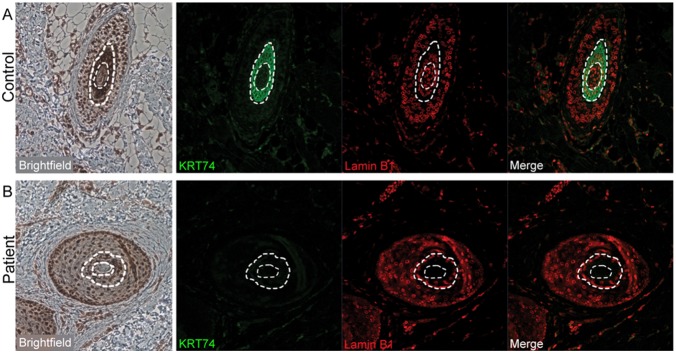
Researchers studying exceptionally long-lived families have identified rare genetic variants linked to sustained health in advanced age, with one mutation appearing to suppress chronic inflammation. The findings suggest inflammation control may be a key mechanism extending healthy aging and could inform future geroprotective therapies. — Autosomal-Recessive-Transmission-of-a-Rare-KRT74-Variant-Causes-Hair-and-Nail-Ectodermal-Dysplasia-pone.0093607.g004.jpg by Raykova D, Klar J, Azhar A, Khan T, Malik N, Iqbal M, Tariq M, Baig S, Dahl N / CC BY 4.0 via Wikimedia Commons (CC BY 4.0)
SHARE
1 min read|142 words

A groundbreaking family-based genetic study has uncovered rare variants that appear to be the protective mechanisms behind sustained health in exceptionally long-lived populations. Researchers analyzing families with multiple centenarians and near-centenarians identified one standout mutation capable of suppressing chronic inflammation—a primary driver of age-related disease.

Inflammation, known as inflammaging when chronic, accelerates the onset of cardiovascular disease, cognitive decline, and other age-related conditions. The newly identified genetic variant appears to keep inflammatory markers significantly lower throughout life, effectively extending not just lifespan but healthspan—the years lived in good health.

These findings suggest that targeted interventions mimicking these protective pathways could eventually help broader populations maintain health into advanced age. While the research remains observational and requires validation through larger studies and functional analysis, it points toward a promising direction for geroprotective therapy development.

Read the full article on GMJ Newsroom.

Submit Your Paper
GMJ_Submit_Banner

Was this article helpful?

GMJ Brief · Announcement

📰 Read the full article: Rare genetic variants in long-lived families linked to healthier aging →

Share This Article
Facebook LinkedIn Bluesky Copy Link Print
GMJ
ByProf. Giorgi Pkhakadze
Follow:
Prof. Giorgi Pkhakadze, MD, MPH, PhD, is Editor-in-Chief of the Georgian Medical Journal and Chair of the Public Health Institute of Georgia (PHIG). He is Professor and Head of the Department of Social and Behavioural Sciences at David Tvildiani Medical University, and Secretary/Treasurer of the UEMS Section of Public Health. ORCID: 0000-0001-7609-4515.

Submit Your Paper →

Georgia's peer-reviewed open-access medical journal. No APC until January 2027.
Submit Manuscript →
What makes prostate cancer aggressive? Biology, genetics, and clinical grading explained

Prostate cancer aggressiveness is determined by histological grade (Gleason score), genetic mutations…

UK childhood vaccination coverage holds steady at high levels, latest quarterly data shows

The UK's Cover of Vaccination Evaluated Rapidly (COVER) programme reports sustained high…

EMA Launches Email Notifications for Clinical Trial Information System

The European Medicines Agency has rolled out email notification subscriptions in CTIS,…

Submit Your Paper to GMJ

No APC until January 2027.
Submit Manuscript →

You Might Also Like

Medical professional using AI technology with legal scales representing liability concerns

Healthcare Providers Bear 100% Legal Responsibility While AI Companies Face Minimal Accountability

By
Prof. Giorgi Pkhakadze
20/07/2026
Infographic showing IOM's global governance structure and member country participation

Decentralized Model: How IOM Coordinates Migration Health Across Global Borders

By
Prof. Giorgi Pkhakadze
27/06/2026
Medical professional handling blood collection equipment in clinical setting

Millions Saved Daily by Safe Blood—Yet Access Remains Profoundly Unequal

By
Prof. Giorgi Pkhakadze
11/07/2026
Chart showing increasing malnutrition burden in Indian children from birth to age 9

What Healthcare Providers Need to Know: Timing Interventions for Childhood Malnutrition

By
Prof. Giorgi Pkhakadze
08/08/2026
Facebook Twitter Youtube Instagram
Company
  • Privacy Policy
  • Contact US
  • GMJ Journal
  • Submit Manuscript
  • Editorial Team
  • Register at GMJ
  • Terms of Use

Subscribe to GMJ News — Click here

Join Community
© 2026 Georgian Medical Journal (GMJ). Published by the Public Health Institute of Georgia (PHIG). All rights reserved.
Welcome Back!

Sign in to your account

Username or Email Address
Password

Lost your password?

Not a member? Sign Up