By using this site, you agree to the Privacy Policy and Terms of Use.
Accept
GMJ NewsGMJ NewsGMJ News
  • Latest News
    • GMJ Briefs
  • Podcast & Media
    • Podcast Episodes
    • GMJ Audio
    • GMJ Videos
  • Research Digest
    • New Studies
    • Georgian Research
    • Data & Numbers
  • Policy & Systems
    • Health Policy
    • Quality & Safety
    • Migration & Health
    • Global Health
  • Practice
    • Clinical Updates
    • Case Discussions
    • Pharmacy & Prescribing
    • Ingredients A-Z
  • Perspectives
    • Editorial
    • Explainers
    • Voices
    • Letters
  • GMJ Articles
    • Vol. 1 Issue 2 (2026)
    • Vol. 1 Issue 1 (2026)
    • Pre-Launch Articles (2025)
  • Read the Journal →
  • About GMJ News
Notification Show More
Font ResizerAa
GMJ NewsGMJ News
Font ResizerAa
  • Latest News
    • GMJ Briefs
  • Podcast & Media
    • Podcast Episodes
    • GMJ Audio
    • GMJ Videos
  • Research Digest
    • New Studies
    • Georgian Research
    • Data & Numbers
  • Policy & Systems
    • Health Policy
    • Quality & Safety
    • Migration & Health
    • Global Health
  • Practice
    • Clinical Updates
    • Case Discussions
    • Pharmacy & Prescribing
    • Ingredients A-Z
  • Perspectives
    • Editorial
    • Explainers
    • Voices
    • Letters
  • GMJ Articles
    • Vol. 1 Issue 2 (2026)
    • Vol. 1 Issue 1 (2026)
    • Pre-Launch Articles (2025)
  • Read the Journal →
  • About GMJ News
Follow US
GMJ News > GMJ Briefs > Heat Stress and Classroom Performance: New Data on Climate’s Cognitive Impact

Heat Stress and Classroom Performance: New Data on Climate’s Cognitive Impact

GMJ
Last updated: 26/06/2026 04:11
By
Prof. Giorgi Pkhakadze
Share
1 Min Read
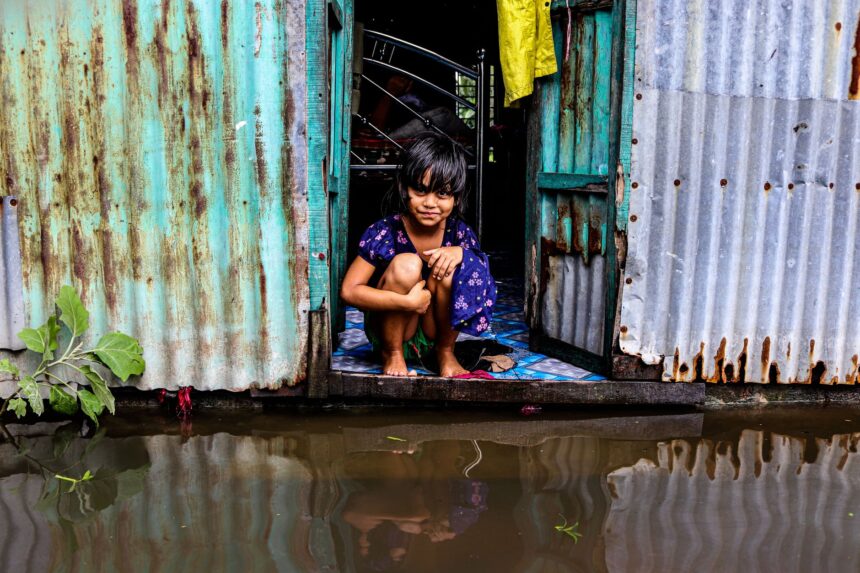
Children walking to damaged school building after climate disaster, symbolizing educational disruption
Climate change is systematically disrupting education for 617 million children worldwide, with those living in poverty experiencing the most severe learning impacts. New research reveals how extreme weather creates lasting educational inequities. — Photo: Najmul Hasan Mahedi / Pexels
SHARE
1 min read|140 words

A systematic analysis of climate change’s effects on education reveals a striking relationship between temperature and academic performance in low-income communities. Research shows that even modest temperature increases of just 1°C above seasonal averages produce measurable declines in test scores and learning retention among vulnerable student populations. The data becomes more severe at higher thresholds: reading comprehension scores decline by an average of 15% when classroom temperatures exceed 32°C.

These findings, drawn from 29 primary studies conducted between 2010 and 2024, underscore how heat stress directly impairs cognitive function during critical developmental periods. Children aged 6-12 years demonstrate the most pronounced impacts on academic achievement. The research suggests that improving classroom thermal conditions and school infrastructure resilience in low-income regions could significantly protect cognitive development and educational outcomes, particularly in regions where climate-related temperature increases are accelerating.

Read the full article on GMJ Newsroom.

Was this article helpful?

GMJ Brief · Key Finding

📰 Read the full article: Climate Change Disrupts Education for 617 Million Children in Poverty Worldwide →

Share This Article
Facebook LinkedIn Bluesky Copy Link Print
GMJ
ByProf. Giorgi Pkhakadze
Follow:
Prof. Giorgi Pkhakadze, MD, MPH, PhD, is Editor-in-Chief of the Georgian Medical Journal and Chair of the Public Health Institute of Georgia (PHIG). He is Professor and Head of the Department of Social and Behavioural Sciences at David Tvildiani Medical University, and Secretary/Treasurer of the UEMS Section of Public Health. ORCID: 0000-0001-7609-4515.

Submit Your Paper →

Georgia's peer-reviewed open-access medical journal. No APC until January 2027.
Submit Manuscript →
Mammals May Possess Hidden Regenerative Capacity: Scientists Redirect Healing Toward Tissue Regrowth Instead of Scarring

Scientists have demonstrated that mammals may retain dormant regenerative abilities through a…

Native Hawaiian Adults Face Mobility Decline Years Earlier Than Peers

New research from the University of Hawaiʻi at Mānoa reveals that Native…

WHO releases first comprehensive clinical guidelines for Ebola and Marburg virus management

The World Health Organization has released its first unified clinical management guidelines…

Submit Your Paper to GMJ

No APC until January 2027.
Submit Manuscript →

You Might Also Like

EBOLA OUTBREAK – DRC/UGANDA CROSS-BORDER TRANSMISSION CONFIRMED

By
Prof. Giorgi Pkhakadze
31/05/2026
CoQ10 supplement comparison chart showing bioavailability differences between formulations

Manufacturing Process, Not Molecular Form, Drives CoQ10 Bioavailability

By
Prof. Giorgi Pkhakadze
03/06/2026
Medical meal delivery program showing healthcare cost reduction statistics

Nevada Demonstrates Medical Meal Intervention Can Drive Healthcare System Savings

By
Prof. Giorgi Pkhakadze
09/06/2026
Global HealthPolicy & Systems

WHO Declares Public Health Emergency as Ebola Outbreak Spreads Across DRC-Uganda Border

By
Prof. Giorgi Pkhakadze
31/05/2026
Facebook Twitter Youtube Instagram
Company
  • Privacy Policy
  • Contact US
  • GMJ Journal
  • Submit Manuscript
  • Editorial Team
  • Register at GMJ
  • Terms of Use

Subscribe to GMJ News — Click here

Join Community
© 2026 Georgian Medical Journal (GMJ). Published by the Public Health Institute of Georgia (PHIG). All rights reserved.
Welcome Back!

Sign in to your account

Username or Email Address
Password

Lost your password?

Not a member? Sign Up