By using this site, you agree to the Privacy Policy and Terms of Use.
Accept
GMJ NewsGMJ NewsGMJ News
  • Latest News
    • GMJ Briefs
  • Podcast & Media
    • Podcast Episodes
    • GMJ Audio
    • GMJ Videos
  • Research Digest
    • New Studies
    • Georgian Research
    • Data & Numbers
  • Policy & Systems
    • Health Policy
    • Quality & Safety
    • Migration & Health
    • Global Health
  • Practice
    • Clinical Updates
    • Case Discussions
    • Pharmacy & Prescribing
    • Ingredients A-Z
  • Perspectives
    • Editorial
    • Explainers
    • Voices
    • Letters
  • GMJ Articles
    • Vol. 1 Issue 2 (2026)
    • Vol. 1 Issue 1 (2026)
    • Pre-Launch Articles (2025)
  • Read the Journal →
  • About GMJ News
Notification Show More
Font ResizerAa
GMJ NewsGMJ News
Font ResizerAa
  • Latest News
    • GMJ Briefs
  • Podcast & Media
    • Podcast Episodes
    • GMJ Audio
    • GMJ Videos
  • Research Digest
    • New Studies
    • Georgian Research
    • Data & Numbers
  • Policy & Systems
    • Health Policy
    • Quality & Safety
    • Migration & Health
    • Global Health
  • Practice
    • Clinical Updates
    • Case Discussions
    • Pharmacy & Prescribing
    • Ingredients A-Z
  • Perspectives
    • Editorial
    • Explainers
    • Voices
    • Letters
  • GMJ Articles
    • Vol. 1 Issue 2 (2026)
    • Vol. 1 Issue 1 (2026)
    • Pre-Launch Articles (2025)
  • Read the Journal →
  • About GMJ News
Follow US
GMJ News > Policy & Systems > Global Health > WHO releases first comprehensive clinical guidelines for Ebola and Marburg virus management
Global HealthHealth PolicyPolicy & Systems

WHO releases first comprehensive clinical guidelines for Ebola and Marburg virus management

GMJ
Last updated: 09/07/2026 15:51
By
GMJ Policy Desk
Share
8 Min Read
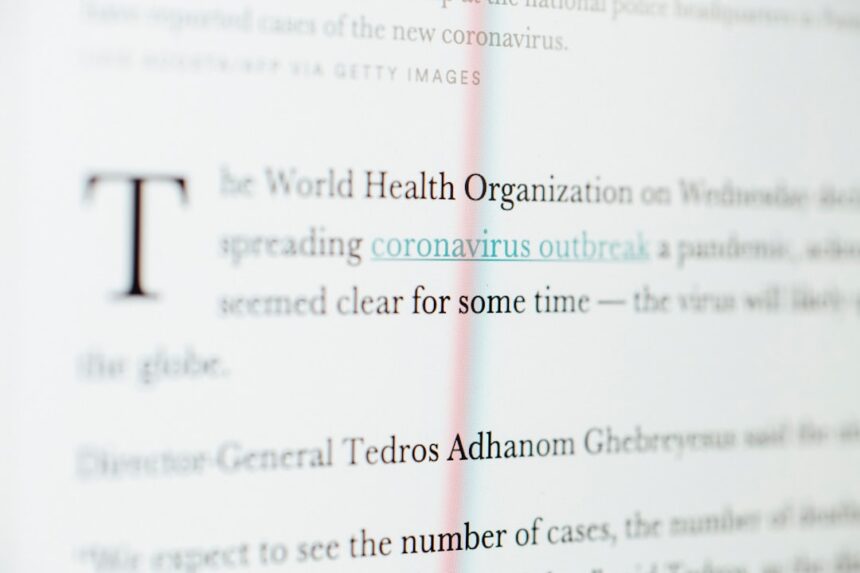
WHO filovirus disease clinical management guidelines for all Ebola and Marburg virus speciesIllustrative image · Photo by Markus Spiske on Unsplash (Unsplash License)
The World Health Organization has released its first unified clinical management guidelines for filovirus diseases, including all Ebola virus species and Marburg virus. The 16 evidence-based recommendations emphasize early supportive care as the critical intervention for improving patient survival amid an ongoing Bundibugyo Ebola outbreak in the Democratic Republic of the Congo. — Photo by Markus Spiske on Unsplash (Unsplash License)
SHARE
5 min read|1,013 words
✓ Reviewed by Prof. Giorgi Pkhakadze, MD, MPH, PhD · ORCID 0000-0001-7609-4515

The World Health Organization has released its first unified clinical management guidelines for filovirus diseases, encompassing all Ebola virus species and Marburg virus, amid an active outbreak of Bundibugyo Ebola virus in the Democratic Republic of the Congo. The guidelines contain 16 evidence-based recommendations emphasizing early supportive care as the cornerstone of improved patient survival and clinical outcomes.

Contents
    • Key takeaways
      • Filovirus species covered by WHO guidelines
  • Unified framework responds to persistent outbreak threat
  • Early supportive care identified as core survival intervention
  • Implications for clinical practice and outbreak response
    • What this means
  • Frequently asked questions
    • Why did WHO release a unified guideline for all filovirus species rather than separate protocols?
    • What is the evidence base for emphasizing early supportive care over antiviral therapy?
    • How do these guidelines apply to countries without prior filovirus experience?

Key takeaways

  • WHO’s first comprehensive filovirus guidelines apply to all Ebola species (Zaire, Sudan, Bundibugyo, Taï Forest, Reston) and Marburg virus
  • Early supportive care is identified as the critical intervention to improve survival rates and reduce mortality
  • Guidelines contain 16 evidence-based clinical recommendations for patient management across all filovirus types
  • Released during active Bundibugyo Ebola outbreak in the Democratic Republic of the Congo
16
evidence-based clinical recommendations in WHO’s new filovirus disease management guidelines

Filovirus species covered by WHO guidelines

First unified clinical management framework for all known filovirus types

Zaire Ebola virus
Largest outbreaks
Sudan Ebola virus
Marburg virus
Bundibugyo Ebola virus

Current outbreak

Taï Forest Ebola virus
Reston Ebola virus

Source: WHO filovirus disease guidelines, 2026 | Georgian Medical Journal News

Unified framework responds to persistent outbreak threat

The timing of WHO’s guideline release coincides with the Democratic Republic of the Congo’s ongoing battle against Bundibugyo Ebola virus disease. This outbreak underscores the clinical and epidemiological need for a standardized, evidence-based approach to filovirus patient management. The organization’s decision to consolidate recommendations for all filovirus species—rather than maintaining separate protocols for each—reflects a shift toward pragmatic, scalable clinical practice in resource-limited settings.

Submit Your Paper
GMJ_Submit_Banner

Filoviruses are a family of negative-sense, single-stranded RNA viruses that cause severe hemorrhagic fever with case fatality rates historically ranging from 25% to 90% depending on the species and viral strain, according to published epidemiological data. The lack of specific antiviral therapies has made supportive care the primary determinant of survival. Clinical management protocols have evolved significantly since the 2014–2016 West African Ebola epidemic, but international guidance has remained fragmented across different virus types.

Early supportive care identified as core survival intervention

The WHO guidelines emphasize early, aggressive supportive care as the cornerstone of improved outcomes. This includes prompt fluid and electrolyte management, correction of coagulopathy, blood transfusion when needed, and organ-system monitoring. The guidelines recognize that many deaths attributed to filovirus disease are preventable through timely intervention on complications such as hypovolemic shock, disseminated intravascular coagulation, and secondary infections.

The 16 recommendations span infection control, triage protocols, laboratory diagnostics, fluid management, antimicrobial stewardship, and supportive measures for multi-organ dysfunction. By harmonizing guidance across all filovirus species, WHO enables health systems to maintain a single clinical protocol applicable to any suspected or confirmed filovirus case, reducing clinical confusion and enabling faster, evidence-based decision-making. This approach is particularly valuable in regions where multiple filovirus species may circulate or where diagnostic capacity is limited.

Early supportive care, including prompt fluid management, correction of coagulopathy, and organ monitoring, is identified as the critical intervention to improve patient survival and reduce mortality in all filovirus diseases.

— World Health Organization, Clinical Management Guidelines for Filovirus Disease (2026)

Implications for clinical practice and outbreak response

The new policy framework has direct consequences for training, resource allocation, and operational planning in health systems at risk for filovirus introduction. Standardized protocols reduce training burden for healthcare workers moving between facilities or countries. The guidelines also clarify roles and responsibilities for laboratory confirmation, case investigation, and contact tracing—enabling integration with broader epidemic preparedness networks.

WHO’s consolidation of filovirus guidance does not minimize the biological differences between species; rather, it reflects evidence that the fundamental principles of survival—early recognition, rapid isolation, aggressive supportive care, and prevention of complications—transcend viral species differences. This harmonization also facilitates resource planning for endemic and at-risk countries in central Africa, enabling procurement and stockpiling of essential supplies under a single protocol.

What this means

For patients: Access to standardized, evidence-based clinical care regardless of filovirus species or location. Emphasis on early recognition and supportive intervention increases likelihood of survival and recovery.
For clinicians: A single, unified clinical protocol applicable to all filovirus cases reduces decision time, training burden, and implementation errors. Clear guidance on fluid management, coagulation support, and organ monitoring enables rapid clinical action in high-stakes settings.
For policymakers: Streamlined procurement, stockpiling, and training requirements. Enhanced integration with national outbreak response frameworks and regional collaboration mechanisms. Improved capacity for surge staffing and resource mobilization across the health system.

Frequently asked questions

Why did WHO release a unified guideline for all filovirus species rather than separate protocols?

Although filovirus species differ biologically, the principles of survival are consistent: early recognition, rapid isolation, aggressive supportive care, and prevention of complications. A unified protocol reduces clinician confusion, simplifies training, and enables faster response. This approach is especially valuable in resource-limited settings where maintaining multiple, species-specific protocols is operationally challenging.

What is the evidence base for emphasizing early supportive care over antiviral therapy?

Currently, no specific antivirals are universally available or recommended for all filovirus species outside research settings. Supportive care remains the standard of care. Evidence from the 2014–2016 West African epidemic and subsequent outbreaks demonstrates that survival is directly linked to early fluid management, correction of coagulopathy, and management of organ dysfunction—not antiviral agents.

How do these guidelines apply to countries without prior filovirus experience?

The guidelines are designed for universal application, including health systems with limited filovirus experience. They provide clear algorithms for triage, infection control, and supportive care that can be adapted to local capacity and resources. WHO and partner organizations offer training and implementation support to ensure health systems can operationalize the guidance before a suspected case arrives.

The release of unified filovirus clinical management guidelines represents a maturation of global hemorrhagic fever preparedness. As the Democratic Republic of the Congo continues its response to Bundibugyo Ebola and other endemic regions remain vigilant, this standardized framework provides a practical foundation for evidence-based practice across all settings. Implementation and clinician familiarity with these recommendations will be critical determinants of survival in future filovirus outbreaks worldwide.

Source: WHO issues comprehensive guidelines on filovirus disease, including Ebola and Marburg disease

Was this article helpful?

Disclaimer. This article is health journalism intended for general information and education. It is not medical advice and is not a substitute for professional diagnosis or treatment. Always consult a qualified healthcare provider about your individual circumstances. Full disclaimer →

Related Coverage
Europe tightens avian flu surveillance as H5N1 spreads among wild birdsJul 10, 2026
Pan-American Health Chief Warns of Financing Crisis as Region Confronts Multiple Health CrisesJul 10, 2026
Diphtheria Cases Rise Across Americas: PAHO Calls for Urgent Vaccination PushJul 10, 2026
PAHO Releases New Toolkit to Help Health Systems Respond to Violence Against ChildrenJul 10, 2026
PG
Written by
Prof. Giorgi Pkhakadze, MD, MPH, PhD
Editor-in-Chief, GMJ News
Full profile →  ·  ORCID 0000-0001-7609-4515
Medical disclaimer. This article is health journalism intended for general information. It is not medical advice and is not a substitute for consultation with a qualified healthcare professional. Always seek your physician's advice regarding any medical condition.
Medically reviewed by Prof. Giorgi Pkhakadze, MD, MPH, PhD. Spotted an error? Contact the editorial team.

Get the GMJ News digest
Evidence-based health journalism in your inbox. No spam; unsubscribe anytime.
TAGGED:clinical guidelinesDRC outbreakEbolafilovirusHemorrhagic Feverinfection controlMarburgoutbreak responsesupportive careWHO
Share This Article
Facebook LinkedIn Bluesky Copy Link Print
GMJ
ByGMJ Policy Desk
Follow:
GMJ Policy Desk is part of GMJ News, the newsroom of the Georgian Medical Journal (gmj.ge), published by the Public Health Institute of Georgia. Every article is editorially reviewed before publication.
Leave a Comment Leave a Comment

Leave a Reply Cancel reply

Your email address will not be published. Required fields are marked *

Submit Your Paper →

Georgia's peer-reviewed open-access medical journal. No APC until January 2027.
Submit Manuscript →
Europe tightens avian flu surveillance as H5N1 spreads among wild birds

The European Centre for Disease Prevention and Control has released unified surveillance…

Pan-American Health Chief Warns of Financing Crisis as Region Confronts Multiple Health Crises

The Pan American Health Organization convened its 178th Executive Committee session on…

Diphtheria Cases Rise Across Americas: PAHO Calls for Urgent Vaccination Push

The Pan American Health Organization (PAHO) has issued an urgent call for…

Submit Your Paper to GMJ

No APC until January 2027.
Submit Manuscript →

You Might Also Like

Healthcare professional engaging in arts activity as part of social prescribing programIllustrative image · Photo by Centre for Ageing Better on Pexels (Pexels License)
Clinical UpdatesGlobal HealthNew StudiesPolicy & SystemsPracticeResearch Digest

Arts Engagement Shows Promise as ‘Social Prescribing’ for Health and Medical Empathy

By
GMJ Practice Desk
30/06/2026
Cancer risk comparison across tobacco product categories in Indian multicentre studyIllustrative image · "A woman smoking a bidi" by HealthHistoryArt is licensed under CC BY-SA 4.0. To view a copy of this license, visit https://creativecommons.org/licenses/by-sa/4.0/. (CC BY-SA 4.0)
Health PolicyNew StudiesPolicy & SystemsResearch Digest

Bidi Smoking Linked to Elevated Cancer Risk in Large Indian Study

By
GMJ Policy Desk
09/07/2026
Medical professional inspecting positive pressure breathing device in hospital settingIllustrative image · Photo by Đậu Photograph on Pexels (Pexels License)
Policy & SystemsQuality & Safety

FDA Issues Early Alert for Baxter Volara Breathing Device Air Leaks

By
GMJ Policy Desk
27/06/2026
Medical stethoscope over legal documents representing healthcare lawsuits in immigration detention
Migration & HealthPolicy & Systems

Federal lawsuits reveal widespread medical neglect in US immigration detention facilities

By
GMJ Policy Desk
02/06/2026
Facebook Twitter Youtube Instagram
Company
  • Privacy Policy
  • Contact US
  • GMJ Journal
  • Submit Manuscript
  • Editorial Team
  • Register at GMJ
  • Terms of Use

Subscribe to GMJ News — Click here

Join Community
© 2026 Georgian Medical Journal (GMJ). Published by the Public Health Institute of Georgia (PHIG). All rights reserved.
Welcome Back!

Sign in to your account

Username or Email Address
Password

Lost your password?

Not a member? Sign Up