By using this site, you agree to the Privacy Policy and Terms of Use.
Accept
GMJ NewsGMJ NewsGMJ News
  • Latest News
    • GMJ Briefs
  • Podcast & Media
    • Podcast Episodes
    • GMJ Audio
    • GMJ Videos
  • Research Digest
    • New Studies
    • Georgian Research
    • Data & Numbers
  • Policy & Systems
    • Health Policy
    • Quality & Safety
    • Migration & Health
    • Global Health
  • Practice
    • Clinical Updates
    • Case Discussions
    • Pharmacy & Prescribing
    • Ingredients A-Z
  • Perspectives
    • Editorial
    • Explainers
    • Voices
    • Letters
  • GMJ Articles
    • Vol. 1 Issue 2 (2026)
    • Vol. 1 Issue 1 (2026)
    • Pre-Launch Articles (2025)
  • Read the Journal →
  • About GMJ News
Notification Show More
Font ResizerAa
GMJ NewsGMJ News
Font ResizerAa
  • Latest News
    • GMJ Briefs
  • Podcast & Media
    • Podcast Episodes
    • GMJ Audio
    • GMJ Videos
  • Research Digest
    • New Studies
    • Georgian Research
    • Data & Numbers
  • Policy & Systems
    • Health Policy
    • Quality & Safety
    • Migration & Health
    • Global Health
  • Practice
    • Clinical Updates
    • Case Discussions
    • Pharmacy & Prescribing
    • Ingredients A-Z
  • Perspectives
    • Editorial
    • Explainers
    • Voices
    • Letters
  • GMJ Articles
    • Vol. 1 Issue 2 (2026)
    • Vol. 1 Issue 1 (2026)
    • Pre-Launch Articles (2025)
  • Read the Journal →
  • About GMJ News
Follow US
GMJ News > GMJ Briefs > HIV-Induced T Cell Conversion Challenges Fundamental Immunology Principles

HIV-Induced T Cell Conversion Challenges Fundamental Immunology Principles

GMJ
Last updated: 21/06/2026 18:51
By
Prof. Giorgi Pkhakadze
Share
1 Min Read
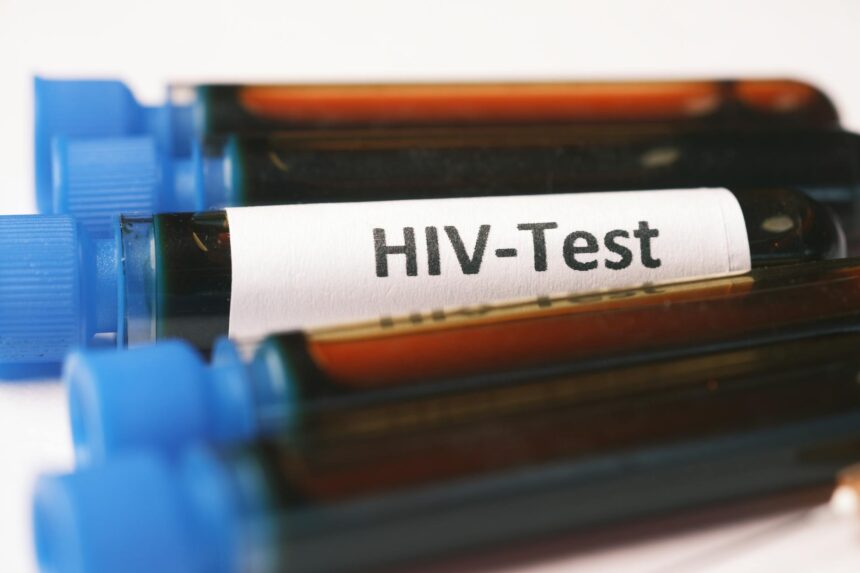
Microscopic image of T cells showing HIV-induced cellular transformation from CD4+ to CD8+ phenotype
Groundbreaking research shows HIV-1 can convert CD4+ helper T cells into CD8+ cells while preserving immune memory, potentially explaining persistent immune dysfunction in treated patients. — Photo: Towfiqu barbhuiya / Pexels
SHARE
1 min read|142 words

A groundbreaking discovery in HIV immunology reveals that HIV-1 infection can trigger CD4+ T cells to express CD8+ markers while maintaining their HLA class II recognition capabilities—a biological phenomenon previously considered impossible. This unprecedented cellular conversion challenges foundational concepts in T cell lineage development that have guided immunological research for decades. The research team, working with multiple cohorts of HIV-positive patients, documented that converted cells retain functional immune memory despite their altered phenotype, suggesting a sophisticated mechanism of viral immune manipulation. Unlike conventional CD8+ cytotoxic T cells that recognize HLA class I molecules, these converted cells maintain their original specificity patterns, creating a unique hybrid cellular population. This unexpected plasticity in T cell biology could fundamentally reshape how researchers approach HIV treatment strategies and explain long-standing clinical observations about immune recovery in antiretroviral-treated patients. Read the full article on GMJ Newsroom.

Was this article helpful?

GMJ Brief · Key Finding

📰 Read the full article: HIV infection triggers CD4+ T cells to transform into CD8+ cells, Science study reveals →

Share This Article
Facebook LinkedIn Bluesky Copy Link Print
GMJ
ByProf. Giorgi Pkhakadze
Follow:
Prof. Giorgi Pkhakadze, MD, MPH, PhD, is Editor-in-Chief of the Georgian Medical Journal and Chair of the Public Health Institute of Georgia (PHIG). He is Professor and Head of the Department of Social and Behavioural Sciences at David Tvildiani Medical University, and Secretary/Treasurer of the UEMS Section of Public Health. ORCID: 0000-0001-7609-4515.

Submit Your Paper →

Georgia's peer-reviewed open-access medical journal. No APC until January 2027.
Submit Manuscript →
Drinking Water Nitrate Linked to Higher Dementia Risk in Major 54,000-Person Study

Major study of 54,000+ adults reveals vegetable nitrates protect against dementia while…

New Drug Target for Alzheimer’s Shows Promise in Preclinical Studies

Researchers identified a novel Alzheimer's mechanism and developed an experimental compound that…

Dual Lassa Fever-Rabies Vaccine Shows Promise in First Human Trial

A novel dual vaccine targeting Lassa fever and rabies shows promising safety…

Submit Your Paper to GMJ

No APC until January 2027.
Submit Manuscript →

You Might Also Like

Global HealthPolicy & Systems

WHO Declares Public Health Emergency for Cross-Border Ebola Outbreak in DRC and Uganda

By
Prof. Giorgi Pkhakadze
31/05/2026
Children walking to damaged school building after climate disaster, symbolizing educational disruption

Climate Crisis Deepens Global Education Inequity for Vulnerable Children

By
Prof. Giorgi Pkhakadze
19/06/2026

🚨 CDC Outbreak Update: Infant Botulism Linked to Powdered Infant Formula

By
Prof. Giorgi Pkhakadze
20/06/2026

Major 6.7 Magnitude Earthquake Strikes Near Palu, Indonesia

By
Prof. Giorgi Pkhakadze
16/06/2026
Facebook Twitter Youtube Instagram
Company
  • Privacy Policy
  • Contact US
  • GMJ Journal
  • Submit Manuscript
  • Editorial Team
  • Register at GMJ
  • Terms of Use

Subscribe to GMJ News — Click here

Join Community
© 2026 Georgian Medical Journal (GMJ). Published by the Public Health Institute of Georgia (PHIG). All rights reserved.
Welcome Back!

Sign in to your account

Username or Email Address
Password

Lost your password?

Not a member? Sign Up