🟢 Strong Evidence
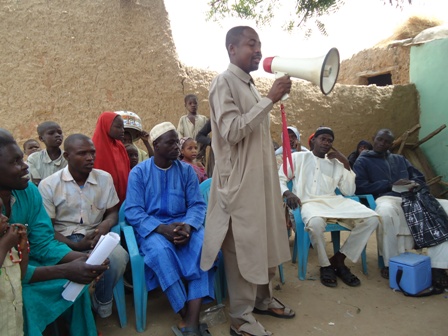
Nigeria’s polio elimination campaign achieved significant operational milestones in May 2026, reaching 33,000 settlements across the country and vaccinating 1.2 million children against the wild poliovirus, according to WHO’s “Big Actions” monthly report published by the World Health Organization’s Regional Office for Africa. The campaign simultaneously identified zero-dose children—those with no prior polio vaccination—in some of Nigeria’s most geographically isolated communities, addressing a critical gap in immunization coverage.
Key takeaways
- 1.2 million children vaccinated in a single month across 33,000 settlements in Nigeria
- Zero-dose children identified in hard-to-reach areas, marking progress in locating previously unmapped populations
- Solar-powered diagnostic laboratories deployed to strengthen Nigeria’s polio surveillance capacity
- Campaign represents coordinated effort by WHO and Nigerian health authorities to maintain polio-free status
Nigeria’s Polio Campaign Reach: May 2026 Operational Summary
Geographic coverage and vaccination targets achieved in a single month
Source: WHO Regional Office for Africa, May 2026 | Georgian Medical Journal News

Unprecedented Geographic Coverage in Nigeria’s Polio Push
The May 2026 campaign represents one of Nigeria’s largest coordinated immunization operations, with WHO documenting the reach of 33,000 distinct settlements, a milestone that reflects both organizational capacity and community mobilization across multiple Nigerian states. This scale of coverage is particularly significant given Nigeria’s diverse geography, ranging from dense urban centers to remote rural areas with limited road infrastructure. The ability to maintain such geographic penetration demonstrates how polio vaccination programs serve as a backbone for broader primary healthcare delivery systems.
Understanding the settlements’ diversity matters for public health planning: communities in northern Nigeria, which have historically experienced lower vaccination coverage due to security challenges and geographic dispersion, require tailored delivery strategies distinct from urban southern regions. WHO’s Global Health initiatives increasingly recognize that polio eradication success depends on mapping and reaching these heterogeneous populations.
Vaccination Numbers and the Zero-Dose Challenge
The 1.2 million children vaccinated in May 2026, according to WHO’s report, represents the primary output of the campaign’s immunization teams. However, the identification of zero-dose children—those with no prior polio vaccination history—signals a parallel achievement: locating previously unmapped or unreached populations. These children represent critical epidemiological vulnerabilities, as they lack any protection against wild poliovirus and could serve as potential transmission bridges if the virus were to re-emerge.
Finding zero-dose children in Nigeria’s most remote areas requires sophisticated microplanning. Health teams must navigate complex settlement patterns, gain community trust in regions where vaccine hesitancy may exist, and often overcome logistical barriers including poor road conditions and sparse population density. The fact that WHO’s polio vaccination program documented these cases indicates successful implementation of community survey and household enumeration protocols essential for reaching every child.
Infrastructure Innovation: Solar-Powered Diagnostic Labs
Complementing the vaccination reach, the May 2026 campaign saw deployment of solar-powered diagnostic laboratories across Nigeria, a development that strengthens the country’s surveillance capacity without depending on inconsistent grid electricity. These facilities enable rapid confirmation of suspected polio cases through testing of stool samples from patients with acute flaccid paralysis (AFP), the clinical presentation required for polio case detection under WHO Quality & Safety standards.
The infrastructure decision reflects lessons from previous polio eradication efforts. Diagnostic delays caused by laboratory access gaps have historically hindered rapid case confirmation and response in low-resource settings. By embedding renewable-energy diagnostic capacity directly within vaccination campaign infrastructure, Nigeria demonstrates integration of case detection with prevention efforts—a model increasingly adopted across sub-Saharan Africa’s disease surveillance systems.
33,000 settlements reached and 1.2 million children vaccinated in Nigeria’s May 2026 polio campaign, with solar-powered diagnostic laboratories deployed to secure surveillance capacity in remote areas.
— WHO Regional Office for Africa, “Big Actions” May 2026 Report
What this means
Frequently asked questions
Why does Nigeria still need large-scale polio campaigns if the disease has been nearly eliminated globally?
Although polio has been eliminated in most countries, Nigeria and other endemic nations in West Africa continue vaccination campaigns because wild poliovirus can spread rapidly among unvaccinated populations and the virus persists in neighboring countries. WHO maintains that maintaining high immunity levels is essential to prevent re-emergence, particularly given international travel and population movement. Full eradication requires sustained campaigns until virus circulation ceases globally.
What is a “zero-dose” child and why are they important in polio eradication?
Zero-dose children are those who have never received any dose of polio vaccine in their lives. They are critical to identify because they represent immunity gaps in a population and potential transmission chains if the virus were reintroduced. According to WHO’s immunization tracking, locating and vaccinating zero-dose children is a key strategy for closing immunity coverage gaps and preventing outbreaks in remote or underserved areas.
How do solar-powered labs improve polio surveillance compared to traditional facilities?
Solar-powered diagnostic laboratories eliminate dependence on unreliable grid electricity, which is often limited in rural Nigeria. This allows health teams to conduct rapid confirmatory tests for suspected polio cases (stool sample analysis) without travel delays to distant centralized labs. Faster confirmation enables quicker public health response and more accurate disease surveillance data, strengthening the entire polio monitoring system.
Nigeria’s May 2026 polio campaign outcomes reflect the maturation of Africa’s immunization infrastructure and the adaptive capacity of public health systems operating in complex settings. As the continent moves toward full polio eradication certification, these operational achievements—reaching dispersed populations, identifying immunity gaps, and embedding diagnostic capacity—will serve as replicable models for other vaccine-preventable disease programs across the region. The integration of vaccination delivery with surveillance infrastructure represents a forward-looking approach to disease elimination that transcends polio and strengthens health systems broadly.
Source: WHO Regional Office for Africa: “The Big Actions: May 2026”
Was this article helpful?
Disclaimer. This article is health journalism intended for general information and education. It is not medical advice and is not a substitute for professional diagnosis or treatment. Always consult a qualified healthcare provider about your individual circumstances. Full disclaimer →
Related Coverage


Editorial standards. This article was produced under the GMJ News editorial process, with oversight by the GMJ Editorial Board. Our editorial process. Spotted an error? Contact the editorial team.