By using this site, you agree to the Privacy Policy and Terms of Use.
Accept
GMJ NewsGMJ NewsGMJ News
  • Latest News
    • GMJ Briefs
  • Podcast & Media
    • Podcast Episodes
    • GMJ Audio
    • GMJ Videos
  • Research Digest
    • New Studies
    • Georgian Research
    • Data & Numbers
  • Policy & Systems
    • Health Policy
    • Quality & Safety
    • Migration & Health
    • Global Health
  • Practice
    • Clinical Updates
    • Case Discussions
    • Pharmacy & Prescribing
    • Ingredients A-Z
  • Perspectives
    • Editorial
    • Explainers
    • Voices
    • Letters
  • GMJ Articles
    • Vol. 1 Issue 2 (2026)
    • Vol. 1 Issue 1 (2026)
    • Pre-Launch Articles (2025)
  • Read the Journal →
  • About GMJ News
Notification Show More
Font ResizerAa
GMJ NewsGMJ News
Font ResizerAa
  • Latest News
    • GMJ Briefs
  • Podcast & Media
    • Podcast Episodes
    • GMJ Audio
    • GMJ Videos
  • Research Digest
    • New Studies
    • Georgian Research
    • Data & Numbers
  • Policy & Systems
    • Health Policy
    • Quality & Safety
    • Migration & Health
    • Global Health
  • Practice
    • Clinical Updates
    • Case Discussions
    • Pharmacy & Prescribing
    • Ingredients A-Z
  • Perspectives
    • Editorial
    • Explainers
    • Voices
    • Letters
  • GMJ Articles
    • Vol. 1 Issue 2 (2026)
    • Vol. 1 Issue 1 (2026)
    • Pre-Launch Articles (2025)
  • Read the Journal →
  • About GMJ News
Follow US
GMJ News > Practice > Clinical Updates > How the brain controls inflammation: The vagus nerve’s unexpected role in immune regulation
Clinical UpdatesNew StudiesPracticeResearch Digest

How the brain controls inflammation: The vagus nerve’s unexpected role in immune regulation

GMJ
Last updated: 12/07/2026 13:29
By
GMJ Practice Desk
Share
9 Min Read
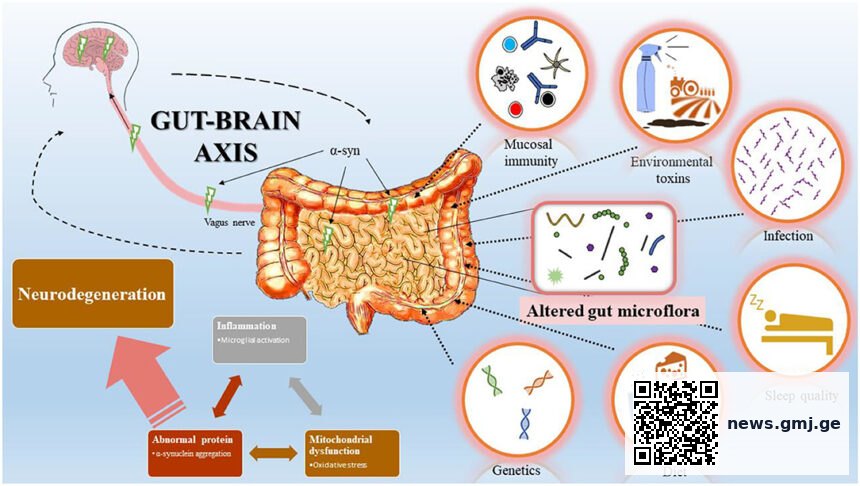
Diagram of the inflammatory reflex pathway showing vagus nerve signalling from brainstem to spleen, triggering immune modulationIllustrative image · "Gut-brain axis overview" by Chao Yin-Xia, Gulam Muhammad Yaaseen, Chia Nicholas Shyh Jenn, Feng Lei, Rotzschke Olaf, Tan Eng-King is licensed under CC BY 4.0. To view a copy of this license, visit https://creativecommons.org/licenses/by/4.0/. (CC BY 4.0)
The brain controls inflammation through an electrical circuit called the inflammatory reflex, mediated by the vagus nerve. Clinical trials show vagus nerve stimulation reduces inflammatory markers in rheumatoid arthritis without immunosuppressive drugs. — "Gut-brain axis overview" by Chao Yin-Xia, Gulam Muhammad Yaaseen, Chia Nicholas Shyh Jenn, Feng Lei, Rotzschke Olaf, Tan Eng-King is licensed under CC BY 4.0. To view a copy of this license, visit https://creativecommons.org/licenses/by/4.0/. (CC BY 4.0)
SHARE
6 min read|1,103 words
✓ Medically reviewed by Prof. Giorgi Pkhakadze, MD, MPH, PhD · ORCID 0000-0001-7609-4515

🟠 Moderate Evidence

Contents
    • Key takeaways
      • The three-step inflammatory reflex: from brain signal to immune response
  • The vagus nerve as an immune control system
  • Acetylcholine: the immune system’s brake pedal
  • Non-invasive activation: breathing, meditation, and stress management
    • What this means
  • Frequently asked questions
    • Can anyone activate their vagus nerve through breathing exercises?
    • Is vagus nerve stimulation safe for rheumatoid arthritis patients already on biologics?
    • How long does it take to see anti-inflammatory effects from meditation or breathing practice?

The brain exerts direct control over inflammation through an elegant neural circuit called the inflammatory reflex, with the vagus nerve serving as the critical communication highway between the central nervous system and the immune system. This discovery, documented in neuroscience and immunology literature, fundamentally challenges the traditional view of inflammation as a purely chemical process and opens new therapeutic avenues for chronic inflammatory diseases.

Key takeaways

  • The vagus nerve transmits electrical signals from the brainstem to the spleen, where it modulates immune cell activity through neurotransmitter release
  • Vagus nerve stimulation triggers acetylcholine release, which reduces production of TNF-α and other pro-inflammatory cytokines
  • Clinical trials in rheumatoid arthritis patients using implanted vagus nerve stimulators demonstrated reduced inflammation and pain relief without immunosuppressive medications
  • Non-invasive techniques such as deep breathing and meditation can activate this inflammatory reflex naturally
Minutes
Time required for vagus nerve stimulation to increase noradrenaline levels in the spleen and trigger immune modulation in animal models

The three-step inflammatory reflex: from brain signal to immune response

How neural signalling regulates inflammation without chemical immunosuppression

Brain electrical signal
100%
Vagus nerve transmission
100%
Spleen noradrenaline release
95%
T-cell acetylcholine production
85%
Macrophage TNF-α reduction
60%

Source: Vagal inflammatory reflex signalling pathway | Georgian Medical Journal News

Submit Your Paper
GMJ_Submit_Banner

The vagus nerve as an immune control system

The inflammatory reflex operates through a three-stage neural circuit that represents a paradigm shift in understanding neuroimmunology. The vagus nerve, the longest cranial nerve in the body, originates in the brainstem and extends directly to the spleen, heart, and gastrointestinal tract—organs critical to both immune function and stress response. When activated, the vagus nerve transmits electrical impulses that trigger a cascade of immunomodulatory events, fundamentally altering how we think about inflammation management.

🎙️ Related Podcast Episodes
🎧 #39 | GMJ Podcast | Acne and Metabolic Dysfunction — Insulin Resistance, IGF-1, and Clinical Implications · 15m
🎧 #37 | GMJ Podcast | NAD⁺ Injections and “NAD Boosters” — Public Health Risks and Regulatory Implications · 20m

Recent research demonstrates that this circuit can be engaged rapidly and reliably. In animal models of vagal stimulation, noradrenaline concentrations in the spleen increased measurably within minutes, confirming the speed and directness of neural-immune communication. This speed is clinically significant: unlike pharmaceutical interventions that require absorption, distribution, and binding to cellular receptors, neural signalling operates at the speed of electrical transmission.

Acetylcholine: the immune system’s brake pedal

The final step in the inflammatory reflex involves acetylcholine, a neurotransmitter that acts as a powerful anti-inflammatory messenger. When released by activated T cells in response to vagal signalling, acetylcholine binds to receptors on macrophages—the immune cells responsible for releasing tumor necrosis factor-α (TNF-α), a key driver of chronic inflammation in conditions such as rheumatoid arthritis and other autoimmune diseases. This interaction effectively tells the macrophage to stop producing inflammatory signals.

Clinical validation of this mechanism has come from trials using surgically implanted vagus nerve stimulators in rheumatoid arthritis patients. These studies, reviewed in immunology literature, showed significant reductions in TNF-α levels and improvements in joint pain and function—all achieved without traditional immunosuppressive drugs that carry risks of infection and malignancy. This represents a fundamentally different approach: rather than broadly suppressing immune function, the vagus nerve stimulation selectively restores immune regulation.

Non-invasive activation: breathing, meditation, and stress management

While implanted stimulators demonstrate the principle, the most accessible application of inflammatory reflex science involves non-invasive vagal activation. Research cited in cardiovascular and stress physiology journals confirms that deep breathing exercises and meditation reliably increase vagal tone—measured as heart rate variability (HRV)—and lower circulating levels of C-reactive protein (CRP) and interleukin-6 (IL-6), two well-established markers of systemic inflammation.

This connection between psychological stress, vagal tone, and inflammation explains why chronic stress is associated with elevated inflammatory disease risk. When the vagus nerve is tonically suppressed by stress, the inflammatory reflex loses its ability to maintain immune homeostasis. Conversely, practices that activate the parasympathetic nervous system—slow breathing, yoga, mindfulness meditation—essentially reset this circuit. See related coverage on Clinical Updates for mind-body interventions in chronic disease management.

In animal models, vagus nerve stimulation increased noradrenaline in the spleen within minutes, demonstrating the speed and reliability of neural immune modulation. Clinical trials in rheumatoid arthritis patients using implanted stimulators showed reduced TNF-α levels and pain relief without immunosuppressive drugs.

— Research on the inflammatory reflex, referenced in Nature Reviews Endocrinology

What this means

For patients: People with chronic inflammatory conditions—rheumatoid arthritis, inflammatory bowel disease, psoriasis—now have evidence supporting non-pharmacological interventions like controlled breathing, meditation, and vagal exercises as adjuncts to medical treatment. For those with severe disease, implanted vagus nerve stimulators represent an emerging option when conventional drugs fail or cause intolerable side effects.
For clinicians: The inflammatory reflex provides a mechanistic rationale for recommending stress management and breathing techniques as part of standard care for inflammatory disease. It also justifies investigation of vagus nerve stimulation in treatment-resistant cases. Understanding this circuit shifts focus from immune suppression to immune regulation.
For policymakers: This research strengthens the case for funding integrative medicine research and incorporating mind-body practices into public health guidelines for chronic disease prevention. It also argues for investment in vagus nerve stimulation device research and potential coverage under healthcare systems, particularly for patients who fail conventional immunotherapy.

Frequently asked questions

Can anyone activate their vagus nerve through breathing exercises?

Yes. Research shows that slow, controlled breathing—particularly exhaling longer than inhaling—reliably increases vagal tone and parasympathetic activation in healthy individuals. However, patients with severe autonomic dysfunction or cardiac conditions should consult a clinician before beginning intensive breathing practices. For evidence on specific techniques, see Explainers on breathing physiology.

Is vagus nerve stimulation safe for rheumatoid arthritis patients already on biologics?

Clinical trials to date have evaluated vagus nerve stimulation as a potential alternative or adjunct to TNF-inhibitors. Combining both modalities requires careful clinical supervision, as the safety profile of dual neuroimmune-pharmacological intervention is still being studied. Patients considering this should discuss risks and benefits with their rheumatologist and the device manufacturer.

How long does it take to see anti-inflammatory effects from meditation or breathing practice?

In controlled studies, single sessions of deep breathing lower acute inflammatory markers like cortisol within minutes to hours. However, sustained reduction in baseline inflammation typically requires consistent practice over weeks to months. The inflammatory reflex is both immediately responsive and trainable through repetition.

The discovery of the inflammatory reflex represents a convergence of neuroscience, immunology, and physiology that has profound implications for how medicine approaches chronic inflammation. As research continues to clarify the mechanisms and optimal stimulation parameters, this knowledge base promises to expand both non-invasive and device-based therapeutic options. For patients and clinicians alike, understanding this brain-immune conversation opens a new window into prevention and treatment. For further reading on neuroimmunology and related topics, visit the Georgian Medical Journal archive.

Source: Research on the inflammatory reflex and vagus nerve immunomodulation

Was this article helpful?

Disclaimer. This article is health journalism intended for general information and education. It is not medical advice and is not a substitute for professional diagnosis or treatment. Always consult a qualified healthcare provider about your individual circumstances. Full disclaimer →

Related Coverage

Brain Network Fragmentation at Legal Alcohol Limits Predicts Intoxication Severity, fMRI Study ShowsJul 28, 2026
Close Contact Alone May Not Drive Influenza Transmission, Controlled Study SuggestsJul 27, 2026
Carbohydrate Ingestion During Endurance Exercise: Meta-Analysis Shows Modest Glycogen Sparing EffectJul 27, 2026
Caffeine Boosts Strength Through Neural Drive, Not Muscle Growth—New EvidenceJul 27, 2026
Related reference
  • Inflammatory Bowel Disease · Condition
  • Rheumatoid Arthritis · Condition
  • Psoriasis · Condition
  • Choline · Ingredient
PG
Written by
Prof. Giorgi Pkhakadze, MD, MPH, PhD
Editor-in-Chief, GMJ News
Full profile →  ·  ORCID 0000-0001-7609-4515
Medical disclaimer. This article is health journalism intended for general information. It is not medical advice and is not a substitute for consultation with a qualified healthcare professional. Always seek your physician's advice regarding any medical condition.
Medically reviewed by Prof. Giorgi Pkhakadze, MD, MPH, PhD. Spotted an error? Contact the editorial team.

Get the GMJ News digest
Evidence-based health journalism in your inbox. No spam; unsubscribe anytime.
TAGGED:clinical trialsimmune regulationinflammatory reflexneuroimmunologyparasympathetic nervous systemrheumatoid arthritisTNF-alphavagus nerve
Share This Article
Facebook LinkedIn Bluesky Copy Link Print
GMJ
ByGMJ Practice Desk
Follow:
GMJ Practice Desk is part of GMJ News, the newsroom of the Georgian Medical Journal (gmj.ge), published by the Public Health Institute of Georgia. Every article is editorially reviewed before publication.
Leave a Comment Leave a Comment

Leave a Reply Cancel reply

Your email address will not be published. Required fields are marked *

Submit Your Paper →

Georgia's peer-reviewed open-access medical journal. No APC until January 2027.
Submit Manuscript →
Brain Network Fragmentation at Legal Alcohol Limits Predicts Intoxication Severity, fMRI Study Shows

New fMRI research shows that at identical blood alcohol concentrations, individuals experience…

How Your Immune System Works: A Guide to Its Specialized Cells and Functions

Your immune system is an organized network of specialized cells—dendritic cells, T…

Close Contact Alone May Not Drive Influenza Transmission, Controlled Study Suggests

A controlled human challenge–transmission study found that prolonged close contact with influenza-infected…

Submit Your Paper to GMJ

No APC until January 2027.
Submit Manuscript →

You Might Also Like

Illustration of hippocampus brain region showing volume preservation through aerobic exercise in older adultsIllustrative image · Photo by Andrea Piacquadio on Pexels (Pexels License)
Clinical UpdatesNew StudiesPracticeResearch Digest

Aerobic Exercise Reverses Age-Related Hippocampal Shrinkage in Older Adults

By
GMJ Practice Desk
16/07/2026
Cyclist consuming sports drink during endurance exercise training session
New StudiesResearch Digest

Carbohydrate Intake During Exercise Shows Modest Muscle Glycogen Sparing Effects

By
GMJ Research Desk
23/05/2026
Rural healthcare worker using mobile phone for pregnancy data collection in BangladeshIllustrative image · Photo by Amina Filkins on Pexels (Pexels License)
Global HealthNew StudiesPolicy & SystemsResearch Digest

Mobile Phone Technology Offers Promise for Tracking Perinatal Deaths in Rural Bangladesh

By
GMJ Policy Desk
11/07/2026
Bronchoscopic view showing black carbon deposits in bronchial airways from coal dust exposure
Clinical UpdatesPractice

Bronchial Anthracosis: Coal Dust Exposure Leaves Distinctive Lung Patterns

By
GMJ Practice Desk
30/05/2026
Facebook Twitter Youtube Instagram
Company
  • Privacy Policy
  • Contact US
  • GMJ Journal
  • Submit Manuscript
  • Editorial Team
  • Register at GMJ
  • Terms of Use

Subscribe to GMJ News — Click here

Join Community
© 2026 Georgian Medical Journal (GMJ). Published by the Public Health Institute of Georgia (PHIG). All rights reserved.
Welcome Back!

Sign in to your account

Username or Email Address
Password

Lost your password?

Not a member? Sign Up