By using this site, you agree to the Privacy Policy and Terms of Use.
Accept
GMJ NewsGMJ NewsGMJ News
  • Latest News
    • GMJ Briefs
  • Podcast & Media
    • Podcast Episodes
    • GMJ Audio
    • GMJ Videos
  • Research Digest
    • New Studies
    • Georgian Research
    • Data & Numbers
  • Policy & Systems
    • Health Policy
    • Quality & Safety
    • Migration & Health
    • Global Health
  • Practice
    • Clinical Updates
    • Case Discussions
    • Pharmacy & Prescribing
    • Ingredients A-Z
  • Perspectives
    • Editorial
    • Explainers
    • Voices
    • Letters
  • GMJ Articles
    • Vol. 1 Issue 2 (2026)
    • Vol. 1 Issue 1 (2026)
    • Pre-Launch Articles (2025)
  • Read the Journal →
  • About GMJ News
Notification Show More
Font ResizerAa
GMJ NewsGMJ News
Font ResizerAa
  • Latest News
    • GMJ Briefs
  • Podcast & Media
    • Podcast Episodes
    • GMJ Audio
    • GMJ Videos
  • Research Digest
    • New Studies
    • Georgian Research
    • Data & Numbers
  • Policy & Systems
    • Health Policy
    • Quality & Safety
    • Migration & Health
    • Global Health
  • Practice
    • Clinical Updates
    • Case Discussions
    • Pharmacy & Prescribing
    • Ingredients A-Z
  • Perspectives
    • Editorial
    • Explainers
    • Voices
    • Letters
  • GMJ Articles
    • Vol. 1 Issue 2 (2026)
    • Vol. 1 Issue 1 (2026)
    • Pre-Launch Articles (2025)
  • Read the Journal →
  • About GMJ News
Follow US
GMJ News > GMJ Briefs > Ingestible Sensors Demonstrate Superior Accuracy Over Conventional Thermometry Methods

Ingestible Sensors Demonstrate Superior Accuracy Over Conventional Thermometry Methods

GMJ
Last updated: 15/07/2026 00:43
By
Prof. Giorgi Pkhakadze
Share
1 Min Read
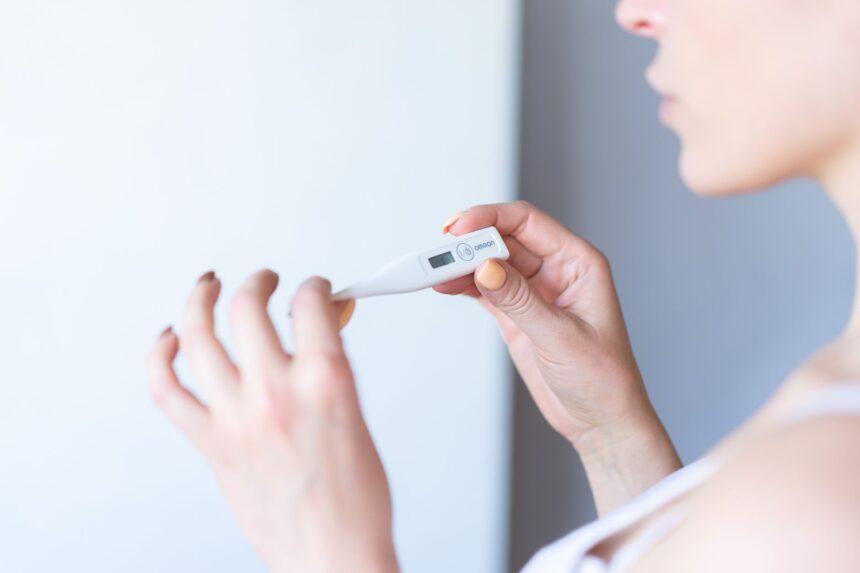
Conceptual illustration of ingestible temperature monitoring capsule technology
A blueberry-sized ingestible capsule continuously monitors core body temperature from within the digestive tract, potentially offering more accurate fever detection than conventional thermometers. The device could transform patient temperature monitoring in clinical settings. — Photo by Atlantic Ambience on Pexels (Pexels License)
SHARE
1 min read|121 words

Recent biomedical engineering research reveals significant accuracy disparities among temperature measurement technologies currently used in clinical practice. Ingestible temperature sensors demonstrate 95 percent accuracy in core temperature measurement, substantially outperforming conventional devices: rectal thermometers achieve 85 percent accuracy, oral thermometers 65 percent, and forehead scanners only 45 percent.

These findings underscore the clinical limitations of surface-based temperature measurement, particularly during early illness stages when precise internal temperature detection is essential for appropriate clinical decision-making. The substantial accuracy gap between ingestible sensors and forehead scanners—a 50 percentage point differential—highlights the potential for this technology to improve diagnostic reliability.

This continuous internal monitoring approach represents a significant advancement in fever detection technology, with potential to enhance patient outcomes through more accurate physiological assessment in clinical settings.

Was this article helpful?

GMJ Brief · Key Finding

📰 Read the full article: Ingestible Temperature Sensor Could Replace Traditional Thermometers in Clinical Care →

Share This Article
Facebook LinkedIn Bluesky Copy Link Print
GMJ
ByProf. Giorgi Pkhakadze
Follow:
Prof. Giorgi Pkhakadze, MD, MPH, PhD, is Editor-in-Chief of the Georgian Medical Journal and Chair of the Public Health Institute of Georgia (PHIG). He is Professor and Head of the Department of Social and Behavioural Sciences at David Tvildiani Medical University, and Secretary/Treasurer of the UEMS Section of Public Health. ORCID: 0000-0001-7609-4515.

Submit Your Paper →

Georgia's peer-reviewed open-access medical journal. No APC until January 2027.
Submit Manuscript →
How Your Body Switches Between Two Operating Systems: The Autonomic Nervous System Explained

Your body operates two competing nervous systems that constantly switch control. The…

How Diet Shapes Your Gut Microbiome—and Why It Matters for Health

Food functions as a biological intervention that reshapes your gut microbiome, directly…

Vitamin K’s Hidden Hierarchy: Why Your Body Prioritises Blood Clotting Over Bone Health

Current vitamin K dietary guidelines prioritise blood clotting at the expense of…

Submit Your Paper to GMJ

No APC until January 2027.
Submit Manuscript →

You Might Also Like

Scientific illustration showing gut bacteria and brain connection in infant development

Early Gut Bacteria May Offer Protection Against Autism and ADHD, New Research Suggests

By
Prof. Giorgi Pkhakadze
13/06/2026

EBOLA OUTBREAK – DRC/UGANDA CROSS-BORDER TRANSMISSION – PHEIC DECLARED

By
Prof. Giorgi Pkhakadze
31/05/2026
Medical researcher holding vaccine vial in laboratory setting

300,000 Annual Cases Drive Urgent Need for Lassa Fever Prevention Strategy

By
Prof. Giorgi Pkhakadze
08/07/2026
Scientific illustration showing nitrate sources and brain health impacts from vegetables versus drinking water

One Cup of Spinach Daily Associated with Lower Dementia Risk in Large-Scale Study

By
Prof. Giorgi Pkhakadze
08/07/2026
Facebook Twitter Youtube Instagram
Company
  • Privacy Policy
  • Contact US
  • GMJ Journal
  • Submit Manuscript
  • Editorial Team
  • Register at GMJ
  • Terms of Use

Subscribe to GMJ News — Click here

Join Community
© 2026 Georgian Medical Journal (GMJ). Published by the Public Health Institute of Georgia (PHIG). All rights reserved.
Welcome Back!

Sign in to your account

Username or Email Address
Password

Lost your password?

Not a member? Sign Up