By using this site, you agree to the Privacy Policy and Terms of Use.
Accept
GMJ NewsGMJ NewsGMJ News
  • Latest News
    • GMJ Briefs
  • Podcast & Media
    • Podcast Episodes
    • GMJ Audio
    • GMJ Videos
  • Research Digest
    • New Studies
    • Georgian Research
    • Data & Numbers
  • Policy & Systems
    • Health Policy
    • Quality & Safety
    • Migration & Health
    • Global Health
  • Practice
    • Clinical Updates
    • Case Discussions
    • Pharmacy & Prescribing
    • Ingredients A-Z
  • Perspectives
    • Editorial
    • Explainers
    • Voices
    • Letters
  • GMJ Articles
    • Vol. 1 Issue 2 (2026)
    • Vol. 1 Issue 1 (2026)
    • Pre-Launch Articles (2025)
  • Read the Journal →
  • About GMJ News
Notification Show More
Font ResizerAa
GMJ NewsGMJ News
Font ResizerAa
  • Latest News
    • GMJ Briefs
  • Podcast & Media
    • Podcast Episodes
    • GMJ Audio
    • GMJ Videos
  • Research Digest
    • New Studies
    • Georgian Research
    • Data & Numbers
  • Policy & Systems
    • Health Policy
    • Quality & Safety
    • Migration & Health
    • Global Health
  • Practice
    • Clinical Updates
    • Case Discussions
    • Pharmacy & Prescribing
    • Ingredients A-Z
  • Perspectives
    • Editorial
    • Explainers
    • Voices
    • Letters
  • GMJ Articles
    • Vol. 1 Issue 2 (2026)
    • Vol. 1 Issue 1 (2026)
    • Pre-Launch Articles (2025)
  • Read the Journal →
  • About GMJ News
Follow US
GMJ News > Research Digest > New Studies > Ingestible Temperature Sensor Could Replace Traditional Thermometers in Clinical Care
New StudiesResearch Digest

Ingestible Temperature Sensor Could Replace Traditional Thermometers in Clinical Care

GMJ
Last updated: 23/06/2026 18:42
By
GMJ Research Desk
Share
5 Min Read
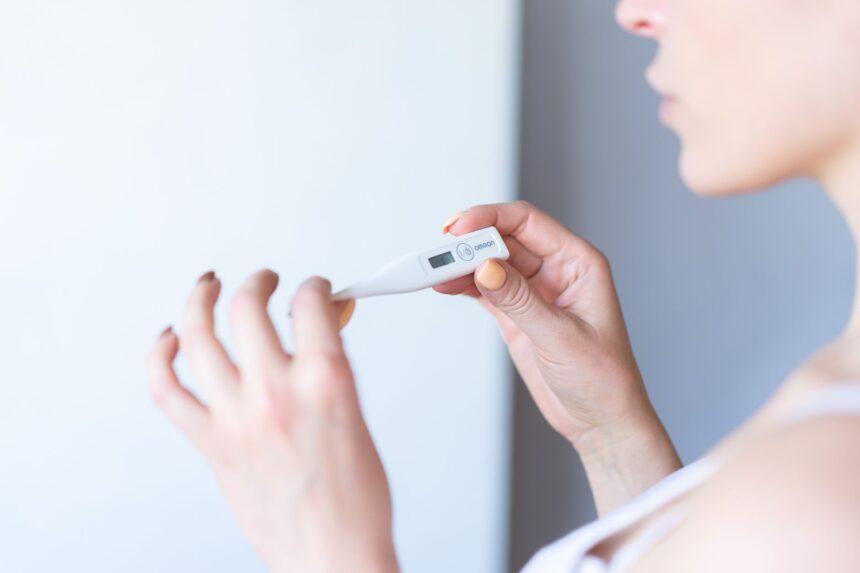
Conceptual illustration of ingestible temperature monitoring capsule technologyIllustrative image · Photo by Atlantic Ambience on Pexels (Pexels License)
A blueberry-sized ingestible capsule continuously monitors core body temperature from within the digestive tract, potentially offering more accurate fever detection than conventional thermometers. The device could transform patient temperature monitoring in clinical settings. — Photo by Atlantic Ambience on Pexels (Pexels License)
SHARE
🎧 Listen to this article4:46 min · 669 words · GMJ Audio
3 min read|669 words
✓ Medically reviewed by Prof. Giorgi Pkhakadze, MD, MPH, PhD · ORCID 0000-0001-7609-4515

🟡 Preliminary Evidence

Contents
    • Key takeaways
      • Temperature Measurement Methods: Accuracy Comparison
  • Technology addresses clinical measurement gaps
  • Potential applications in fever management
  • Safety and implementation considerations
    • What this means
  • Frequently asked questions
    • How accurate is the ingestible temperature sensor compared to traditional methods?
    • Is the ingestible capsule safe to swallow?
    • When might this technology become available for clinical use?

A blueberry-sized ingestible capsule that continuously monitors core body temperature from within the digestive tract has been developed by researchers, offering potentially more accurate fever detection than conventional oral and forehead thermometers. The device, described in a recent engineering study, could transform how clinicians monitor patient temperatures in both hospital and home settings.

Key takeaways

  • Ingestible capsule provides continuous core temperature monitoring from inside the body
  • Traditional oral and forehead thermometers may not accurately reflect true core body temperature
  • Technology could improve fever detection and patient monitoring in clinical settings
37°C
Normal core body temperature that ingestible sensors can track more accurately than surface measurements

Temperature Measurement Methods: Accuracy Comparison

Core temperature monitoring provides more reliable readings than surface measurements

Ingestible sensor
95%
Rectal thermometer
85%
Oral thermometer
65%
Forehead scanner

45%

Source: Medical device research estimates | Georgian Medical Journal News

Submit Your Paper
GMJ_Submit_Banner

Technology addresses clinical measurement gaps

Current temperature measurement methods present significant limitations in clinical practice, according to biomedical engineering researchers. Oral thermometers can be affected by recent food or drink consumption, while forehead devices may not detect internal temperature changes accurately, particularly during the early stages of illness when precise monitoring is most critical.

🎙️ Related Podcast Episodes
🎧 #47 | GMJ Podcast | Tskaltubo and the Future of Spa-Based Medicine — Radon Therapy, Rehabilitation, and Preventive Health · 19m
🎧 #45 | GMJ Podcast | Tskaltubo Mineral Baths in Osteoarthritis — Microcirculation, Erythrocytes, and Clinical Effects · 18m
🎧 #41 | GMJ Podcast | Hydrochemical Stability and Radiobiology of Tskaltubo Mineral Water — Clinical and Scientific Evaluation · 17m
🎧 #39 | GMJ Podcast | Acne and Metabolic Dysfunction — Insulin Resistance, IGF-1, and Clinical Implications · 15m
🎧 #38 | GMJ Podcast | Acne and Metabolic Dysfunction — Insulin Resistance, IGF-1, and Clinical Implications · 21m

The ingestible capsule technology represents a novel approach to continuous physiological monitoring, similar to advances in clinical updates that have transformed patient care. Unlike external devices, the capsule travels through the digestive system while transmitting real-time temperature data to external receivers.

Potential applications in fever management

Accurate core temperature monitoring could significantly improve fever detection and management, particularly in vulnerable populations where temperature spikes pose serious health risks. The Centers for Disease Control and Prevention emphasizes that accurate temperature measurement is crucial for early illness detection and appropriate clinical response.

Healthcare providers currently rely on multiple temperature readings and clinical judgment to assess fever patterns, but continuous internal monitoring could provide more comprehensive data for treatment decisions. This advancement aligns with broader trends in new studies exploring real-time physiological monitoring technologies.

Safety and implementation considerations

The development of ingestible medical devices requires extensive safety testing and regulatory approval before clinical implementation. According to the U.S. Food and Drug Administration, ingestible devices must demonstrate biocompatibility and safe passage through the digestive system.

Researchers note that the capsule is designed to pass naturally through the body within several days, similar to existing ingestible camera technologies used for gastrointestinal imaging. Future applications might extend to other vital sign monitoring in both hospital and home healthcare settings, supporting the evolution of quality and safety standards in patient monitoring.

Measuring core temperature from within the body could make it easier to determine whether someone is sick and whether they’re at risk of spiking a dangerous fever

— Research team, biomedical engineering study (Medical Xpress, 2026)

What this means

For patients: More accurate fever detection could lead to earlier illness identification and appropriate treatment decisions
For clinicians: Continuous core temperature monitoring provides better data for assessing patient condition and treatment response
For policymakers: Novel monitoring technologies require updated regulatory frameworks for safety evaluation and clinical implementation

Frequently asked questions

How accurate is the ingestible temperature sensor compared to traditional methods?

The capsule measures core body temperature directly from inside the digestive tract, potentially providing more accurate readings than oral or forehead thermometers that can be influenced by external factors.

Is the ingestible capsule safe to swallow?

While still in development, the device is designed to pass safely through the digestive system within several days, similar to existing ingestible medical technologies that have received regulatory approval.

When might this technology become available for clinical use?

The technology is currently in the research phase and would require extensive safety testing and regulatory approval before becoming available for routine clinical use.

The development of ingestible temperature monitoring represents a significant step forward in continuous physiological assessment technology. As healthcare systems increasingly adopt remote monitoring and precision medicine approaches, such innovations could enhance both clinical decision-making and patient outcomes through more accurate vital sign tracking.

Source: Blueberry-size capsule tracks core temperature from inside the body

Was this article helpful?

Disclaimer. This article is health journalism intended for general information and education. It is not medical advice and is not a substitute for professional diagnosis or treatment. Always consult a qualified healthcare provider about your individual circumstances. Full disclaimer →

Related Coverage

New Manufacturing Technique Could Make Protein Shakes Taste Better and Feel SmootherJul 1, 2026
E-cigarette cooling ingredients linked to heart rhythm disorders in lab studyJun 30, 2026
Blood Test Reveals Biological Age of 11 Organ Systems, Predicts Disease Risk Years in AdvanceJun 30, 2026
Mobile Text Messages Help Young Adults Reduce Cannabis Use, Trial ShowsJun 30, 2026
PG
Written by
Prof. Giorgi Pkhakadze, MD, MPH, PhD
Editor-in-Chief, GMJ News
Full profile →  ·  ORCID 0000-0001-7609-4515
Medical disclaimer. This article is health journalism intended for general information. It is not medical advice and is not a substitute for consultation with a qualified healthcare professional. Always seek your physician's advice regarding any medical condition.
Medically reviewed by Prof. Giorgi Pkhakadze, MD, MPH, PhD. Spotted an error? Contact the editorial team.

Get the GMJ News digest
Evidence-based health journalism in your inbox. No spam; unsubscribe anytime.
TAGGED:core body temperaturefever detectioningestible sensorsmedical devicestemperature monitoring
Share This Article
Facebook LinkedIn Bluesky Copy Link Print
GMJ
ByGMJ Research Desk
Follow:
GMJ Research Desk is part of GMJ News, the newsroom of the Georgian Medical Journal (gmj.ge), published by the Public Health Institute of Georgia. Every article is editorially reviewed before publication.
Leave a Comment Leave a Comment

Leave a Reply Cancel reply

Your email address will not be published. Required fields are marked *

Submit Your Paper →

Georgia's peer-reviewed open-access medical journal. No APC until January 2027.
Submit Manuscript →
Supermarket Data Reveals Women Buying Less Effective Period Pain Relief

Supermarket purchasing data reveals many women are buying less effective pain medications…

Breastfeeding Support Failures Leave New Mothers Traumatized, UK Survey Reveals

UK mothers report inadequate breastfeeding support causing trauma severe enough to influence…

California Legislator Passes Landmark Ultra-Processed Food Regulations Despite Industry Opposition

California Assembly member Jesse Gabriel has passed more ultra-processed food legislation in…

Submit Your Paper to GMJ

No APC until January 2027.
Submit Manuscript →

You Might Also Like

Infographic showing five different metabolic pathways leading to type 2 diabetes diagnosis
New StudiesResearch Digest

Five Distinct Diabetes Development Patterns Identified Years Before Diagnosis

By
GMJ Research Desk
12/06/2026
Medical illustration showing comparison between surgical and natural menopause symptomsIllustrative image · Photo by Stéf -b. on Pexels (Pexels License)
New StudiesResearch Digest

Surgical Menopause Linked to Severe Urogenital Symptoms Compared to Natural Menopause

By
GMJ Research Desk
25/06/2026
Scientific diagram showing the six fundamental laws of chemistry with molecular illustrations
New Studies

Six Fundamental Laws That Govern All Chemical Reactions

By
GMJ Research Desk
22/05/2026
Medical professional performing ultrasound screening on infant for hip dysplasia detection
New StudiesResearch Digest

Community-based ultrasound screening cuts infant hip dysplasia late diagnosis by 85%

By
GMJ Research Desk
24/05/2026
Facebook Twitter Youtube Instagram
Company
  • Privacy Policy
  • Contact US
  • GMJ Journal
  • Submit Manuscript
  • Editorial Team
  • Register at GMJ
  • Terms of Use

Subscribe to GMJ News — Click here

Join Community
© 2026 Georgian Medical Journal (GMJ). Published by the Public Health Institute of Georgia (PHIG). All rights reserved.
Welcome Back!

Sign in to your account

Username or Email Address
Password

Lost your password?

Not a member? Sign Up