Updated 13/09/2026
🟡 Preliminary Evidence
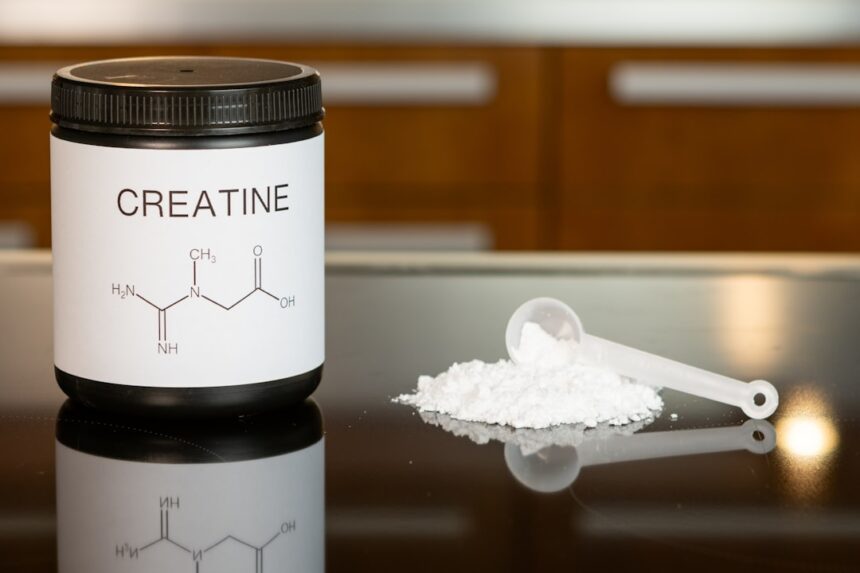
Creatine is an endogenous molecule synthesized in the kidneys and liver that serves as a critical energy buffer in muscle and brain tissue. According to biochemical literature, approximately 95% of total body creatine is stored in skeletal muscle, where it participates in rapid adenosine triphosphate (ATP) regeneration during high-intensity activity. This mechanism underpins creatine’s role in cellular energy homeostasis and has made it one of the most studied micronutrients in sports physiology and clinical biochemistry.
Key takeaways
- Creatine synthesis begins in the kidneys, where arginine and glycine combine to form guanidinoacetate, then the liver converts this to functional creatine via methylation
- Approximately 95% of the body’s creatine pool is stored in skeletal muscle tissue, serving as a phosphate donor for rapid ATP regeneration during energy demand
- Creatinine, a creatine metabolite, is filtered by the kidneys and used clinically as a marker of renal function in blood tests
- The creatine-phosphocreatine system functions as an “instant energy buffer” during brief high-intensity muscle contractions and neurological activity
The Creatine Synthesis and Energy Cycle
Four-stage pathway: kidney synthesis → liver activation → muscle storage → cellular energy exchange

Source: Biochemical literature on creatine metabolism | Georgian Medical Journal News
Where Creatine Synthesis Begins: The Kidney Connection
Creatine synthesis initiates in the kidneys through a two-step process involving amino acid metabolism. The kidney catalyzes the combination of arginine and glycine to form guanidinoacetate (GAA), the immediate precursor to functional creatine. This initial condensation reaction represents the rate-limiting step in creatine biosynthesis and determines the overall capacity for endogenous creatine production.
The kidneys also play a second crucial role: filtering creatinine, the primary metabolite of creatine degradation. According to clinical biochemistry standards, creatinine clearance measured in blood and urine samples serves as the gold standard for assessing glomerular filtration rate (GFR) and renal function. This dual role—as both a synthesis organ and an excretion checkpoint—positions the kidneys as central to creatine homeostasis.
The Liver’s Methylation Step: Activating the Energy Molecule
Once guanidinoacetate is synthesized in the kidneys, it travels via the bloodstream to the liver, where the final activation step occurs. The enzyme guanidinoacetate methyltransferase (GAMT) catalyzes methylation of GAA using S-adenosylmethionine (SAM) as the methyl donor, converting it into active creatine. This methylation reaction is energetically expensive, consuming one-carbon units from the one-carbon metabolism cycle.
The liver manufactures approximately 1–2 grams of creatine daily in healthy adults, according to metabolic studies published in physiological journals. This endogenous production rate is sufficient to maintain normal muscle and organ function without supplementation in individuals consuming adequate protein and micronutrients. The methylation step represents the point at which the molecule becomes functionally activated as an energy buffer.
Distribution to Muscle: Storage and Energy Reserve
After synthesis in the liver, creatine enters systemic circulation and is transported to target tissues via creatine transporter proteins (SLC6A8). The vast majority—approximately 95% of total body creatine—accumulates in skeletal muscle, where it is stored as free creatine and phosphocreatine. The remaining 5% distributes to the heart, brain, kidneys, and other organs requiring rapid ATP turnover.
Inside muscle cells, creatine binds to ATP in the presence of creatine kinase (CK), forming phosphocreatine, a high-energy phosphate compound. This storage form of creatine serves as a phosphate reservoir: during muscle contraction or neuronal firing, phosphocreatine rapidly donates its phosphate group back to adenosine diphosphate (ADP), regenerating ATP within milliseconds. This creatine-phosphocreatine shuttle is the body’s fastest mechanism for replenishing ATP during brief, intense activities—such as sprinting, weightlifting, or acute cognitive demands—and is critical for maintaining cellular energy balance.
Approximately 95% of the body’s creatine pool resides in skeletal muscle tissue, functioning as a rapid-access phosphate donor that regenerates ATP during high-intensity activity within seconds, making it the fastest energy buffer system available to muscle and brain cells.
— Biochemical literature on creatine kinase and phosphocreatine metabolism
The Energy Exchange: How Creatine Powers Cellular Work
The creatine-phosphocreatine system operates as a dynamic equilibrium between energy demand and energy regeneration. Under resting conditions, when ATP is abundant, the enzyme creatine kinase catalyzes the transfer of a high-energy phosphate from ATP to creatine, creating phosphocreatine—a form of “stored” energy. During physical exertion or cognitive demand, phosphocreatine rapidly reverses this reaction, donating its phosphate back to ADP to regenerate ATP.
This system provides several metabolic advantages. First, it operates on a millisecond timescale, orders of magnitude faster than glucose oxidation or fatty acid metabolism, making it ideal for sudden energy demands. Second, it functions independently of oxygen availability, allowing muscles to sustain maximal effort during the opening seconds of high-intensity exercise before aerobic pathways activate. Third, creatine exerts osmotic effects within muscle cells, drawing water intracellularly and enhancing cellular hydration, which may contribute to muscle protein synthesis and stability.
Beyond muscle, the creatine-phosphocreatine system also supports brain function. The brain accounts for approximately 20% of the body’s ATP consumption at rest. According to neuroscience literature on cerebral bioenergetics, creatine supplementation may enhance phosphocreatine levels in brain tissue, potentially supporting cognitive performance during periods of high mental demand or metabolic stress. This has relevance for individuals recovering from neurological injury or experiencing age-related cognitive decline.
Creatinine: The Metabolic Byproduct and Clinical Marker
As creatine is utilized and recycled, a portion spontaneously converts to creatinine through non-enzymatic dehydration. Unlike creatine, which is actively transported back into muscle, creatinine cannot be reused and is filtered from the blood by the kidneys into the urine. The amount of creatinine appearing in urine and blood is relatively constant and proportional to total muscle mass, making it a stable biomarker for renal function assessment.
Serum creatinine concentration is inversely correlated with glomerular filtration rate (GFR): when kidney function declines, creatinine accumulates in the blood. According to nephrology guidelines from major professional societies, creatinine-based GFR estimation is standard clinical practice for screening and monitoring chronic kidney disease (CKD). Elevated creatinine may indicate reduced kidney function, although muscle mass, age, sex, and ethnicity must be considered when interpreting results. This clinical application demonstrates how the body’s byproducts of normal metabolism serve as windows into organ function.
What this means
Frequently asked questions
Is creatine supplementation safe for healthy individuals?
Creatine monohydrate supplementation (typically 3–5 grams daily) is one of the most extensively studied micronutrient supplements and is generally recognized as safe in individuals with normal kidney function, according to sports medicine literature and meta-analyses of supplementation trials. However, individuals with pre-existing kidney disease, family history of kidney dysfunction, or those taking medications affecting kidney function should consult a clinician before supplementing. Creatine does increase urinary creatinine and serum creatinine levels, which may create confusion when interpreting kidney function tests—clinicians must be informed of supplementation status.
Why does creatinine appear in blood and urine tests, and what does elevation mean?
Creatinine is the natural byproduct of creatine metabolism in muscle. It is filtered by the kidneys and excreted in urine at a relatively constant rate proportional to muscle mass. Elevated serum creatinine typically indicates reduced kidney filtration capacity—the kidneys cannot clear creatinine efficiently. However, elevation can also occur with increased muscle breakdown (rhabdomyolysis), certain medications, or dehydration. Clinicians typically calculate estimated GFR using creatinine alongside age, sex, and body composition to assess true kidney function rather than relying on creatinine alone.
Can creatine supplementation enhance brain function or cognitive performance?
The brain relies heavily on the creatine-phosphocreatine system for rapid ATP regeneration, and some studies suggest creatine supplementation may modestly improve cognitive performance during sustained mental effort or in individuals with neurological conditions. However, evidence is preliminary and mixed: neurological research indicates potential benefits in aging populations and those with neurological injury, but effects in healthy young adults are inconsistent. More research is needed before creatine can be recommended specifically for cognitive enhancement outside clinical contexts.
The creatine synthesis and energy cycle represents a elegant system optimized by evolution to provide rapid, reliable energy during high-intensity activity and cognitive demand. Future research may reveal additional roles for creatine in aging, neurological disease, and metabolic health, while clinicians will continue to rely on creatinine as a practical marker of kidney function. Understanding this system—from kidney synthesis through muscle storage to urinary excretion—offers insight into how the body maintains energy balance and how clinicians use metabolic byproducts to assess organ function.
For comprehensive information on kidney health, mineral metabolism, and sports nutrition, readers are encouraged to consult evidence-based resources from the Georgian Medical Journal News research digest and the SheniEkimi patient education portal.
Source: Creatine made simple: how your body builds and uses its energy buffer
🗺️ Find certified Georgian healthcare providers: sheniekimi.ge — Georgia Health Map · 998 clinics · 6,600+ doctors · 2,296 pharmacies
Was this article helpful?
Disclaimer. This article is health journalism intended for general information and education. It is not medical advice and is not a substitute for professional diagnosis or treatment. Always consult a qualified healthcare provider about your individual circumstances. Full disclaimer →
Related Coverage

Editorial standards. This article was produced under the GMJ News editorial process, with oversight by the GMJ Editorial Board. Our editorial process. Spotted an error? Contact the editorial team.