By using this site, you agree to the Privacy Policy and Terms of Use.
Accept
GMJ NewsGMJ NewsGMJ News
  • Latest News
    • GMJ Briefs
  • Podcast & Media
    • Podcast Episodes
    • GMJ Audio
    • GMJ Videos
  • Research Digest
    • New Studies
    • Georgian Research
    • Data & Numbers
  • Policy & Systems
    • Health Policy
    • Quality & Safety
    • Migration & Health
    • Global Health
  • Practice
    • Clinical Updates
    • Case Discussions
    • Pharmacy & Prescribing
    • Ingredients A-Z
  • Perspectives
    • Editorial
    • Explainers
    • Voices
    • Letters
  • Health Topics
  • GMJ Articles
    • Vol. 1 Issue 2 (2026)
    • Vol. 1 Issue 1 (2026)
    • Pre-Launch Articles (2025)
  • Read the Journal →
  • About GMJ News
Notification Show More
Font ResizerAa
GMJ NewsGMJ News
Font ResizerAa
  • Latest News
    • GMJ Briefs
  • Podcast & Media
    • Podcast Episodes
    • GMJ Audio
    • GMJ Videos
  • Research Digest
    • New Studies
    • Georgian Research
    • Data & Numbers
  • Policy & Systems
    • Health Policy
    • Quality & Safety
    • Migration & Health
    • Global Health
  • Practice
    • Clinical Updates
    • Case Discussions
    • Pharmacy & Prescribing
    • Ingredients A-Z
  • Perspectives
    • Editorial
    • Explainers
    • Voices
    • Letters
  • Health Topics
  • GMJ Articles
    • Vol. 1 Issue 2 (2026)
    • Vol. 1 Issue 1 (2026)
    • Pre-Launch Articles (2025)
  • Read the Journal →
  • About GMJ News
Follow US
GMJ News > GMJ Briefs > Kale Delivers Highest Lutein Concentration Among Common Foods

Kale Delivers Highest Lutein Concentration Among Common Foods

GMJ
Last updated: 12/08/2026 17:30
By
Prof. Giorgi Pkhakadze
Share
1 Min Read
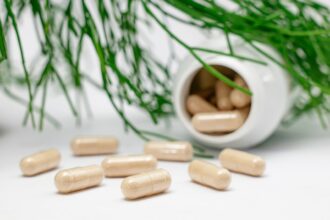
Chart showing lutein content in leafy greens, eggs, and corn—dietary sources for macular pigment health
Lutein and zeaxanthin, dietary carotenoid pigments, concentrate in the retina's macula where they filter high-energy blue light before it damages light-sensitive cells. Studies show macular pigment density increases over weeks to months with consistent dietary intake of approximately 10 mg lutein and 2 mg zeaxanthin daily. — Photo by Nothing Ahead on Pexels (Pexels License)
SHARE
1 min read|102 words

A single half-cup serving of cooked kale provides 10–12 mg of lutein, surpassing all other commonly consumed foods in lutein density. This makes leafy greens an efficient dietary strategy for supporting macular health and preventing age-related vision loss.

Clinical studies reveal that macular pigment density—the eye’s built-in blue-light filter—increases measurably within 4–8 weeks of consistent dietary intake meeting the 10 mg daily lutein threshold. Cooked spinach (8 mg per half cup) and egg yolks (0.5 mg with superior bioavailability) offer complementary sources. This measurable physiological response underscores the importance of consistent, long-term dietary support as foundational preventive ophthalmology.

Read the full article on GMJ Newsroom.

Was this article helpful?

GMJ Brief · Key Finding

📰 Read the full article: How Lutein and Zeaxanthin Protect Your Retina from Blue Light Damage →

Related reference
  • Lutein · Ingredient
Share This Article
Facebook LinkedIn Bluesky Copy Link Print
GMJ
ByProf. Giorgi Pkhakadze
Follow:
Prof. Giorgi Pkhakadze, MD, MPH, PhD, is Editor-in-Chief of the Georgian Medical Journal and Chair of the Public Health Institute of Georgia (PHIG). He is Professor and Head of the Department of Social and Behavioural Sciences at David Tvildiani Medical University, and Secretary/Treasurer of the UEMS Section of Public Health. ORCID: 0000-0001-7609-4515.

Submit Your Paper →

Georgia's peer-reviewed open-access medical journal. No APC until January 2027.
Submit Manuscript →
Expanding Heart Failure Care With Pharmacists and Nurse Practitioners Cuts Costs and Saves Lives

An economic analysis in the Canadian Journal of Cardiology demonstrates that integrating…

Assistive Technology Access in Sri Lanka Reveals Stark Disparities Across Age, Sex, and Geography

A mixed-methods study in The Lancet Regional Asia documents how age, sex,…

Physicians as Political Voices: 250 Years of Medicine and American Democracy

A New England Journal of Medicine historical analysis examines 250 years of…

Submit Your Paper to GMJ

No APC until January 2027.
Submit Manuscript →

You Might Also Like

WOAH laboratory network showing digital monitoring systems and global connectivity

WOAH Modernizes Global Veterinary Laboratory Standards Without Compromising Scientific Rigor

By
Prof. Giorgi Pkhakadze
27/06/2026
FDA medical device early alert notification for non-sterile alcohol prep pads

Non-Sterile Medical Prep Pads: A Critical Patient Safety Gap Identified

By
Prof. Giorgi Pkhakadze
24/07/2026
Ophthalmologic image showing diabetic retinopathy neovascularization of optic disk

Global Diabetes Crisis Drives Rising Burden of Diabetic Retinopathy Complications

By
Prof. Giorgi Pkhakadze
27/06/2026
Infographic showing daily micronutrient targets for thyroid health: iodine 150 mcg, selenium 55-100 mcg, tyrosine 500-1000 mg

Announcement: Thyroid Health Requires Nutritional Balance: Why Iodine, Selenium, and Tyrosine Work as a System

By
Prof. Giorgi Pkhakadze
29/07/2026
Facebook Twitter Youtube Instagram
Company
  • Privacy Policy
  • Contact US
  • GMJ Journal
  • Submit Manuscript
  • Editorial Team
  • Register at GMJ
  • Terms of Use

Subscribe to GMJ News — Click here

Join Community
© 2026 Georgian Medical Journal (GMJ). Published by the Public Health Institute of Georgia (PHIG). All rights reserved.
Welcome Back!

Sign in to your account

Username or Email Address
Password

Lost your password?

Not a member? Sign Up