By using this site, you agree to the Privacy Policy and Terms of Use.
Accept
GMJ NewsGMJ NewsGMJ News
  • Latest News
    • GMJ Briefs
  • Podcast & Media
    • Podcast Episodes
    • GMJ Audio
    • GMJ Videos
  • Research Digest
    • New Studies
    • Georgian Research
    • Data & Numbers
  • Policy & Systems
    • Health Policy
    • Quality & Safety
    • Migration & Health
    • Global Health
  • Practice
    • Clinical Updates
    • Case Discussions
    • Pharmacy & Prescribing
    • Ingredients A-Z
  • Perspectives
    • Editorial
    • Explainers
    • Voices
    • Letters
  • Health Topics
  • GMJ Articles
    • Vol. 1 Issue 2 (2026)
    • Vol. 1 Issue 1 (2026)
    • Pre-Launch Articles (2025)
  • Read the Journal →
  • About GMJ News
Notification Show More
Font ResizerAa
GMJ NewsGMJ News
Font ResizerAa
  • Latest News
    • GMJ Briefs
  • Podcast & Media
    • Podcast Episodes
    • GMJ Audio
    • GMJ Videos
  • Research Digest
    • New Studies
    • Georgian Research
    • Data & Numbers
  • Policy & Systems
    • Health Policy
    • Quality & Safety
    • Migration & Health
    • Global Health
  • Practice
    • Clinical Updates
    • Case Discussions
    • Pharmacy & Prescribing
    • Ingredients A-Z
  • Perspectives
    • Editorial
    • Explainers
    • Voices
    • Letters
  • Health Topics
  • GMJ Articles
    • Vol. 1 Issue 2 (2026)
    • Vol. 1 Issue 1 (2026)
    • Pre-Launch Articles (2025)
  • Read the Journal →
  • About GMJ News
Follow US
GMJ News > GMJ Briefs > Key Finding: Why creatine works in muscle but not the brain—yet

Key Finding: Why creatine works in muscle but not the brain—yet

GMJ
Last updated: 11/08/2026 13:29
By
Prof. Giorgi Pkhakadze
Share
0 Min Read
Diagram comparing creatine transport in muscle versus brain tissue across blood–brain barrier
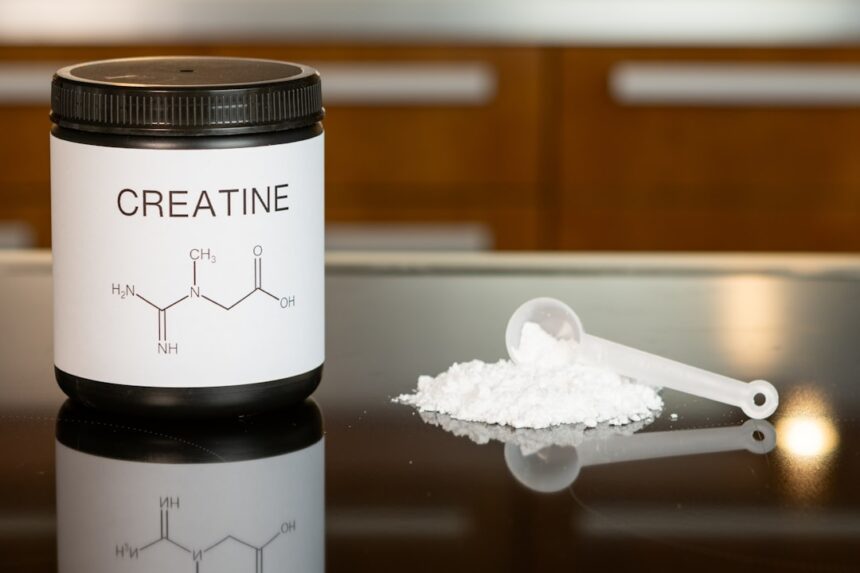
Creatine supplementation raises muscle creatine by 20–50% in days, but brain creatine increases by only 4% due to the blood–brain barrier. A meta-analysis of 16 randomised controlled trials found cognitive improvements in stressed or fatigued populations, but evidence in healthy people remains sparse. — Photo by Alex Saks on Unsplash (Unsplash License)
SHARE
1 min read|32 words

Creatine muscle penetration: 20–50% in days. Brain penetration: 4%. The blood–brain barrier is the reason. Standard supplement doses barely reach neurons—even 4× doses top out at 9–11%.

Read the full article on GMJ Newsroom →

Was this article helpful?

GMJ Brief · Key Finding

📰 Read the full article: Why creatine works in muscle but not the brain—yet →

Related reference
  • Creatine · Ingredient
Share This Article
Facebook LinkedIn Bluesky Copy Link Print
GMJ
ByProf. Giorgi Pkhakadze
Follow:
Prof. Giorgi Pkhakadze, MD, MPH, PhD, is Editor-in-Chief of the Georgian Medical Journal and Chair of the Public Health Institute of Georgia (PHIG). He is Professor and Head of the Department of Social and Behavioural Sciences at David Tvildiani Medical University, and Secretary/Treasurer of the UEMS Section of Public Health. ORCID: 0000-0001-7609-4515.

Submit Your Paper →

Georgia's peer-reviewed open-access medical journal. No APC until January 2027.
Submit Manuscript →
UK Medical Device Manufacturers Must Navigate New MHRA Registration System Post-Brexit

Medical device manufacturers must now register separately with the UK's MHRA for…

Aging Activates Belly Fat Stem Cells: New Clues to Middle-Age Weight Gain

Aging activates specialized stem cells in abdominal tissue that accelerate belly fat…

Why Scratching Insect Bites Worsens Itching: The Science Behind the Itch-Scratch Cycle

Scratching insect bites temporarily masks itching through nerve activation but triggers a…

Submit Your Paper to GMJ

No APC until January 2027.
Submit Manuscript →

You Might Also Like

Medical illustration showing osteomyelitis bone infection with diagnostic imaging

Advanced Imaging and Oral Antibiotics Transform Osteomyelitis Clinical Practice

By
Prof. Giorgi Pkhakadze
29/06/2026
Infographic showing seven amino acids and their neurological functions in synaptic plasticity, neurotransmission, and cognitive regulation

Seven Essential Amino Acids: The Nutritional Foundation of Brain Health

By
Prof. Giorgi Pkhakadze
25/07/2026
Diphtheria prevention through DTP vaccine coverage assessment chart showing vaccination effectiveness across population groups

Americas Face Diphtheria Resurgence as PAHO Launches Vaccination Campaign

By
Prof. Giorgi Pkhakadze
17/07/2026
Medical laboratory technician analyzing blood samples for multicancer detection testing

What Multicancer Blood Tests Must Prove Before Reaching NHS Patients

By
Prof. Giorgi Pkhakadze
08/08/2026
Facebook Twitter Youtube Instagram
Company
  • Privacy Policy
  • Contact US
  • GMJ Journal
  • Submit Manuscript
  • Editorial Team
  • Register at GMJ
  • Terms of Use

Subscribe to GMJ News — Click here

Join Community
© 2026 Georgian Medical Journal (GMJ). Published by the Public Health Institute of Georgia (PHIG). All rights reserved.
Welcome Back!

Sign in to your account

Username or Email Address
Password

Lost your password?

Not a member? Sign Up