By using this site, you agree to the Privacy Policy and Terms of Use.
Accept
GMJ NewsGMJ NewsGMJ News
  • Latest News
    • GMJ Briefs
  • Podcast & Media
    • Podcast Episodes
    • GMJ Audio
    • GMJ Videos
  • Research Digest
    • New Studies
    • Georgian Research
    • Data & Numbers
  • Policy & Systems
    • Health Policy
    • Quality & Safety
    • Migration & Health
    • Global Health
  • Practice
    • Clinical Updates
    • Case Discussions
    • Pharmacy & Prescribing
    • Ingredients A-Z
  • Perspectives
    • Editorial
    • Explainers
    • Voices
    • Letters
  • GMJ Articles
    • Vol. 1 Issue 2 (2026)
    • Vol. 1 Issue 1 (2026)
    • Pre-Launch Articles (2025)
  • Read the Journal →
  • About GMJ News
Notification Show More
Font ResizerAa
GMJ NewsGMJ News
Font ResizerAa
  • Latest News
    • GMJ Briefs
  • Podcast & Media
    • Podcast Episodes
    • GMJ Audio
    • GMJ Videos
  • Research Digest
    • New Studies
    • Georgian Research
    • Data & Numbers
  • Policy & Systems
    • Health Policy
    • Quality & Safety
    • Migration & Health
    • Global Health
  • Practice
    • Clinical Updates
    • Case Discussions
    • Pharmacy & Prescribing
    • Ingredients A-Z
  • Perspectives
    • Editorial
    • Explainers
    • Voices
    • Letters
  • GMJ Articles
    • Vol. 1 Issue 2 (2026)
    • Vol. 1 Issue 1 (2026)
    • Pre-Launch Articles (2025)
  • Read the Journal →
  • About GMJ News
Follow US
GMJ News > GMJ Briefs > Millions of Sudanese Students Face Educational Disruption: UNICEF Insists on Equal Exam Access

Millions of Sudanese Students Face Educational Disruption: UNICEF Insists on Equal Exam Access

GMJ
Last updated: 10/07/2026 20:43
By
Prof. Giorgi Pkhakadze
Share
1 Min Read
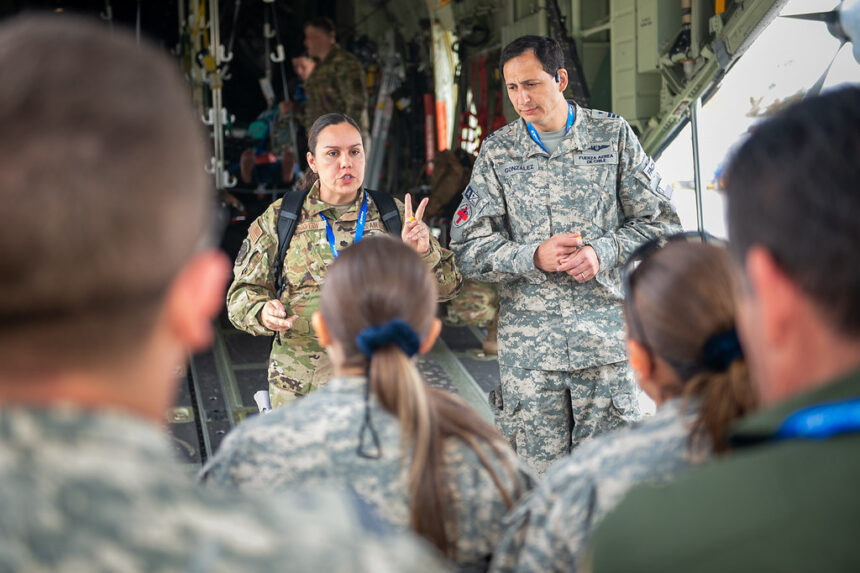
Sudanese students in classroom setting representing educational access challenges
UNICEF calls for equal access to national examinations for all Sudanese students amid ongoing conflict that has displaced millions and disrupted educational systems. The organization emphasizes the fundamental right to education during humanitarian crises. — "Texas National Guard" by The National Guard is licensed under CC BY 2.0. To view a copy of this license, visit https://creativecommons.org/licenses/by/2.0/. (CC BY 2.0)
SHARE
1 min read|144 words

According to UNICEF’s latest assessment, millions of Sudanese students currently experience severe educational disruption as a direct consequence of the country’s ongoing conflict. Despite this massive scale of disruption, the organization maintains that all affected students must retain equal access to national examinations, regardless of their current location or displacement status.

The educational crisis extends beyond temporary school closures, affecting the fundamental ability of children to participate in standardized assessments that determine academic progression. Schools across Sudan have been significantly impacted by conflict-related damage and insecurity, creating systemic barriers that disproportionately affect already vulnerable populations.

UNICEF’s emphasis on equitable exam access reflects evidence that educational continuity during humanitarian crises supports children’s psychological wellbeing and future opportunities. The organization’s data underscores the urgent need for international coordination to ensure that crisis-affected students receive both protection and educational support.

Read the full article on GMJ Newsroom.

Submit Your Paper
GMJ_Submit_Banner

Was this article helpful?

GMJ Brief · Key Finding

📰 Read the full article: UNICEF Calls for Equal Access to National Exams for All Sudanese Students Amid Ongoing Crisis →

Share This Article
Facebook LinkedIn Bluesky Copy Link Print
GMJ
ByProf. Giorgi Pkhakadze
Follow:
Prof. Giorgi Pkhakadze, MD, MPH, PhD, is Editor-in-Chief of the Georgian Medical Journal and Chair of the Public Health Institute of Georgia (PHIG). He is Professor and Head of the Department of Social and Behavioural Sciences at David Tvildiani Medical University, and Secretary/Treasurer of the UEMS Section of Public Health. ORCID: 0000-0001-7609-4515.

Submit Your Paper →

Georgia's peer-reviewed open-access medical journal. No APC until January 2027.
Submit Manuscript →
Apigenin Shows Promise in Lab Studies, But Human Evidence Remains Elusive

Apigenin, a plant compound featured in sleep and longevity supplements, has demonstrated…

Light roast coffee retains highest chlorogenic acid levels, study shows

Light roast coffee preserves 8.0 mg/g of chlorogenic acids compared to 4.35…

Zinc depletion in athletes: why the standard RDA falls short during training

The human body stores only ~2 grams of zinc with no physiological…

Submit Your Paper to GMJ

No APC until January 2027.
Submit Manuscript →

You Might Also Like

PHEIC Declaration: Ebola Outbreak – DRC with Cross-Border Transmission to Uganda

By
Prof. Giorgi Pkhakadze
31/05/2026
Clinical UpdatesGlobal HealthPolicy & SystemsPractice

WHO Approves First Diagnostic Test for Ebola Bundibugyo Virus Amid Outbreak Response

By
Prof. Giorgi Pkhakadze
15/07/2026
Medical illustration showing kidney protection with finerenone drug therapy

Data Point: Finerenone Cuts Kidney Disease Progression by 23% in Non-Diabetic Populations

By
Prof. Giorgi Pkhakadze
08/07/2026
New StudiesResearch Digest

Uganda Cuts Cholera-Endemic Districts From 36 to Six Through Mass Vaccination Campaign

By
Prof. Giorgi Pkhakadze
26/05/2026
Facebook Twitter Youtube Instagram
Company
  • Privacy Policy
  • Contact US
  • GMJ Journal
  • Submit Manuscript
  • Editorial Team
  • Register at GMJ
  • Terms of Use

Subscribe to GMJ News — Click here

Join Community
© 2026 Georgian Medical Journal (GMJ). Published by the Public Health Institute of Georgia (PHIG). All rights reserved.
Welcome Back!

Sign in to your account

Username or Email Address
Password

Lost your password?

Not a member? Sign Up