By using this site, you agree to the Privacy Policy and Terms of Use.
Accept
GMJ NewsGMJ NewsGMJ News
  • Latest News
    • GMJ Briefs
  • Podcast & Media
    • Podcast Episodes
    • GMJ Audio
    • GMJ Videos
  • Research Digest
    • New Studies
    • Georgian Research
    • Data & Numbers
  • Policy & Systems
    • Health Policy
    • Quality & Safety
    • Migration & Health
    • Global Health
  • Practice
    • Clinical Updates
    • Case Discussions
    • Pharmacy & Prescribing
    • Ingredients A-Z
  • Perspectives
    • Editorial
    • Explainers
    • Voices
    • Letters
  • GMJ Articles
    • Vol. 1 Issue 2 (2026)
    • Vol. 1 Issue 1 (2026)
    • Pre-Launch Articles (2025)
  • Read the Journal →
  • About GMJ News
Notification Show More
Font ResizerAa
GMJ NewsGMJ News
Font ResizerAa
  • Latest News
    • GMJ Briefs
  • Podcast & Media
    • Podcast Episodes
    • GMJ Audio
    • GMJ Videos
  • Research Digest
    • New Studies
    • Georgian Research
    • Data & Numbers
  • Policy & Systems
    • Health Policy
    • Quality & Safety
    • Migration & Health
    • Global Health
  • Practice
    • Clinical Updates
    • Case Discussions
    • Pharmacy & Prescribing
    • Ingredients A-Z
  • Perspectives
    • Editorial
    • Explainers
    • Voices
    • Letters
  • GMJ Articles
    • Vol. 1 Issue 2 (2026)
    • Vol. 1 Issue 1 (2026)
    • Pre-Launch Articles (2025)
  • Read the Journal →
  • About GMJ News
Follow US
GMJ News > GMJ Briefs > New Data: Six Protein Targets and 13 Drug Candidates Could Accelerate MS Therapy Development

New Data: Six Protein Targets and 13 Drug Candidates Could Accelerate MS Therapy Development

GMJ
Last updated: 20/07/2026 16:06
By
Prof. Giorgi Pkhakadze
Share
1 Min Read
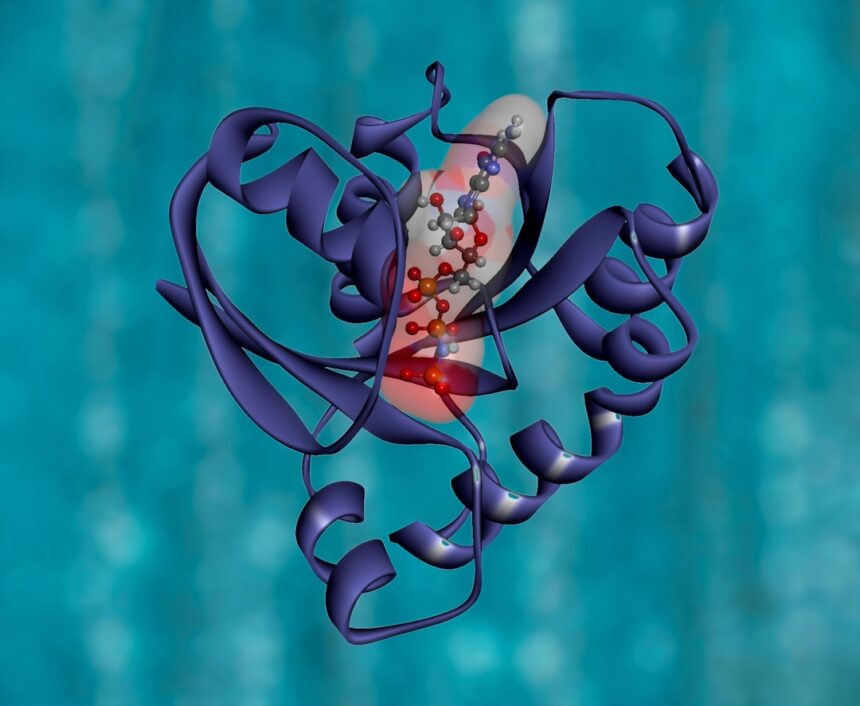
Scientific illustration showing protein targets and drug molecules for multiple sclerosis research
Researchers identify six protein targets and 13 drug repurposing opportunities for progressive multiple sclerosis treatment. The findings could accelerate development of new therapies for this challenging neurological condition. — Photo by National Cancer Institute on Unsplash (Unsplash License)
SHARE
1 min read|153 words

A major research finding offers quantifiable hope for progressive multiple sclerosis patients: six protein targets have been identified alongside thirteen existing drugs showing potential for therapeutic repurposing. This discovery could fundamentally compress treatment development timelines, potentially reducing the typical decades-long drug development process to just years. The significance of drug repurposing cannot be overstated—existing pharmaceuticals that have already undergone safety testing can be redirected toward new therapeutic applications much faster than developing entirely novel compounds. For the progressive MS population, which currently faces severely limited treatment options, this acceleration represents a critical advancement. The targeted approach based on these specific protein pathways stands in contrast to conventional therapies that provide only modest benefits for progressive disease sufferers. With approximately 2.8 million MS patients worldwide, many of whom experience progressive forms, this research offers both scientific validation and practical momentum toward addressing a significant unmet clinical need. Read the full article on GMJ Newsroom.

Was this article helpful?

GMJ Brief · Key Finding

📰 Read the full article: Six protein targets offer new pathways for progressive multiple sclerosis treatment →

Related reference
  • Multiple Sclerosis · Condition
Share This Article
Facebook LinkedIn Bluesky Copy Link Print
GMJ
ByProf. Giorgi Pkhakadze
Follow:
Prof. Giorgi Pkhakadze, MD, MPH, PhD, is Editor-in-Chief of the Georgian Medical Journal and Chair of the Public Health Institute of Georgia (PHIG). He is Professor and Head of the Department of Social and Behavioural Sciences at David Tvildiani Medical University, and Secretary/Treasurer of the UEMS Section of Public Health. ORCID: 0000-0001-7609-4515.

Submit Your Paper →

Georgia's peer-reviewed open-access medical journal. No APC until January 2027.
Submit Manuscript →
Brain’s Support Cells Hold Key to Mental Health: How Astrocytes, Microglia, and Oligodendrocytes Shape Resilience

The human brain is far more than neurons alone. Astrocytes, microglia, and…

Apigenin Shows Promise in Lab Studies, But Human Evidence Remains Elusive

Apigenin, a plant compound featured in sleep and longevity supplements, has demonstrated…

Light roast coffee retains highest chlorogenic acid levels, study shows

Light roast coffee preserves 8.0 mg/g of chlorogenic acids compared to 4.35…

Submit Your Paper to GMJ

No APC until January 2027.
Submit Manuscript →

You Might Also Like

Diagram showing gut-brain circadian communication pathways

Three Critical Ways Your Gut Bacteria Influence Sleep Quality and Metabolic Health

By
Prof. Giorgi Pkhakadze
27/06/2026
Various magnesium supplement bottles and capsules arranged on laboratory bench

Eight Magnesium Forms Deliver Comparable Benefits, Data Shows

By
Prof. Giorgi Pkhakadze
09/06/2026
Children using digital mental health platform showing emotional well-being improvement graphs

Danish Study Validates Digital Platform for Supporting Children Through Divorce

By
Prof. Giorgi Pkhakadze
31/05/2026
FDA Class I recall notice for VOCSN V+Pro ventilators showing medical device safety alert

Class I Recall Alert: Understanding the Highest Level of FDA Medical Device Risk Classification

By
Prof. Giorgi Pkhakadze
07/06/2026
Facebook Twitter Youtube Instagram
Company
  • Privacy Policy
  • Contact US
  • GMJ Journal
  • Submit Manuscript
  • Editorial Team
  • Register at GMJ
  • Terms of Use

Subscribe to GMJ News — Click here

Join Community
© 2026 Georgian Medical Journal (GMJ). Published by the Public Health Institute of Georgia (PHIG). All rights reserved.
Welcome Back!

Sign in to your account

Username or Email Address
Password

Lost your password?

Not a member? Sign Up