By using this site, you agree to the Privacy Policy and Terms of Use.
Accept
GMJ NewsGMJ NewsGMJ News
  • Latest News
    • GMJ Briefs
  • Podcast & Media
    • Podcast Episodes
    • GMJ Audio
    • GMJ Videos
  • Research Digest
    • New Studies
    • Georgian Research
    • Data & Numbers
  • Policy & Systems
    • Health Policy
    • Quality & Safety
    • Migration & Health
    • Global Health
  • Practice
    • Clinical Updates
    • Case Discussions
    • Pharmacy & Prescribing
    • Ingredients A-Z
  • Perspectives
    • Editorial
    • Explainers
    • Voices
    • Letters
  • GMJ Articles
    • Vol. 1 Issue 2 (2026)
    • Vol. 1 Issue 1 (2026)
    • Pre-Launch Articles (2025)
  • Read the Journal →
  • About GMJ News
Notification Show More
Font ResizerAa
GMJ NewsGMJ News
Font ResizerAa
  • Latest News
    • GMJ Briefs
  • Podcast & Media
    • Podcast Episodes
    • GMJ Audio
    • GMJ Videos
  • Research Digest
    • New Studies
    • Georgian Research
    • Data & Numbers
  • Policy & Systems
    • Health Policy
    • Quality & Safety
    • Migration & Health
    • Global Health
  • Practice
    • Clinical Updates
    • Case Discussions
    • Pharmacy & Prescribing
    • Ingredients A-Z
  • Perspectives
    • Editorial
    • Explainers
    • Voices
    • Letters
  • GMJ Articles
    • Vol. 1 Issue 2 (2026)
    • Vol. 1 Issue 1 (2026)
    • Pre-Launch Articles (2025)
  • Read the Journal →
  • About GMJ News
Follow US
GMJ News > GMJ Briefs > One in Three Healthcare Students Report Barriers: New Data on Neurodivergent Learners

One in Three Healthcare Students Report Barriers: New Data on Neurodivergent Learners

GMJ
Last updated: 12/07/2026 00:43
By
Prof. Giorgi Pkhakadze
Share
1 Min Read
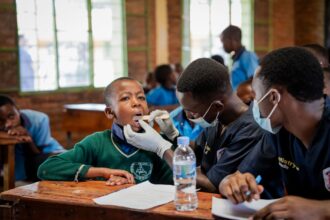
Diverse group of healthcare students in clinical setting representing inclusive medical education
New Australian research reveals neurodivergent students face significant stigma and support gaps in healthcare education programs. Study of 183 graduate students highlights need for inclusive teaching reforms. — Photo by Yusuf Çelik on Pexels (Pexels License)
SHARE
1 min read|143 words

A new survey of 183 graduate healthcare students across Australian universities provides quantifiable evidence of the challenges facing neurodivergent learners pursuing careers in medicine, nursing, and occupational therapy. The data reveals that these students experience stigma not only in traditional classroom settings but also during clinical placements—environments where they work directly with patients and established healthcare teams.

The research identifies a critical infrastructure problem: institutional support systems designed to assist neurodivergent students are difficult to navigate and frequently inadequate for their needs. This finding has significant implications for healthcare education policy and practice. As universities continue to admit diverse student populations, the infrastructure supporting neurodivergent learners must evolve to match their actual needs. The study provides essential evidence that current support models are insufficient, requiring urgent institutional investment and systemic redesign across Australian healthcare education programs.

Read the full article on GMJ Newsroom.

Was this article helpful?

GMJ Brief · Key Finding

📰 Read the full article: Neurodivergent students face barriers in healthcare education, Australian study finds →

Related reference
  • Iron · Ingredient
Share This Article
Facebook LinkedIn Bluesky Copy Link Print
GMJ
ByProf. Giorgi Pkhakadze
Follow:
Prof. Giorgi Pkhakadze, MD, MPH, PhD, is Editor-in-Chief of the Georgian Medical Journal and Chair of the Public Health Institute of Georgia (PHIG). He is Professor and Head of the Department of Social and Behavioural Sciences at David Tvildiani Medical University, and Secretary/Treasurer of the UEMS Section of Public Health. ORCID: 0000-0001-7609-4515.

Submit Your Paper →

Georgia's peer-reviewed open-access medical journal. No APC until January 2027.
Submit Manuscript →
Global Atopic Dermatitis Burden Exceeds 400 Million Cases: Nature Reviews Updates Landmark Evidence

An updated analysis in Nature Reviews Disease Primers (June 2026) confirms atopic…

Myanmar’s Digital Divide Deepens as Conflict Intensifies: Unequal Internet Access Correlates With Worsening Social Isolation

A longitudinal analysis across Myanmar reveals profound digital inequalities that track with…

Why Food Labels Alone Won’t Stop Child Obesity in Latin America—Evidence From Ecuador

Latin American countries have implemented front-of-package warning labels and advertising restrictions, yet…

Submit Your Paper to GMJ

No APC until January 2027.
Submit Manuscript →

You Might Also Like

Parent distracted by phone while teenager sits nearby, illustrating parental screen time impact on adolescent attachment

Beyond Child Screen Time: How Parental Phone Use Shapes Adolescent Attachment

By
Prof. Giorgi Pkhakadze
18/07/2026
Brain neurons with vitamin D receptors controlling dopamine production

What Everyone Should Know About Vitamin D’s Role in Brain Health

By
Prof. Giorgi Pkhakadze
27/06/2026
Bar chart comparing mean player height by position in elite soccer

Beyond Height: How Position-Specific Demands Shape Elite Soccer Rosters

By
Prof. Giorgi Pkhakadze
21/07/2026
Medical researcher analyzing genetic test results for breast cancer treatment decisions

Minimal Survival Difference Challenges Chemotherapy Use in Intermediate-Risk Breast Cancer

By
Prof. Giorgi Pkhakadze
23/06/2026
Facebook Twitter Youtube Instagram
Company
  • Privacy Policy
  • Contact US
  • GMJ Journal
  • Submit Manuscript
  • Editorial Team
  • Register at GMJ
  • Terms of Use

Subscribe to GMJ News — Click here

Join Community
© 2026 Georgian Medical Journal (GMJ). Published by the Public Health Institute of Georgia (PHIG). All rights reserved.
Welcome Back!

Sign in to your account

Username or Email Address
Password

Lost your password?

Not a member? Sign Up