By using this site, you agree to the Privacy Policy and Terms of Use.
Accept
GMJ NewsGMJ NewsGMJ News
  • Latest News
    • GMJ Briefs
  • Podcast & Media
    • Podcast Episodes
    • GMJ Audio
    • GMJ Videos
  • Research Digest
    • New Studies
    • Georgian Research
    • Data & Numbers
  • Policy & Systems
    • Health Policy
    • Quality & Safety
    • Migration & Health
    • Global Health
  • Practice
    • Clinical Updates
    • Case Discussions
    • Pharmacy & Prescribing
    • Ingredients A-Z
  • Perspectives
    • Editorial
    • Explainers
    • Voices
    • Letters
  • GMJ Articles
    • Vol. 1 Issue 2 (2026)
    • Vol. 1 Issue 1 (2026)
    • Pre-Launch Articles (2025)
  • Read the Journal →
  • About GMJ News
Notification Show More
Font ResizerAa
GMJ NewsGMJ News
Font ResizerAa
  • Latest News
    • GMJ Briefs
  • Podcast & Media
    • Podcast Episodes
    • GMJ Audio
    • GMJ Videos
  • Research Digest
    • New Studies
    • Georgian Research
    • Data & Numbers
  • Policy & Systems
    • Health Policy
    • Quality & Safety
    • Migration & Health
    • Global Health
  • Practice
    • Clinical Updates
    • Case Discussions
    • Pharmacy & Prescribing
    • Ingredients A-Z
  • Perspectives
    • Editorial
    • Explainers
    • Voices
    • Letters
  • GMJ Articles
    • Vol. 1 Issue 2 (2026)
    • Vol. 1 Issue 1 (2026)
    • Pre-Launch Articles (2025)
  • Read the Journal →
  • About GMJ News
Follow US
GMJ News > GMJ Briefs > Only 0.14 g/dL: Why Vitamin C With Iron Supplements Falls Short

Only 0.14 g/dL: Why Vitamin C With Iron Supplements Falls Short

GMJ
Last updated: 05/08/2026 03:30
By
Prof. Giorgi Pkhakadze
Share
1 Min Read
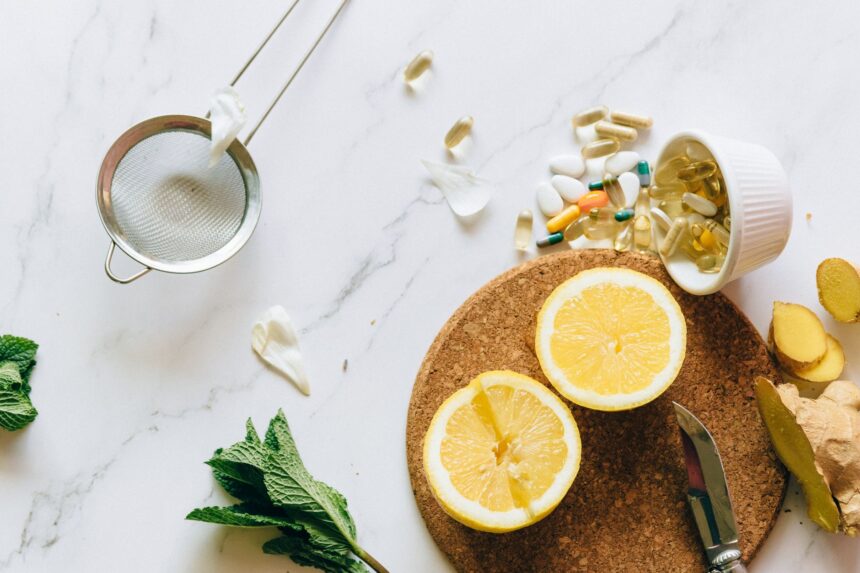
Medical chart comparing hemoglobin levels with and without vitamin C supplementation
Vitamin C enhances plant-based iron absorption through a well-documented biochemical mechanism, but clinical trials show it provides negligible benefit when added to ferrous iron supplements. A 2024 meta-analysis of 1,930 patients found hemoglobin increased by just 0.14 g/dL—too small to be clinically meaningful. — Photo by Nataliya Vaitkevich on Pexels (Pexels License)
SHARE
1 min read|143 words

When clinicians recommend adding vitamin C to iron supplements, they typically expect measurable improvements in hemoglobin and iron stores. But the numbers tell a different story. A 2024 meta-analysis examining 11 randomized controlled trials found that the hemoglobin increase from combining vitamin C with ferrous iron supplements was just 0.14 g/dL—a margin so small that researchers designated it clinically insignificant.

The pooled analysis, which encompassed 1,930 patients diagnosed with iron deficiency anemia, also documented a ferritin increase of only 3.23 mcg/L when vitamin C was added. This minimal response challenges the assumption that a well-established biochemical principle translates into meaningful clinical benefit. The data suggest that while vitamin C effectively enhances absorption of non-heme iron in food, supplemental vitamin C provides no substantial advantage when paired with ferrous iron medications that have already undergone the necessary chemical conversion.

Read the full article on GMJ Newsroom.

Was this article helpful?

GMJ Brief · Key Finding

📰 Read the full article: Vitamin C and Iron Supplements: The Evidence Falls Short of the Hype →

Related reference
  • Iron supplements · Drug
  • Vitamin C · Ingredient
  • Iron · Ingredient
Share This Article
Facebook LinkedIn Bluesky Copy Link Print
GMJ
ByProf. Giorgi Pkhakadze
Follow:
Prof. Giorgi Pkhakadze, MD, MPH, PhD, is Editor-in-Chief of the Georgian Medical Journal and Chair of the Public Health Institute of Georgia (PHIG). He is Professor and Head of the Department of Social and Behavioural Sciences at David Tvildiani Medical University, and Secretary/Treasurer of the UEMS Section of Public Health. ORCID: 0000-0001-7609-4515.

Submit Your Paper →

Georgia's peer-reviewed open-access medical journal. No APC until January 2027.
Submit Manuscript →
Purple Urine Bag Syndrome: A Rare but Treatable Condition in Long-Term Care

Purple urine bag syndrome is a rare but benign condition affecting catheterised…

Cancer Survivors in Their Teens and Twenties Face Unique Long-Term Health Risks

Adolescents and young adults surviving cancer face distinct long-term complications and psychosocial…

Indiana Enacts Hospital Price Caps as States Challenge Healthcare Cost Growth

Indiana has enacted direct price caps on hospital charges to employers, becoming…

Submit Your Paper to GMJ

No APC until January 2027.
Submit Manuscript →

You Might Also Like

🚨 Ebola: Outbreak cases are “tip of iceberg,” says Africa CDC official at centre of epidemic

By
Prof. Giorgi Pkhakadze
20/06/2026
Medical researchers analyzing viral genomic sequences in laboratory setting

What Healthcare Providers Should Know About Uganda’s 2026 Bundibugyo Virus Case

By
Prof. Giorgi Pkhakadze
27/07/2026
Brain-computer interface electrode array implanted in motor cortex for speech and cursor control restoration

ALS Patient Achieves Independent Speech Recovery Using Home-Based Brain-Computer Interface

By
Prof. Giorgi Pkhakadze
18/07/2026
Medical illustration showing regional nerve block procedure for cardiac surgery pain management

What Cardiac Surgeons Need to Know: Practical Benefits of SPIP Nerve Blocks

By
Prof. Giorgi Pkhakadze
29/06/2026
Facebook Twitter Youtube Instagram
Company
  • Privacy Policy
  • Contact US
  • GMJ Journal
  • Submit Manuscript
  • Editorial Team
  • Register at GMJ
  • Terms of Use

Subscribe to GMJ News — Click here

Join Community
© 2026 Georgian Medical Journal (GMJ). Published by the Public Health Institute of Georgia (PHIG). All rights reserved.
Welcome Back!

Sign in to your account

Username or Email Address
Password

Lost your password?

Not a member? Sign Up