By using this site, you agree to the Privacy Policy and Terms of Use.
Accept
GMJ NewsGMJ NewsGMJ News
  • Latest News
    • GMJ Briefs
  • Podcast & Media
    • Podcast Episodes
    • GMJ Audio
    • GMJ Videos
  • Research Digest
    • New Studies
    • Georgian Research
    • Data & Numbers
  • Policy & Systems
    • Health Policy
    • Quality & Safety
    • Migration & Health
    • Global Health
  • Practice
    • Clinical Updates
    • Case Discussions
    • Pharmacy & Prescribing
    • Ingredients A-Z
  • Perspectives
    • Editorial
    • Explainers
    • Voices
    • Letters
  • GMJ Articles
    • Vol. 1 Issue 2 (2026)
    • Vol. 1 Issue 1 (2026)
    • Pre-Launch Articles (2025)
  • Read the Journal →
  • About GMJ News
Notification Show More
Font ResizerAa
GMJ NewsGMJ News
Font ResizerAa
  • Latest News
    • GMJ Briefs
  • Podcast & Media
    • Podcast Episodes
    • GMJ Audio
    • GMJ Videos
  • Research Digest
    • New Studies
    • Georgian Research
    • Data & Numbers
  • Policy & Systems
    • Health Policy
    • Quality & Safety
    • Migration & Health
    • Global Health
  • Practice
    • Clinical Updates
    • Case Discussions
    • Pharmacy & Prescribing
    • Ingredients A-Z
  • Perspectives
    • Editorial
    • Explainers
    • Voices
    • Letters
  • GMJ Articles
    • Vol. 1 Issue 2 (2026)
    • Vol. 1 Issue 1 (2026)
    • Pre-Launch Articles (2025)
  • Read the Journal →
  • About GMJ News
Follow US
GMJ News > GMJ Briefs > Strong Statistical Agreement: Serological and Model-Based COVID-19 Estimates Converge

Strong Statistical Agreement: Serological and Model-Based COVID-19 Estimates Converge

GMJ
Last updated: 25/07/2026 10:52
By
Prof. Giorgi Pkhakadze
Share
1 Min Read
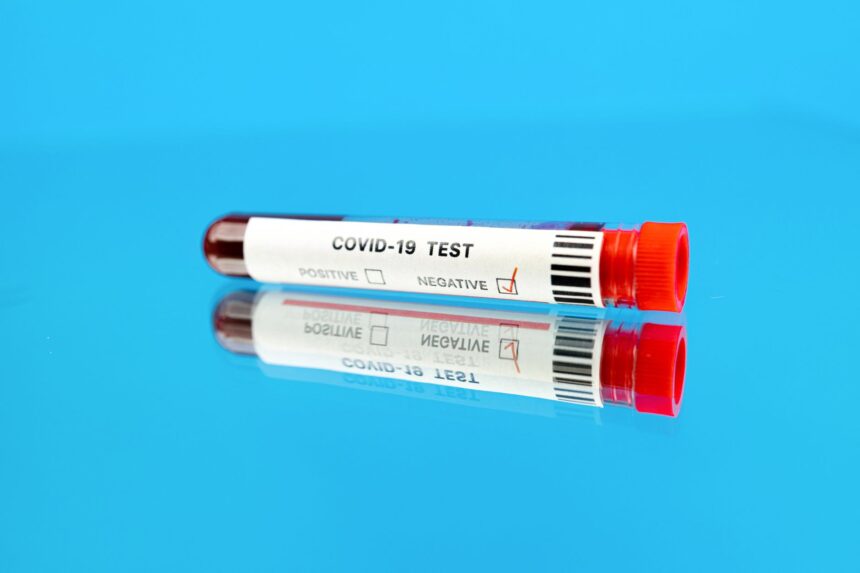
Comparative diagram showing serological survey (antibody measurement) and mathematical epidemiological model producing aligned COVID-19 burden estimates
A December 2026 study in Global Health Action confirms that serological surveys and mathematical epidemiological models produce concordant estimates of COVID-19 infection burden, validating both approaches as reliable tools for pandemic surveillance and retrospective assessment. — Photo by Maksim Goncharenok on Pexels (Pexels License)
SHARE
1 min read|111 words

A significant methodological validation emerged from recent pandemic research: serological testing and mathematical epidemiological models demonstrate strong concordance in estimating true COVID-19 infection burden. This finding, published in December 2026 in Global Health Action, provides quantitative confirmation that both approaches reliably detect actual infection patterns across diverse population groups.

The alignment between these independent measurement methods substantially reduces uncertainty in pandemic impact assessment. By confirming that antibody surveys and computational models produce comparable estimates, researchers have validated complementary surveillance tools that public health agencies can deploy with confidence. This statistical agreement strengthens the evidentiary foundation for pandemic response strategies and supports continued integration of serological and modeling approaches in disease surveillance infrastructure.

Was this article helpful?

GMJ Brief · Key Finding

📰 Read the full article: Serological Testing and Mathematical Models Align on True COVID-19 Burden →

Share This Article
Facebook LinkedIn Bluesky Copy Link Print
GMJ
ByProf. Giorgi Pkhakadze
Follow:
Prof. Giorgi Pkhakadze, MD, MPH, PhD, is Editor-in-Chief of the Georgian Medical Journal and Chair of the Public Health Institute of Georgia (PHIG). He is Professor and Head of the Department of Social and Behavioural Sciences at David Tvildiani Medical University, and Secretary/Treasurer of the UEMS Section of Public Health. ORCID: 0000-0001-7609-4515.

Submit Your Paper →

Georgia's peer-reviewed open-access medical journal. No APC until January 2027.
Submit Manuscript →
PQQ Shows Consistent Benefits for Inflammation, Energy, and Memory in Human Trials

Pyrroloquinoline quinone (PQQ), a naturally occurring micronutrient, shows consistent improvements in inflammatory…

Matcha vs Steeped Green Tea: Why Preparation Chemistry Matters More Than the Leaf

Matcha and steeped green tea contain the same plant but differ fundamentally…

Why women’s brains lose omega-3 protection: new insights from European Alzheimer’s study

A 2025 study in Alzheimer's & Dementia identifies a sex-specific mechanism: women…

Submit Your Paper to GMJ

No APC until January 2027.
Submit Manuscript →

You Might Also Like

Healthcare cost reduction chart showing potential savings from medically tailored meal interventions

Takeaway: Medically Tailored Meals Show Promise in Reducing Healthcare Costs, Nature Medicine Reports

By
Prof. Giorgi Pkhakadze
06/07/2026
Wearable device on wrist displaying health monitoring data for personalized depression treatment

Three Critical Insights on Machine Learning’s Role in Personalizing Depression Care

By
Prof. Giorgi Pkhakadze
27/06/2026
Global HealthPolicy & Systems

WHO Declares International Emergency for Ebola Outbreak Spreading from DRC to Uganda

By
Prof. Giorgi Pkhakadze
31/05/2026
Medical illustration showing immune system intervention preventing rheumatoid arthritis development

Study Reveals 25% of High-Risk Patients Avoided Rheumatoid Arthritis Entirely

By
Prof. Giorgi Pkhakadze
17/06/2026
Facebook Twitter Youtube Instagram
Company
  • Privacy Policy
  • Contact US
  • GMJ Journal
  • Submit Manuscript
  • Editorial Team
  • Register at GMJ
  • Terms of Use

Subscribe to GMJ News — Click here

Join Community
© 2026 Georgian Medical Journal (GMJ). Published by the Public Health Institute of Georgia (PHIG). All rights reserved.
Welcome Back!

Sign in to your account

Username or Email Address
Password

Lost your password?

Not a member? Sign Up