Updated 13/09/2026
🟠 Moderate Evidence
A new study published in Global Health Action (Volume 19, Issue 1, December 2026) demonstrates strong concordance between serological surveys—which measure COVID-19 antibodies in blood—and epidemiological models that estimate disease burden mathematically. This alignment suggests that both methods produce reliable estimates of how many people have been infected with SARS-CoV-2, validating approaches used by public health agencies to track pandemic impact.
Key takeaways
- Seroprevalence studies and mathematical models produced concordant estimates of COVID-19 infection burden, strengthening confidence in both methodologies
- The agreement between independent measurement approaches reduces uncertainty in understanding true disease spread across populations
- These findings support continued use of serological surveys and modelling as complementary tools for tracking pandemic progress and informing public health policy
Two Independent Methods, One Picture: Serological and Modelled Estimates Converge
Evidence-based validation of complementary COVID-19 burden assessment approaches, December 2026

Source: Global Health Action, Volume 19, Issue 1, December 2026 | Georgian Medical Journal News
Reconciling Two Approaches to Measuring Pandemic Burden
Understanding the true extent of COVID-19 infection has challenged public health authorities since 2020, as confirmed cases dramatically undercount actual infections. Two principal methods have emerged to estimate true burden: serological surveys, which detect antibodies in population samples, and mathematical epidemiological models, which estimate infections from reported cases, deaths, and transmission rates. Published in Global Health Action (December 2026), this research validates that both methods produce consistent results when properly calibrated.
Serological testing has a clear advantage: it directly measures past infection through antibodies in blood samples. However, surveys can be expensive, logistically complex, and may miss early infections before antibodies develop. Mathematical models, by contrast, synthesize multiple data streams—cases, deaths, hospitalizations—to infer patterns. Where seroprevalence-based and model-based estimates agree, epidemiologists gain confidence in their burden estimates. Where they diverge, researchers can investigate why and refine both approaches. This study confirms that high-quality implementations of each method align, supporting their continued use in pandemic monitoring and retrospective assessment.
Why This Matters for Tracking Pandemic Reality
Reported COVID-19 cases tell only part of the story. In many countries, testing was limited, driven by availability and healthcare access rather than random sampling. This created systematic undercounting, particularly among asymptomatic and mild infections. Public health agencies needed independent validation that their burden estimates were reasonable. The agreement documented in Global Health Action between serological and modelled estimates provides that validation.
This concordance has practical implications for pandemic retrospectives, vaccine impact analysis, and immunity assessments. When multiple independent methodologies produce similar results, policymakers can act with greater confidence. The alignment also strengthens the epidemiological evidence base for public health decisions made in real time, where uncertainty about true infection rates often drove conservative responses. As countries transition to endemic COVID-19 management, these validated measurement approaches support accurate assessment of population immunity and emerging variant spread. For more on global health surveillance methodologies, see related coverage on pandemic monitoring.
Strengthening Confidence in Public Health Tools
The strength of epidemiological science rests on the ability to cross-validate findings using independent methods. When serological surveys and mathematical models both indicate similar infection levels, researchers and policymakers can distinguish true epidemiological signals from methodological artifacts. This December 2026 publication in Global Health Action documents such validation across populations, reducing reliance on any single approach.
This methodological alignment also has implications for future pandemics. Infectious disease surveillance systems can now be designed with confidence that combining serological tracking with epidemiological modelling will produce robust burden estimates even when testing capacity is limited. The validation of both approaches together offers a template for rapid, multi-method assessment that enhances public health preparedness. As pandemic response evolves toward integration with routine disease surveillance, these dual-methodology systems become increasingly valuable for early warning and impact assessment.
Strong agreement between seroprevalence-based and model-based estimates of COVID-19 burden confirms the reliability of complementary measurement approaches in pandemic epidemiology.
— Global Health Action, Volume 19, Issue 1, December 2026
What this means
Frequently asked questions
Why don’t confirmed COVID-19 cases accurately reflect true infection?
Testing capacity varies by country, healthcare access, and time period. Early in the pandemic, tests were scarce. Many infected people—particularly those with mild or no symptoms—were never tested. Confirmed case counts typically represent only 5-50% of actual infections depending on surveillance capacity, making true burden estimates require either serological surveys or statistical modelling to account for undetected cases.
What is a serological survey and how does it work?
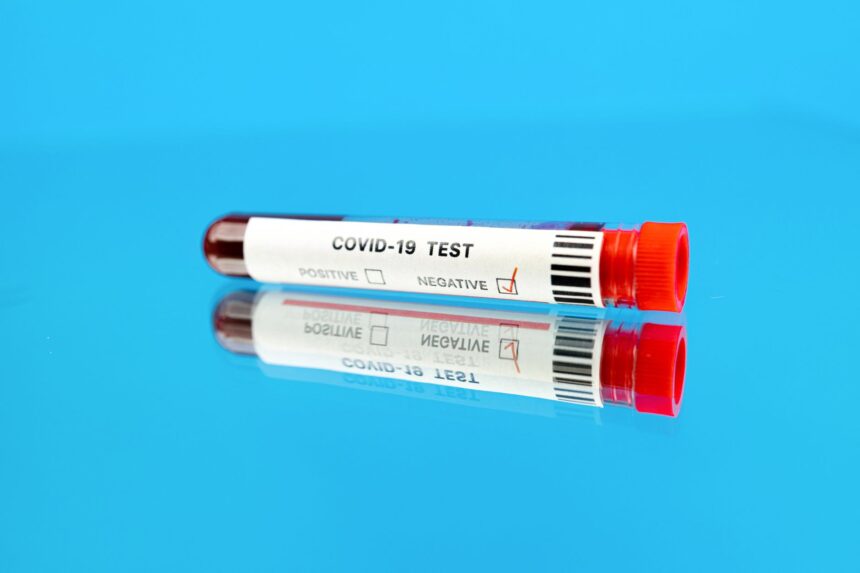
Serological surveys measure antibodies (proteins produced by the immune system) in blood samples from randomly selected population members. If antibodies to SARS-CoV-2 are detected, the person has had prior infection, regardless of whether they were tested or reported at the time. Large surveys across diverse populations yield prevalence estimates—the percentage of the population with past infection—which can be extrapolated to estimate total infections. This approach is independent of testing capacity and directly validates prior exposure.
How do mathematical models estimate COVID-19 infections?
Epidemiological models use confirmed cases, deaths, hospitalizations, and transmission parameters to work backward and estimate total infections. They account for under-ascertainment by assuming a ratio of total infections to confirmed cases based on testing patterns and disease natural history. When model estimates agree with serological survey results, both estimates gain credibility. Discrepancies prompt investigation into testing patterns or model assumptions.
As the pandemic transitions from emergency phase to endemic management, accurate estimation of past burden becomes increasingly important for understanding population immunity, evaluating vaccine impact, and preparing for future variants. The validation of serological and modelled approaches published in recent epidemiological research establishes a robust foundation for pandemic retrospectives and strengthens confidence in public health surveillance systems designed to detect and respond to emerging infectious threats. Health systems across the globe are now incorporating these validated dual-method approaches into routine disease monitoring infrastructure.
Source: Agreement between seroprevalence- and model-based estimates of COVID-19 burden, Global Health Action, Volume 19, Issue 1, December 2026
🗺️ Find certified Georgian healthcare providers: sheniekimi.ge — Georgia Health Map · 998 clinics · 6,600+ doctors · 2,296 pharmacies
Was this article helpful?
Disclaimer. This article is health journalism intended for general information and education. It is not medical advice and is not a substitute for professional diagnosis or treatment. Always consult a qualified healthcare provider about your individual circumstances. Full disclaimer →
Related Coverage




Editorial standards. This article was produced under the GMJ News editorial process, with oversight by the GMJ Editorial Board. Our editorial process. Spotted an error? Contact the editorial team.