By using this site, you agree to the Privacy Policy and Terms of Use.
Accept
GMJ NewsGMJ NewsGMJ News
  • Latest News
    • GMJ Briefs
  • Podcast & Media
    • Podcast Episodes
    • GMJ Audio
    • GMJ Videos
  • Research Digest
    • New Studies
    • Georgian Research
    • Data & Numbers
  • Policy & Systems
    • Health Policy
    • Quality & Safety
    • Migration & Health
    • Global Health
  • Practice
    • Clinical Updates
    • Case Discussions
    • Pharmacy & Prescribing
    • Ingredients A-Z
  • Perspectives
    • Editorial
    • Explainers
    • Voices
    • Letters
  • GMJ Articles
    • Vol. 1 Issue 2 (2026)
    • Vol. 1 Issue 1 (2026)
    • Pre-Launch Articles (2025)
  • Read the Journal →
  • About GMJ News
Notification Show More
Font ResizerAa
GMJ NewsGMJ News
Font ResizerAa
  • Latest News
    • GMJ Briefs
  • Podcast & Media
    • Podcast Episodes
    • GMJ Audio
    • GMJ Videos
  • Research Digest
    • New Studies
    • Georgian Research
    • Data & Numbers
  • Policy & Systems
    • Health Policy
    • Quality & Safety
    • Migration & Health
    • Global Health
  • Practice
    • Clinical Updates
    • Case Discussions
    • Pharmacy & Prescribing
    • Ingredients A-Z
  • Perspectives
    • Editorial
    • Explainers
    • Voices
    • Letters
  • GMJ Articles
    • Vol. 1 Issue 2 (2026)
    • Vol. 1 Issue 1 (2026)
    • Pre-Launch Articles (2025)
  • Read the Journal →
  • About GMJ News
Follow US
GMJ News > Policy & Systems > Global Health > 1 billion children exposed to multiple climate hazards simultaneously, UNICEF warns
Global HealthHealth PolicyMigration & HealthPolicy & Systems

1 billion children exposed to multiple climate hazards simultaneously, UNICEF warns

GMJ
Last updated: 09/07/2026 15:51
By
GMJ Policy Desk
Share
7 Min Read
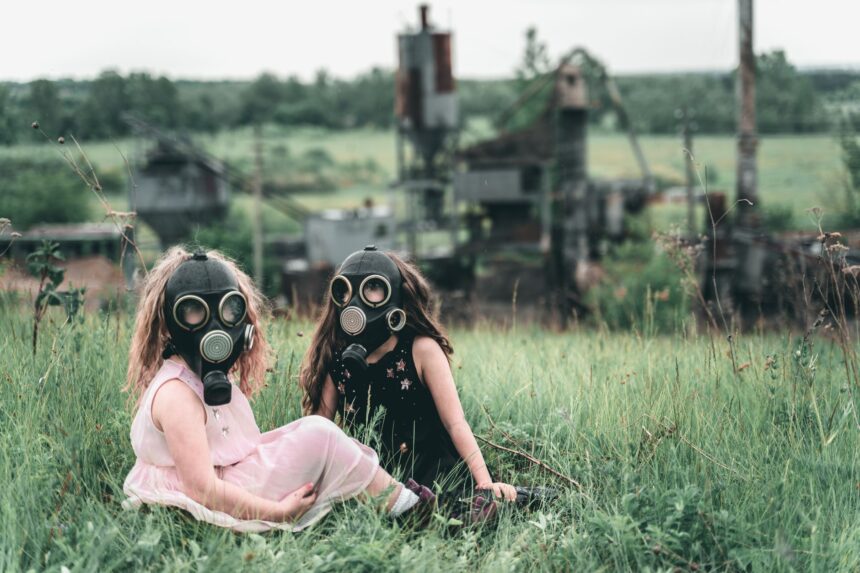
Global map showing regions of high child vulnerability to multiple climate hazardsIllustrative image · Photo by Ilya Perelude on Pexels (Pexels License)
UNICEF warns that over 1 billion children face three or more overlapping climate hazards simultaneously, with unequal exposure concentrating risk in low- and middle-income regions vulnerable to heat stress, flooding, drought, and air pollution combined. — Photo by Ilya Perelude on Pexels (Pexels License)
SHARE
4 min read|847 words
✓ Reviewed by Prof. Giorgi Pkhakadze, MD, MPH, PhD · ORCID 0000-0001-7609-4515

🟡 Preliminary Evidence

Contents
    • Key takeaways
      • Global child vulnerability to multiple climate hazards
  • Climate hazards compound health risks in vulnerable populations
  • Unequal geographic burden demands targeted intervention
  • Health systems must integrate climate adaptation into routine care
    • What this means
  • Frequently asked questions
    • How many climate hazards do children typically face simultaneously?
    • Which regions have the highest burden of multi-hazard climate exposure?
    • What health conditions are most directly linked to multiple simultaneous climate hazards?

More than 1 billion children globally face at least three overlapping climate hazards simultaneously, according to UNICEF‘s latest assessment released in June 2026. The finding underscores how climate risks compound across vulnerable populations, with children in certain regions experiencing disproportionately severe exposure to heat stress, flooding, drought, and air pollution in combination.

Key takeaways

  • Over 1 billion children are exposed to three or more overlapping climate hazards at the same time
  • Exposure is unequally distributed globally, with some regions facing far greater cumulative risk
  • Multiple simultaneous climate stressors amplify health risks beyond the impact of single hazards
  • Climate health vulnerability requires integrated public health and adaptation strategies across sectors
1 billion+
children facing three or more overlapping climate hazards simultaneously, according to UNICEF’s June 2026 assessment

Global child vulnerability to multiple climate hazards

Estimated number of children exposed to three or more simultaneous climate risks, by region type

1.0b
Global total exposed
Unequal
Regional distribution
3+
Hazards per child

Source: UNICEF, June 2026 | Georgian Medical Journal News

Submit Your Paper
GMJ_Submit_Banner

Climate hazards compound health risks in vulnerable populations

UNICEF‘s assessment demonstrates that children do not face climate threats in isolation. A child experiencing heat stress may simultaneously endure water scarcity and air pollution, creating multiplicative physiological strain. This confluence of hazards amplifies risks of respiratory disease, waterborne illness, malnutrition, and heat-related mortality beyond what any single stressor would produce.

🎙️ Related Podcast Episodes
🎧 #10 | WHO Child-Friendly Cities: Safe and Inclusive Public Spaces for Children · 18m
🎧 #44 | GMJ Podcast | Infant Formula Contamination — Global Food Safety Failure and the Cereulide Outbreak · 21m
🎧 #28 | GMJ Podcast | SheniEkimi.ge #1: Top 5 Evidence-Based Public Health News · 19m
🎧 #25 | WHO Warns: Childhood Hearing Loss Must Be Addressed Early · 19m
🎧 #23 | WHO: Next-Generation Influenza Vaccines Could Save Millions of Lives · 18m

The health implications of multi-hazard exposure are particularly acute in low- and middle-income countries, where healthcare infrastructure, water treatment systems, and early warning networks remain limited. Global health authorities increasingly recognise that climate adaptation strategies must address overlapping risks rather than treating hazards independently.

Unequal geographic burden demands targeted intervention

UNICEF emphasised in its June 2026 report that vulnerability is not randomly distributed. Certain regions—particularly in sub-Saharan Africa, South Asia, and low-lying island nations—face substantially higher cumulative exposure due to geographic, economic, and infrastructural factors. Children in these areas lack the healthcare access, water security, and climate resilience resources available to peers in high-income nations.

This disparity raises critical equity and human rights questions about climate justice. Children bear disproportionate health consequences despite contributing minimally to greenhouse gas emissions. Public health responses must therefore prioritise strengthening healthcare capacity, water systems, and climate adaptation infrastructure in the most vulnerable regions.

Health systems must integrate climate adaptation into routine care

Clinicians and health policymakers face an urgent imperative to embed climate health considerations into health policy and practice. Paediatricians and primary care physicians should routinely assess children’s exposure to heat, air pollution, and water insecurity as part of clinical assessment. Health facilities in vulnerable regions require strengthened capacity for heat illness management, diarrhoeal disease treatment, and malnutrition screening.

At the policy level, governments and international bodies must invest in climate-resilient health infrastructure, early warning systems, and integrated water-sanitation-hygiene programmes. The World Health Organization and UNICEF recommend mainstreaming climate health adaptation into national health plans and development budgets, particularly in regions where children face multiple concurrent hazards.

More than 1 billion children globally are exposed to three or more overlapping climate hazards simultaneously, with unequal distribution concentrating risk in low- and middle-income regions.

— UNICEF, June 2026 Assessment

What this means

For patients: Families in climate-vulnerable regions should understand that children may face cumulative health risks from heat, water quality, and air pollution. Parents should seek immediate care if children show signs of dehydration, respiratory distress, or diarrhoeal disease, especially during extreme weather events.
For clinicians: Paediatricians should integrate climate hazard assessment into routine care, screen for heat illness and water-related diseases in vulnerable populations, and advocate for strengthening health facility capacity to manage climate-related conditions.
For policymakers: Governments must prioritise climate adaptation funding for health infrastructure in vulnerable regions, establish heat-health early warning systems, ensure universal access to safe water and sanitation, and integrate climate resilience into national health strategies.

Frequently asked questions

How many climate hazards do children typically face simultaneously?

UNICEF’s June 2026 assessment found that over 1 billion children are exposed to three or more overlapping climate hazards at the same time. These hazards include heat stress, flooding, drought, and air pollution—often occurring in combination rather than isolation.

Which regions have the highest burden of multi-hazard climate exposure?

According to UNICEF, vulnerability is concentrated in low- and middle-income regions, particularly sub-Saharan Africa, South Asia, and low-lying island nations. These areas have limited healthcare infrastructure, water treatment capacity, and early warning systems to mitigate cumulative climate risks.

What health conditions are most directly linked to multiple simultaneous climate hazards?

Overlapping exposure to heat, poor air quality, and water insecurity significantly increases risk of respiratory disease, waterborne illness, malnutrition, heat stroke, and diarrhoeal disease. The combination of stressors creates compounding physiological strain beyond what single hazards would produce.

The UNICEF assessment signals an urgent shift in how global health systems conceptualise climate risk. Rather than preparing for isolated heat waves or droughts, health authorities must develop integrated strategies that address the simultaneous threats children face. This requires sustained investment in climate-resilient health infrastructure, particularly in the regions where the burden falls heaviest on the world’s most vulnerable populations.

Source: UNICEF June 2026 Assessment on Child Exposure to Multiple Climate Hazards

Was this article helpful?

Disclaimer. This article is health journalism intended for general information and education. It is not medical advice and is not a substitute for professional diagnosis or treatment. Always consult a qualified healthcare provider about your individual circumstances. Full disclaimer →

Related Coverage

Serological Testing and Mathematical Models Align on True COVID-19 BurdenJul 11, 2026
Mobile Health Tools Strengthen Tuberculosis Contact Tracing in Low-Resource SettingsJul 11, 2026
Return migrants in sub-Saharan Africa face persistent health barriers despite homecoming, scoping review findsJul 11, 2026
Mobile Phone Technology Offers Promise for Tracking Perinatal Deaths in Rural BangladeshJul 11, 2026
Related reference
  • Stroke · Condition
  • SAMe · Ingredient
PG
Written by
Prof. Giorgi Pkhakadze, MD, MPH, PhD
Editor-in-Chief, GMJ News
Full profile →  ·  ORCID 0000-0001-7609-4515
Medical disclaimer. This article is health journalism intended for general information. It is not medical advice and is not a substitute for consultation with a qualified healthcare professional. Always seek your physician's advice regarding any medical condition.
Medically reviewed by Prof. Giorgi Pkhakadze, MD, MPH, PhD. Spotted an error? Contact the editorial team.
Get the GMJ News digest
Evidence-based health journalism in your inbox. No spam; unsubscribe anytime.
TAGGED:child healthclimate adaptationclimate healthglobal-healthUNICEF
Share This Article
Facebook LinkedIn Bluesky Copy Link Print
GMJ
ByGMJ Policy Desk
Follow:
GMJ Policy Desk is part of GMJ News, the newsroom of the Georgian Medical Journal (gmj.ge), published by the Public Health Institute of Georgia. Every article is editorially reviewed before publication.
Leave a Comment Leave a Comment

Leave a Reply Cancel reply

Your email address will not be published. Required fields are marked *

Submit Your Paper →

Georgia's peer-reviewed open-access medical journal. No APC until January 2027.
Submit Manuscript →
Nasal spray reaches women’s brains differently across menstrual cycle, new study reveals

Research shows that nasal sprays penetrate women's brains at different rates depending…

Serological Testing and Mathematical Models Align on True COVID-19 Burden

A December 2026 study in Global Health Action confirms that serological surveys…

Mobile Health Tools Strengthen Tuberculosis Contact Tracing in Low-Resource Settings

A scoping review in Global Health Action identifies how mobile health platforms…

Submit Your Paper to GMJ

No APC until January 2027.
Submit Manuscript →

You Might Also Like

Mental health awareness and suicide prevention concept with focus on adolescent and young adult wellbeing
Global Health

Adolescent suicide rates rising across Americas, PAHO warns of prevention urgency

By
GMJ Policy Desk
21/05/2026
Laboratory technician performing avian influenza testing with RT-PCR equipmentIllustrative image · Photo by Jet Stouten on Unsplash (Unsplash License)
Global HealthHealth PolicyPolicy & Systems

Europe tightens avian flu surveillance as H5N1 spreads among wild birds

By
GMJ Policy Desk
10/07/2026
PAHO logo with 2026 FIFA World Cup emblem representing public health preparedness guidelines
Global HealthPolicy & Systems

PAHO Urges Enhanced Measles Surveillance Ahead of 2026 FIFA World Cup

By
GMJ Policy Desk
05/06/2026
Medical illustration showing sleep's role in trauma recovery for forced migrants
Migration & HealthPolicy & Systems

Sleep Quality Emerges as Critical Factor in Trauma Recovery for Forced Migrants

By
GMJ Policy Desk
08/06/2026
Facebook Twitter Youtube Instagram
Company
  • Privacy Policy
  • Contact US
  • GMJ Journal
  • Submit Manuscript
  • Editorial Team
  • Register at GMJ
  • Terms of Use

Subscribe to GMJ News — Click here

Join Community
© 2026 Georgian Medical Journal (GMJ). Published by the Public Health Institute of Georgia (PHIG). All rights reserved.
Welcome Back!

Sign in to your account

Username or Email Address
Password

Lost your password?

Not a member? Sign Up