By using this site, you agree to the Privacy Policy and Terms of Use.
Accept
GMJ NewsGMJ NewsGMJ News
  • Latest News
    • GMJ Briefs
  • Podcast & Media
    • Podcast Episodes
    • GMJ Audio
    • GMJ Videos
  • Research Digest
    • New Studies
    • Georgian Research
    • Data & Numbers
  • Policy & Systems
    • Health Policy
    • Quality & Safety
    • Migration & Health
    • Global Health
  • Practice
    • Clinical Updates
    • Case Discussions
    • Pharmacy & Prescribing
    • Ingredients A-Z
  • Perspectives
    • Editorial
    • Explainers
    • Voices
    • Letters
  • GMJ Articles
    • Vol. 1 Issue 2 (2026)
    • Vol. 1 Issue 1 (2026)
    • Pre-Launch Articles (2025)
  • Read the Journal →
  • About GMJ News
Notification Show More
Font ResizerAa
GMJ NewsGMJ News
Font ResizerAa
  • Latest News
    • GMJ Briefs
  • Podcast & Media
    • Podcast Episodes
    • GMJ Audio
    • GMJ Videos
  • Research Digest
    • New Studies
    • Georgian Research
    • Data & Numbers
  • Policy & Systems
    • Health Policy
    • Quality & Safety
    • Migration & Health
    • Global Health
  • Practice
    • Clinical Updates
    • Case Discussions
    • Pharmacy & Prescribing
    • Ingredients A-Z
  • Perspectives
    • Editorial
    • Explainers
    • Voices
    • Letters
  • GMJ Articles
    • Vol. 1 Issue 2 (2026)
    • Vol. 1 Issue 1 (2026)
    • Pre-Launch Articles (2025)
  • Read the Journal →
  • About GMJ News
Follow US
GMJ News > GMJ Briefs > Study of 62 Prosthetic Feet Reveals Robust Reliability for Low-Cost Visual Assessment Method

Study of 62 Prosthetic Feet Reveals Robust Reliability for Low-Cost Visual Assessment Method

GMJ
Last updated: 14/06/2026 13:07
By
Prof. Giorgi Pkhakadze
Share
1 Min Read
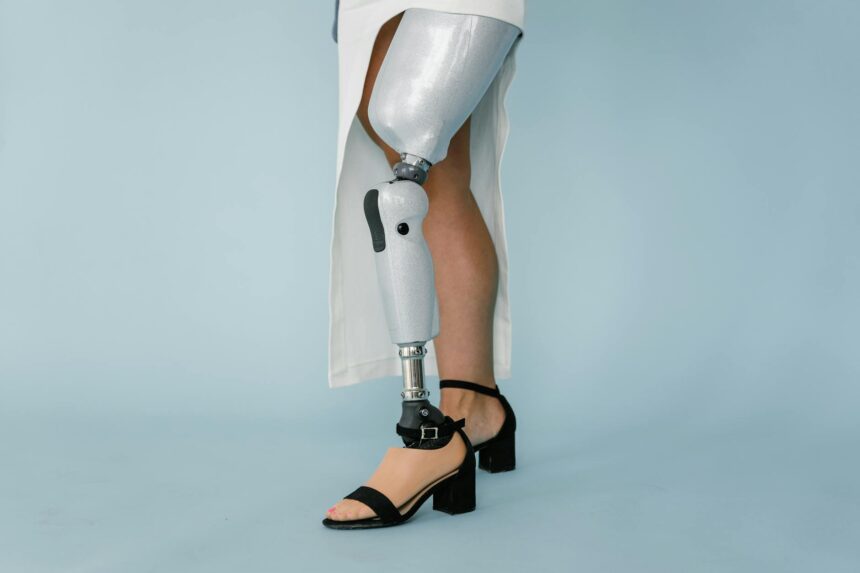
Medical researcher examining prosthetic foot with grid overlay assessment method
New grid-based visual scoring system achieves 0.88 inter-observer reliability for assessing prosthetic foot wear. Method requires only basic photography, making systematic monitoring accessible in resource-limited settings. — Photo: MART PRODUCTION / Pexels
SHARE
1 min read|137 words

A comprehensive analysis of 62 prosthetic feet has demonstrated the efficacy of a novel grid-based assessment system, with inter-observer reliability reaching 0.88 using three independent raters. This landmark finding, published in PLOS Global Public Health, challenges the traditional reliance on expensive laboratory infrastructure for prosthetic wear evaluation.

The research team employed a 20×10 grid overlay system to analyze plantar wear patterns, with observers rating each cell on a 0-9 scale. Notably, central foot areas—typically subject to less wear—demonstrated even higher agreement levels exceeding 0.92, suggesting the method’s particular strength in detecting subtle deterioration patterns.

These findings establish a statistically validated framework for prosthetic monitoring that can be implemented across healthcare systems with minimal resource investment. The method’s accessibility positions it as a practical solution for systematic device assessment in low-income regions. Read the full article on GMJ Newsroom.

Was this article helpful?

GMJ Brief · Key Finding

📰 Read the full article: New grid-based method improves prosthetic foot wear assessment in resource-limited settings →

Share This Article
Facebook LinkedIn Bluesky Copy Link Print
GMJ
ByProf. Giorgi Pkhakadze
Follow:
Prof. Giorgi Pkhakadze, MD, MPH, PhD, is Editor-in-Chief of the Georgian Medical Journal and Chair of the Public Health Institute of Georgia (PHIG). He is Professor and Head of the Department of Social and Behavioural Sciences at David Tvildiani Medical University, and Secretary/Treasurer of the UEMS Section of Public Health. ORCID: 0000-0001-7609-4515.

Submit Your Paper →

Georgia's peer-reviewed open-access medical journal. No APC until January 2027.
Submit Manuscript →
Medical Experts Push to Rename PCOS as ‘Metabolic Reproductive Syndrome’

Healthcare professionals advocate renaming PCOS to "metabolic reproductive syndrome" to better reflect…

USC researchers identify enzyme target for reducing Alzheimer’s brain inflammation

USC researchers have identified a new approach to combat Alzheimer's by targeting…

Ceramide Metabolism May Explain Racial Disparities in Prostate Cancer Drug Response

New research reveals that differences in ceramide lipid metabolism between Black and…

Submit Your Paper to GMJ

No APC until January 2027.
Submit Manuscript →

You Might Also Like

Healthcare worker experiencing occupational stress in a hospital setting, illustrating the importance of occupational safety and health, burnout prevention, infection control, workplace violence prevention, and health worker wellbeing in Georgia.

Georgia Must Make Health Worker Safety a Core Strategic Priority

By
Prof. Giorgi Pkhakadze
11/06/2026
Children laughing during therapeutic play session showing brain development benefits

Humor Unlocks Neural Pathways: How Laughter Strengthens Children’s Brains

By
Prof. Giorgi Pkhakadze
04/06/2026

PHEIC Declaration: Ebola Cross-Border Transmission DRC-Uganda

By
Prof. Giorgi Pkhakadze
31/05/2026
Brain synaptic network illustration showing enhanced connectivity with combined nutrient approach

Key Finding: Why Nutrients Work Better Together: New Research Reveals Synaptic Benefits of Combined Nutrition

By
Prof. Giorgi Pkhakadze
09/06/2026
Facebook Twitter Youtube Instagram
Company
  • Privacy Policy
  • Contact US
  • GMJ Journal
  • Submit Manuscript
  • Editorial Team
  • Register at GMJ
  • Terms of Use

Subscribe to GMJ News — Click here

Join Community
© 2026 Georgian Medical Journal (GMJ). Published by the Public Health Institute of Georgia (PHIG). All rights reserved.
Welcome Back!

Sign in to your account

Username or Email Address
Password

Lost your password?

Not a member? Sign Up