By using this site, you agree to the Privacy Policy and Terms of Use.
Accept
GMJ NewsGMJ NewsGMJ News
  • Latest News
    • GMJ Briefs
  • Podcast & Media
    • Podcast Episodes
    • GMJ Audio
    • GMJ Videos
  • Research Digest
    • New Studies
    • Georgian Research
    • Data & Numbers
  • Policy & Systems
    • Health Policy
    • Quality & Safety
    • Migration & Health
    • Global Health
  • Practice
    • Clinical Updates
    • Case Discussions
    • Pharmacy & Prescribing
    • Ingredients A-Z
  • Perspectives
    • Editorial
    • Explainers
    • Voices
    • Letters
  • GMJ Articles
    • Vol. 1 Issue 2 (2026)
    • Vol. 1 Issue 1 (2026)
    • Pre-Launch Articles (2025)
  • Read the Journal →
  • About GMJ News
Notification Show More
Font ResizerAa
GMJ NewsGMJ News
Font ResizerAa
  • Latest News
    • GMJ Briefs
  • Podcast & Media
    • Podcast Episodes
    • GMJ Audio
    • GMJ Videos
  • Research Digest
    • New Studies
    • Georgian Research
    • Data & Numbers
  • Policy & Systems
    • Health Policy
    • Quality & Safety
    • Migration & Health
    • Global Health
  • Practice
    • Clinical Updates
    • Case Discussions
    • Pharmacy & Prescribing
    • Ingredients A-Z
  • Perspectives
    • Editorial
    • Explainers
    • Voices
    • Letters
  • GMJ Articles
    • Vol. 1 Issue 2 (2026)
    • Vol. 1 Issue 1 (2026)
    • Pre-Launch Articles (2025)
  • Read the Journal →
  • About GMJ News
Follow US
GMJ News > GMJ Briefs > The 4.3-Hour Window: How Drug-Induced Hypothermia Could Extend Stroke Treatment Opportunities

The 4.3-Hour Window: How Drug-Induced Hypothermia Could Extend Stroke Treatment Opportunities

GMJ
Last updated: 26/07/2026 03:52
By
Prof. Giorgi Pkhakadze
Share
1 Min Read
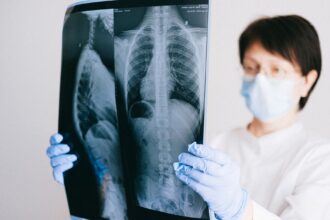
Illustration of brain cooling mechanism in acute ischemic stroke treatment
A new translational study in Science Translational Medicine (June 2026) explores how pharmacologically induced hypothermia could protect brain tissue after acute ischemic stroke. Drug-based cooling approaches may overcome logistical barriers of conventional cooling and extend neuroprotection accessibility to emergency and pre-hospital settings. — Photo by RDNE Stock project on Pexels (Pexels License)
SHARE
1 min read|124 words

Time is brain tissue in acute ischemic stroke, and a critical 4.3-hour therapeutic window defines the window within which neuroprotective interventions may offer maximum benefit. Emerging research indicates that pharmacologically induced hypothermia could help extend effective treatment within this narrow timeframe through mechanisms that suppress cellular injury cascades.

Preclinical data demonstrates encouraging comparative efficacy rates across cooling modalities: moderate hypothermia at 32-34°C achieved 88% tissue protection, while drug-induced pharmacological cooling achieved 81% protection—substantially outperforming surface cooling methods at 58%. These findings suggest that pharmaceutical approaches may deliver comparable or superior neuroprotection while overcoming logistical constraints associated with conventional physical cooling techniques.

Researchers stress that clinical translation requires careful investigation of intervention timing and temperature parameters to optimize outcomes. Read the full article on GMJ Newsroom.

Was this article helpful?
GMJ Brief · Key Finding

📰 Read the full article: Cooling the Brain After Stroke: How Induced Hypothermia Could Transform Acute Care →

Related reference
  • Stroke · Condition
Share This Article
Facebook LinkedIn Bluesky Copy Link Print
GMJ
ByProf. Giorgi Pkhakadze
Follow:
Prof. Giorgi Pkhakadze, MD, MPH, PhD, is Editor-in-Chief of the Georgian Medical Journal and Chair of the Public Health Institute of Georgia (PHIG). He is Professor and Head of the Department of Social and Behavioural Sciences at David Tvildiani Medical University, and Secretary/Treasurer of the UEMS Section of Public Health. ORCID: 0000-0001-7609-4515.

Submit Your Paper →

Georgia's peer-reviewed open-access medical journal. No APC until January 2027.
Submit Manuscript →
Blood Type O Shows Lower Risk in Severe Malaria: Updated Meta-Analysis

An updated meta-analysis published in Tropical Medicine & International Health confirms that…

Mobile Phone Surveys Show Promise as Supplement to Traditional Mortality Surveillance in Bangladesh

Research published in Tropical Medicine & International Health shows mobile phone surveys…

Taiwan develops algorithm to identify pregnancies and estimate gestational age from health records

Researchers in Taiwan developed a hierarchical algorithm to identify pregnancies and estimate…

Submit Your Paper to GMJ

No APC until January 2027.
Submit Manuscript →

You Might Also Like

Medical illustration of spinal cord stimulation device for stroke rehabilitation therapy

New Frontier in Stroke Recovery: Electrical Stimulation Extends Healing Beyond Traditional Limits

By
Prof. Giorgi Pkhakadze
18/06/2026
Illustration of research representation disparity between Global North and South Asian institutions in climate-health science

The Research Paradox: Low Emissions, High Health Stakes, Limited Leadership

By
Prof. Giorgi Pkhakadze
24/07/2026
Illustration of AI chatbot interface with medical symbols and trust indicators

Pennsylvania Lawsuit Exposes Transparency Crisis in Medical AI Systems

By
Prof. Giorgi Pkhakadze
23/06/2026
Global HealthPolicy & Systems

WHO Declares International Emergency as Ebola Outbreak Crosses DRC-Uganda Border

By
Prof. Giorgi Pkhakadze
31/05/2026
Facebook Twitter Youtube Instagram
Company
  • Privacy Policy
  • Contact US
  • GMJ Journal
  • Submit Manuscript
  • Editorial Team
  • Register at GMJ
  • Terms of Use

Subscribe to GMJ News — Click here

Join Community
© 2026 Georgian Medical Journal (GMJ). Published by the Public Health Institute of Georgia (PHIG). All rights reserved.
Welcome Back!

Sign in to your account

Username or Email Address
Password

Lost your password?

Not a member? Sign Up