By using this site, you agree to the Privacy Policy and Terms of Use.
Accept
GMJ NewsGMJ NewsGMJ News
  • Latest News
    • GMJ Briefs
  • Podcast & Media
    • Podcast Episodes
    • GMJ Audio
    • GMJ Videos
  • Research Digest
    • New Studies
    • Georgian Research
    • Data & Numbers
  • Policy & Systems
    • Health Policy
    • Quality & Safety
    • Migration & Health
    • Global Health
  • Practice
    • Clinical Updates
    • Case Discussions
    • Pharmacy & Prescribing
    • Ingredients A-Z
  • Perspectives
    • Editorial
    • Explainers
    • Voices
    • Letters
  • GMJ Articles
    • Vol. 1 Issue 2 (2026)
    • Vol. 1 Issue 1 (2026)
    • Pre-Launch Articles (2025)
  • Read the Journal →
  • About GMJ News
Notification Show More
Font ResizerAa
GMJ NewsGMJ News
Font ResizerAa
  • Latest News
    • GMJ Briefs
  • Podcast & Media
    • Podcast Episodes
    • GMJ Audio
    • GMJ Videos
  • Research Digest
    • New Studies
    • Georgian Research
    • Data & Numbers
  • Policy & Systems
    • Health Policy
    • Quality & Safety
    • Migration & Health
    • Global Health
  • Practice
    • Clinical Updates
    • Case Discussions
    • Pharmacy & Prescribing
    • Ingredients A-Z
  • Perspectives
    • Editorial
    • Explainers
    • Voices
    • Letters
  • GMJ Articles
    • Vol. 1 Issue 2 (2026)
    • Vol. 1 Issue 1 (2026)
    • Pre-Launch Articles (2025)
  • Read the Journal →
  • About GMJ News
Follow US
GMJ News > GMJ Briefs > Three Clinical Advances in Temperature Monitoring Technology Reshape Fever Detection

Three Clinical Advances in Temperature Monitoring Technology Reshape Fever Detection

GMJ
Last updated: 01/08/2026 00:43
By
Prof. Giorgi Pkhakadze
Share
1 Min Read
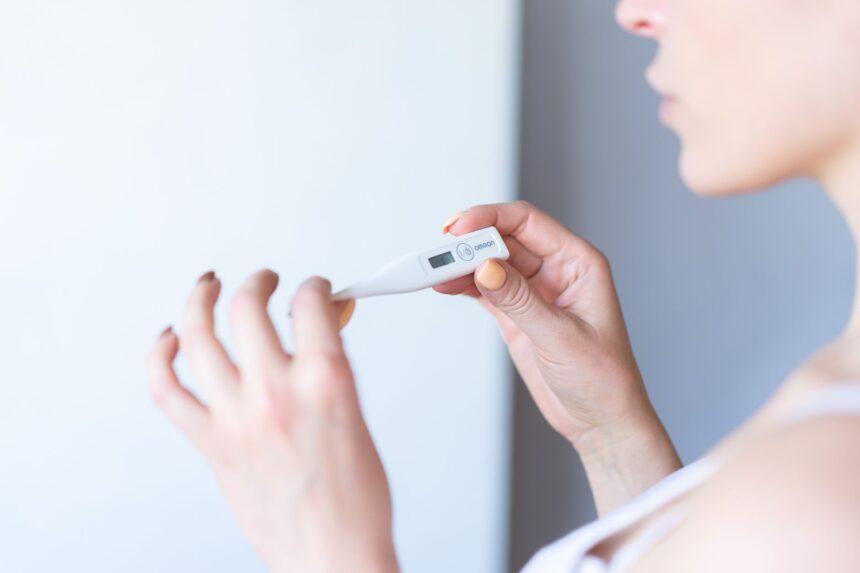
Conceptual illustration of ingestible temperature monitoring capsule technology
A blueberry-sized ingestible capsule continuously monitors core body temperature from within the digestive tract, potentially offering more accurate fever detection than conventional thermometers. The device could transform patient temperature monitoring in clinical settings. — Photo by Atlantic Ambience on Pexels (Pexels License)
SHARE
1 min read|135 words

Temperature monitoring in clinical practice is evolving with three significant technological advances. First, ingestible capsules now enable continuous core temperature tracking from within the digestive tract, eliminating reliance on intermittent surface measurements. Second, this approach demonstrates superior accuracy compared to conventional oral and forehead methods, which are subject to environmental interference and measurement limitations. Third, these advances could fundamentally revolutionize fever management protocols across hospital and home healthcare settings.

Clinicians should understand that traditional thermometry methods may not detect true internal temperature changes, particularly during critical early illness stages. The ingestible capsule technology addresses this diagnostic gap by providing real-time core temperature data, enabling more precise fever detection and patient monitoring.

For healthcare providers managing patients requiring accurate temperature assessment, this technology represents an important development in precision diagnostic capability that could enhance clinical outcomes.

Was this article helpful?

GMJ Brief · Takeaway

📰 Read the full article: Ingestible Temperature Sensor Could Replace Traditional Thermometers in Clinical Care →

Related reference
  • Iron · Ingredient
Share This Article
Facebook LinkedIn Bluesky Copy Link Print
GMJ
ByProf. Giorgi Pkhakadze
Follow:
Prof. Giorgi Pkhakadze, MD, MPH, PhD, is Editor-in-Chief of the Georgian Medical Journal and Chair of the Public Health Institute of Georgia (PHIG). He is Professor and Head of the Department of Social and Behavioural Sciences at David Tvildiani Medical University, and Secretary/Treasurer of the UEMS Section of Public Health. ORCID: 0000-0001-7609-4515.

Submit Your Paper →

Georgia's peer-reviewed open-access medical journal. No APC until January 2027.
Submit Manuscript →
How amino acids shape brain function: from neurotransmitters to cognitive endurance

Amino acids are the biochemical foundation of neurotransmitter synthesis, energy metabolism, and…

L-Theanine Shifts Brain Waves Toward Calm Focus Without Sedation, Research Shows

L-theanine, an amino acid in green tea, shifts brain waves from stress-associated…

Magnesium Deficiency Linked to Multiple Chronic Diseases: What the Evidence Shows

Magnesium deficiency is implicated in multiple chronic diseases including type 2 diabetes,…

Submit Your Paper to GMJ

No APC until January 2027.
Submit Manuscript →

You Might Also Like

CLUSTER ALERT: Ebola Cross-Border Transmission DRC-Uganda

By
Prof. Giorgi Pkhakadze
31/05/2026
Father and teenager having a conversation about relationships and communication

Research Reveals Impact of Dual-Parent Communication on Teen Decision-Making

By
Prof. Giorgi Pkhakadze
10/07/2026
Digital visualization of AI-powered heart model showing cardiovascular system analysis

Three Essential Facts About AI Digital Twins and the Future of Cardiac Care

By
Prof. Giorgi Pkhakadze
06/07/2026
Global HealthPolicy & Systems

WHO Declares Emergency as Ebola Outbreak Crosses DRC-Uganda Border

By
Prof. Giorgi Pkhakadze
31/05/2026
Facebook Twitter Youtube Instagram
Company
  • Privacy Policy
  • Contact US
  • GMJ Journal
  • Submit Manuscript
  • Editorial Team
  • Register at GMJ
  • Terms of Use

Subscribe to GMJ News — Click here

Join Community
© 2026 Georgian Medical Journal (GMJ). Published by the Public Health Institute of Georgia (PHIG). All rights reserved.
Welcome Back!

Sign in to your account

Username or Email Address
Password

Lost your password?

Not a member? Sign Up