By using this site, you agree to the Privacy Policy and Terms of Use.
Accept
GMJ NewsGMJ NewsGMJ News
  • Latest News
    • GMJ Briefs
  • Podcast & Media
    • Podcast Episodes
    • GMJ Audio
    • GMJ Videos
  • Research Digest
    • New Studies
    • Georgian Research
    • Data & Numbers
  • Policy & Systems
    • Health Policy
    • Quality & Safety
    • Migration & Health
    • Global Health
  • Practice
    • Clinical Updates
    • Case Discussions
    • Pharmacy & Prescribing
    • Ingredients A-Z
  • Perspectives
    • Editorial
    • Explainers
    • Voices
    • Letters
  • GMJ Articles
    • Vol. 1 Issue 2 (2026)
    • Vol. 1 Issue 1 (2026)
    • Pre-Launch Articles (2025)
  • Read the Journal →
  • About GMJ News
Notification Show More
Font ResizerAa
GMJ NewsGMJ News
Font ResizerAa
  • Latest News
    • GMJ Briefs
  • Podcast & Media
    • Podcast Episodes
    • GMJ Audio
    • GMJ Videos
  • Research Digest
    • New Studies
    • Georgian Research
    • Data & Numbers
  • Policy & Systems
    • Health Policy
    • Quality & Safety
    • Migration & Health
    • Global Health
  • Practice
    • Clinical Updates
    • Case Discussions
    • Pharmacy & Prescribing
    • Ingredients A-Z
  • Perspectives
    • Editorial
    • Explainers
    • Voices
    • Letters
  • GMJ Articles
    • Vol. 1 Issue 2 (2026)
    • Vol. 1 Issue 1 (2026)
    • Pre-Launch Articles (2025)
  • Read the Journal →
  • About GMJ News
Follow US
GMJ News > GMJ Briefs > Three Critical Findings From Nevada’s Medical Meal Program Offer Roadmap for Healthcare Systems

Three Critical Findings From Nevada’s Medical Meal Program Offer Roadmap for Healthcare Systems

GMJ
Last updated: 02/07/2026 20:37
By
Prof. Giorgi Pkhakadze
Share
1 Min Read
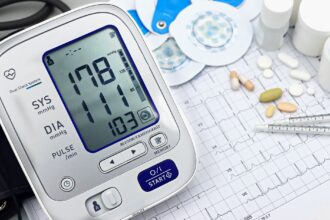
Medical meal delivery program showing healthcare cost reduction statistics
Nevada's medical meal delivery program reduced healthcare costs by 11% among Medicaid beneficiaries with chronic conditions. Emergency department visits fell by 23% in the intervention group. — Photo: RDNE Stock project / Pexels
SHARE
1 min read|142 words

Nevada’s Medical Nutrition Therapy Program yields three essential insights for healthcare policy stakeholders. First, the program achieved an 11% reduction in overall healthcare costs, demonstrating that investment in medical nutrition interventions produces measurable fiscal returns. Second, emergency department visits decreased by 23%, indicating that medically tailored meals may effectively reduce acute care utilization among chronic disease populations. Third, the program’s 1.3:1 return on investment justifies expansion and replication across other states and health systems.

These findings suggest that nutrition-focused clinical interventions warrant consideration as part of comprehensive chronic disease management strategies. For health plans, policymakers, and provider organizations, Nevada’s results indicate that allocating resources toward medically tailored meal programs may yield simultaneous improvements in patient outcomes and healthcare system efficiency. The program’s success among Medicaid beneficiaries with diabetes, cardiovascular disease, and kidney disease provides evidence supporting broader implementation.

Read the full article on GMJ Newsroom.

Was this article helpful?

GMJ Brief · Takeaway

📰 Read the full article: Nevada’s Medical Meal Program Cuts Healthcare Costs by 11% in Medicaid Population →

Share This Article
Facebook LinkedIn Bluesky Copy Link Print
GMJ
ByProf. Giorgi Pkhakadze
Follow:
Prof. Giorgi Pkhakadze, MD, MPH, PhD, is Editor-in-Chief of the Georgian Medical Journal and Chair of the Public Health Institute of Georgia (PHIG). He is Professor and Head of the Department of Social and Behavioural Sciences at David Tvildiani Medical University, and Secretary/Treasurer of the UEMS Section of Public Health. ORCID: 0000-0001-7609-4515.

Submit Your Paper →

Georgia's peer-reviewed open-access medical journal. No APC until January 2027.
Submit Manuscript →
Engineered Heart Muscle From Stem Cells Shows Promise in First-in-Human Trial

A first-in-human clinical trial of engineered heart muscle derived from induced pluripotent…

Most People Who Stop GLP-1 Drugs Like Ozempic Eventually Return to Treatment

A new analysis of treatment patterns shows that many patients who discontinue…

Semaglutide Linked to Fewer Bone Fractures Despite Greater Weight Loss in Type 2 Diabetes

A real-world analysis of 60,000 adults with type 2 diabetes shows semaglutide…

Submit Your Paper to GMJ

No APC until January 2027.
Submit Manuscript →

You Might Also Like

Medical illustration showing multiple myeloma cells and treatment timeline concepts

Three Clinical Practice Changes Coming to Multiple Myeloma Care

By
Prof. Giorgi Pkhakadze
01/07/2026
Elderly person adding salt to meal at dining table, representing study findings on salt consumption habits

23% Faster Cognitive Decline Associated with Regular Table Salt Addition, New Study Shows

By
Prof. Giorgi Pkhakadze
29/06/2026
Brain scan showing appetite control regions affected by childhood junk food consumption

Early Dietary Choices May Shape Lifelong Appetite Control, Research Suggests

By
Prof. Giorgi Pkhakadze
02/06/2026
Scientific illustration showing air pollution particles affecting brain and lung health

The Four-Hour Window: How Quickly Air Pollution Affects Your Body

By
Prof. Giorgi Pkhakadze
10/06/2026
Facebook Twitter Youtube Instagram
Company
  • Privacy Policy
  • Contact US
  • GMJ Journal
  • Submit Manuscript
  • Editorial Team
  • Register at GMJ
  • Terms of Use

Subscribe to GMJ News — Click here

Join Community
© 2026 Georgian Medical Journal (GMJ). Published by the Public Health Institute of Georgia (PHIG). All rights reserved.
Welcome Back!

Sign in to your account

Username or Email Address
Password

Lost your password?

Not a member? Sign Up