By using this site, you agree to the Privacy Policy and Terms of Use.
Accept
GMJ NewsGMJ NewsGMJ News
  • Latest News
    • GMJ Briefs
  • Podcast & Media
    • Podcast Episodes
    • GMJ Audio
    • GMJ Videos
  • Research Digest
    • New Studies
    • Georgian Research
    • Data & Numbers
  • Policy & Systems
    • Health Policy
    • Quality & Safety
    • Migration & Health
    • Global Health
  • Practice
    • Clinical Updates
    • Case Discussions
    • Pharmacy & Prescribing
    • Ingredients A-Z
  • Perspectives
    • Editorial
    • Explainers
    • Voices
    • Letters
  • Health Topics
  • GMJ Articles
    • Vol. 1 Issue 2 (2026)
    • Vol. 1 Issue 1 (2026)
    • Pre-Launch Articles (2025)
  • Read the Journal →
  • About GMJ News
Notification Show More
Font ResizerAa
GMJ NewsGMJ News
Font ResizerAa
  • Latest News
    • GMJ Briefs
  • Podcast & Media
    • Podcast Episodes
    • GMJ Audio
    • GMJ Videos
  • Research Digest
    • New Studies
    • Georgian Research
    • Data & Numbers
  • Policy & Systems
    • Health Policy
    • Quality & Safety
    • Migration & Health
    • Global Health
  • Practice
    • Clinical Updates
    • Case Discussions
    • Pharmacy & Prescribing
    • Ingredients A-Z
  • Perspectives
    • Editorial
    • Explainers
    • Voices
    • Letters
  • Health Topics
  • GMJ Articles
    • Vol. 1 Issue 2 (2026)
    • Vol. 1 Issue 1 (2026)
    • Pre-Launch Articles (2025)
  • Read the Journal →
  • About GMJ News
Follow US
GMJ News > GMJ Briefs > Three Critical Mechanisms: How Diabetes Damages the Brain

Three Critical Mechanisms: How Diabetes Damages the Brain

GMJ
Last updated: 09/08/2026 22:52
By
Prof. Giorgi Pkhakadze
Share
1 Min Read
Brain imaging showing grey matter atrophy in diabetes-related cognitive decline
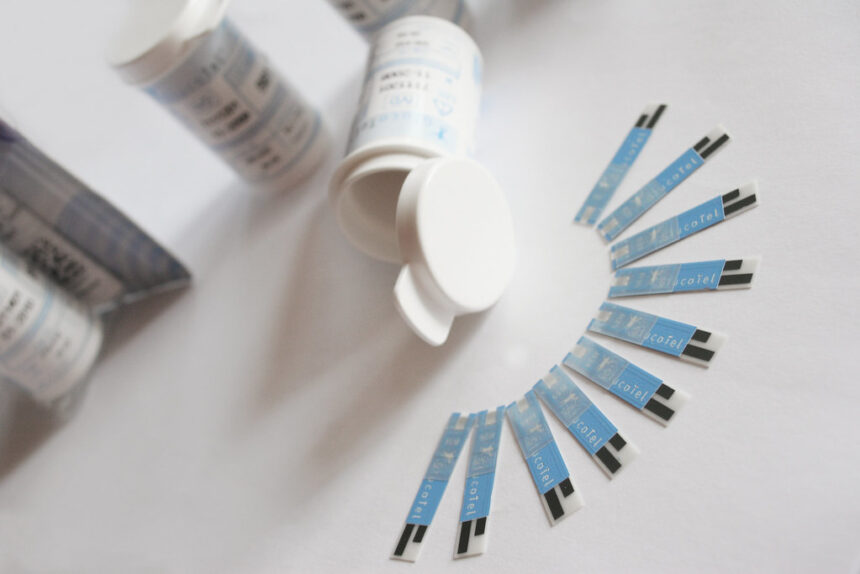
Mounting evidence reveals that diabetes and dementia share bidirectional pathophysiological pathways involving impaired glucose metabolism, chronic inflammation, and vascular dysfunction. Emerging research suggests select diabetes medications may confer neuroprotective benefits, opening new avenues for cognitive preservation in aging populations. — "Diabetes Testing Strips" by bodytel is licensed under CC BY-ND 2.0. To view a copy of this license, visit https://creativecommons.org/licenses/by-nd/2.0/. (CC BY-ND 2.0)
SHARE
1 min read|112 words

Understanding the pathways through which diabetes accelerates cognitive decline is essential for prevention. First, impaired glucose metabolism and insulin resistance starve neurons of adequate energy, compromising their capacity for normal function and plasticity. Second, chronic hyperglycaemia triggers sustained neuroinflammation and damages the cerebrovascular system, disrupting the blood-brain barrier and reducing cerebral perfusion—consequences that elevate vascular dementia risk and may accelerate Alzheimer pathology. Third, metabolic dysfunction promotes amyloid-β accumulation, a hallmark of Alzheimer disease. These interconnected mechanisms suggest that aggressive glycaemic management during midlife represents a critical window for neuroprotection. Clinicians should counsel patients that tight glucose control and emerging neuroprotective medications offer evidence-based strategies to preserve cognitive health into late life.

Was this article helpful?
GMJ Brief · Takeaway

📰 Read the full article: Diabetes and Dementia: New Evidence Reveals Bidirectional Risk and Potential Neuroprotection →

Related reference
  • Alzheimer Disease · Condition
  • Insulin · Drug
Share This Article
Facebook LinkedIn Bluesky Copy Link Print
GMJ
ByProf. Giorgi Pkhakadze
Follow:
Prof. Giorgi Pkhakadze, MD, MPH, PhD, is Editor-in-Chief of the Georgian Medical Journal and Chair of the Public Health Institute of Georgia (PHIG). He is Professor and Head of the Department of Social and Behavioural Sciences at David Tvildiani Medical University, and Secretary/Treasurer of the UEMS Section of Public Health. ORCID: 0000-0001-7609-4515.

Submit Your Paper →

Georgia's peer-reviewed open-access medical journal. No APC until January 2027.
Submit Manuscript →
New optical imaging technique could improve donor liver assessment before transplantation

Researchers have developed polarization-sensitive optical coherence tomography (PS-OCT) to assess donor liver…

AI-designed ‘master key’ vaccine could target entire virus families, not individual strains

Artificial intelligence is enabling vaccine designers to target conserved viral proteins shared…

Immune ‘Peacemakers’ May Unlock Long-Term Disease Remission in Autoimmune Conditions

Regulatory immune cells that suppress harmful inflammation could unlock long-term disease remission…

Submit Your Paper to GMJ

No APC until January 2027.
Submit Manuscript →

You Might Also Like

Medical chart showing paracetamol poisoning statistics and outcomes data

What Clinicians Must Know About Paracetamol Poisoning: Beyond Acute Liver Injury

By
Prof. Giorgi Pkhakadze
01/07/2026
Children affected by immigration enforcement and family separation policies

Takeaway: Mass Immigration Raids Leave Thousands of Children Without Parents: Legal Guardianship Crisis Emerges

By
Prof. Giorgi Pkhakadze
26/06/2026

WHO Declares International Health Emergency Over Ebola Outbreak Spreading From DRC to Uganda

By
Prof. Giorgi Pkhakadze
31/05/2026
Medical illustration showing spinal cord anatomy and stroke location in adolescent patient

Recognising Post-Viral Neurological Complications: What Clinicians Should Know

By
Prof. Giorgi Pkhakadze
19/07/2026
Facebook Twitter Youtube Instagram
Company
  • Privacy Policy
  • Contact US
  • GMJ Journal
  • Submit Manuscript
  • Editorial Team
  • Register at GMJ
  • Terms of Use

Subscribe to GMJ News — Click here

Join Community
© 2026 Georgian Medical Journal (GMJ). Published by the Public Health Institute of Georgia (PHIG). All rights reserved.
Welcome Back!

Sign in to your account

Username or Email Address
Password

Lost your password?

Not a member? Sign Up