By using this site, you agree to the Privacy Policy and Terms of Use.
Accept
GMJ NewsGMJ NewsGMJ News
  • Latest News
    • GMJ Briefs
  • Podcast & Media
    • Podcast Episodes
    • GMJ Audio
    • GMJ Videos
  • Research Digest
    • New Studies
    • Georgian Research
    • Data & Numbers
  • Policy & Systems
    • Health Policy
    • Quality & Safety
    • Migration & Health
    • Global Health
  • Practice
    • Clinical Updates
    • Case Discussions
    • Pharmacy & Prescribing
    • Ingredients A-Z
  • Perspectives
    • Editorial
    • Explainers
    • Voices
    • Letters
  • GMJ Articles
    • Vol. 1 Issue 2 (2026)
    • Vol. 1 Issue 1 (2026)
    • Pre-Launch Articles (2025)
  • Read the Journal →
  • About GMJ News
Notification Show More
Font ResizerAa
GMJ NewsGMJ News
Font ResizerAa
  • Latest News
    • GMJ Briefs
  • Podcast & Media
    • Podcast Episodes
    • GMJ Audio
    • GMJ Videos
  • Research Digest
    • New Studies
    • Georgian Research
    • Data & Numbers
  • Policy & Systems
    • Health Policy
    • Quality & Safety
    • Migration & Health
    • Global Health
  • Practice
    • Clinical Updates
    • Case Discussions
    • Pharmacy & Prescribing
    • Ingredients A-Z
  • Perspectives
    • Editorial
    • Explainers
    • Voices
    • Letters
  • GMJ Articles
    • Vol. 1 Issue 2 (2026)
    • Vol. 1 Issue 1 (2026)
    • Pre-Launch Articles (2025)
  • Read the Journal →
  • About GMJ News
Follow US
GMJ News > GMJ Briefs > Three Essential Reforms for Indigenous-Centered Health Research in Canada

Three Essential Reforms for Indigenous-Centered Health Research in Canada

GMJ
Last updated: 05/08/2026 02:43
By
Prof. Giorgi Pkhakadze
Share
1 Min Read
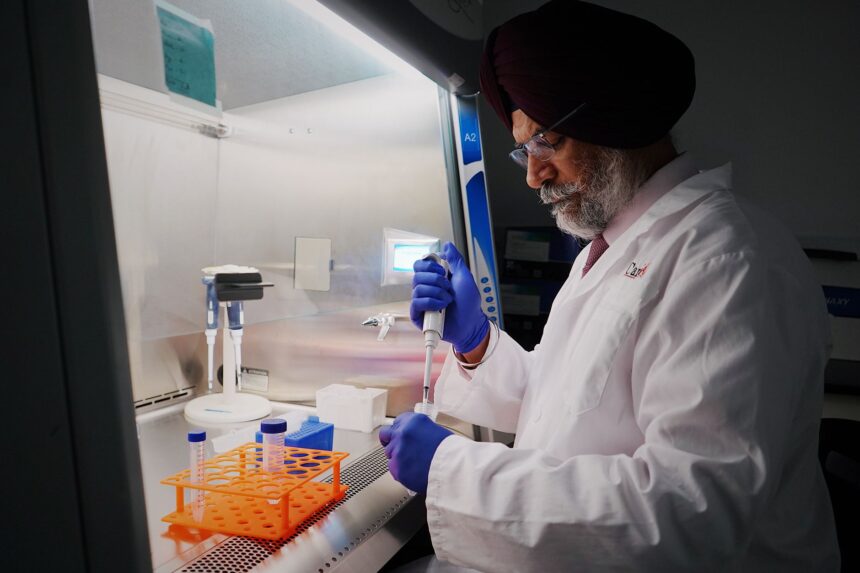
Indigenous health researchers collaborating on community-led study design and data collection
Canadian researchers emphasize the need for Indigenous-led health research approaches to advance reconciliation and address persistent health disparities. The commentary calls for fundamental changes to traditional research methodologies. — Photo by World Sikh Organization of Canada on Pexels (Pexels License)
SHARE
1 min read|117 words

Meaningful progress in Indigenous health research requires three interconnected institutional changes. First, communities must control research agendas and maintain data sovereignty, ensuring that studies address priorities identified by Indigenous peoples themselves rather than external researchers. Second, partnerships must replace extractive methodologies, establishing relationships where Indigenous knowledge holders and communities are recognized as equal collaborators from conception through dissemination.

Third, academic and funding institutions must actively support Indigenous knowledge systems alongside Western scientific approaches, recognizing their complementary value. These reforms move beyond symbolic gestures toward structural change. Canadian research institutions implementing these protocols are demonstrating that reconciliation-focused approaches strengthen both research quality and community health outcomes, creating sustainable models that serve Indigenous health needs while advancing scientific understanding.

Was this article helpful?

GMJ Brief · Takeaway

📰 Read the full article: Indigenous-led health research essential for reconciliation in Canada →

Share This Article
Facebook LinkedIn Bluesky Copy Link Print
GMJ
ByProf. Giorgi Pkhakadze
Follow:
Prof. Giorgi Pkhakadze, MD, MPH, PhD, is Editor-in-Chief of the Georgian Medical Journal and Chair of the Public Health Institute of Georgia (PHIG). He is Professor and Head of the Department of Social and Behavioural Sciences at David Tvildiani Medical University, and Secretary/Treasurer of the UEMS Section of Public Health. ORCID: 0000-0001-7609-4515.

Submit Your Paper →

Georgia's peer-reviewed open-access medical journal. No APC until January 2027.
Submit Manuscript →
Personalised Squat Biomechanics: How Individual Posture Determines Safe Exercise Form

Effective squat technique depends on individual postural alignment and structural constraints, not…

Cardiorespiratory Fitness: A Stronger Predictor of Longevity Than Blood Pressure or Cholesterol

Maximal oxygen uptake (VO₂max) emerges as a stronger predictor of long-term health…

The Master Clock: How Your Brain’s Circadian Rhythm Controls Sleep, Hunger, and Mood

Your brain contains a master clock—the suprachiasmatic nucleus—that controls every major physiological…

Submit Your Paper to GMJ

No APC until January 2027.
Submit Manuscript →

You Might Also Like

Medical professional discussing prostate cancer screening with patient, representing expanded access to healthcare

Black Men Face Double Prostate Cancer Risk, Yet Remain Underrepresented in Screening Programs

By
Prof. Giorgi Pkhakadze
16/06/2026
American Diabetes Association conference presentation on MAHA health strategy

37.3 Million Americans Living With Diabetes as NIH Promotes MAHA Strategy

By
Prof. Giorgi Pkhakadze
30/06/2026
Pharmacy & PrescribingPractice

BD Recalls ChloraPrep and FREPP Applicators Due to Fungal Contamination

By
Prof. Giorgi Pkhakadze
11/06/2026
Medical illustration showing brain health improvement after smoking cessation

New Evidence: Smoking Cessation Offers Significant Protection Against Dementia

By
Prof. Giorgi Pkhakadze
30/06/2026
Facebook Twitter Youtube Instagram
Company
  • Privacy Policy
  • Contact US
  • GMJ Journal
  • Submit Manuscript
  • Editorial Team
  • Register at GMJ
  • Terms of Use

Subscribe to GMJ News — Click here

Join Community
© 2026 Georgian Medical Journal (GMJ). Published by the Public Health Institute of Georgia (PHIG). All rights reserved.
Welcome Back!

Sign in to your account

Username or Email Address
Password

Lost your password?

Not a member? Sign Up