By using this site, you agree to the Privacy Policy and Terms of Use.
Accept
GMJ NewsGMJ NewsGMJ News
  • Latest News
    • GMJ Briefs
  • Podcast & Media
    • Podcast Episodes
    • GMJ Audio
    • GMJ Videos
  • Research Digest
    • New Studies
    • Georgian Research
    • Data & Numbers
  • Policy & Systems
    • Health Policy
    • Quality & Safety
    • Migration & Health
    • Global Health
  • Practice
    • Clinical Updates
    • Case Discussions
    • Pharmacy & Prescribing
    • Ingredients A-Z
  • Perspectives
    • Editorial
    • Explainers
    • Voices
    • Letters
  • GMJ Articles
    • Vol. 1 Issue 2 (2026)
    • Vol. 1 Issue 1 (2026)
    • Pre-Launch Articles (2025)
  • Read the Journal →
  • About GMJ News
Notification Show More
Font ResizerAa
GMJ NewsGMJ News
Font ResizerAa
  • Latest News
    • GMJ Briefs
  • Podcast & Media
    • Podcast Episodes
    • GMJ Audio
    • GMJ Videos
  • Research Digest
    • New Studies
    • Georgian Research
    • Data & Numbers
  • Policy & Systems
    • Health Policy
    • Quality & Safety
    • Migration & Health
    • Global Health
  • Practice
    • Clinical Updates
    • Case Discussions
    • Pharmacy & Prescribing
    • Ingredients A-Z
  • Perspectives
    • Editorial
    • Explainers
    • Voices
    • Letters
  • GMJ Articles
    • Vol. 1 Issue 2 (2026)
    • Vol. 1 Issue 1 (2026)
    • Pre-Launch Articles (2025)
  • Read the Journal →
  • About GMJ News
Follow US
GMJ News > Policy & Systems > Health Policy > Indigenous-led health research essential for reconciliation in Canada
Health PolicyPolicy & Systems

Indigenous-led health research essential for reconciliation in Canada

GMJ
Last updated: 23/06/2026 18:42
By
GMJ Policy Desk
Share
5 Min Read
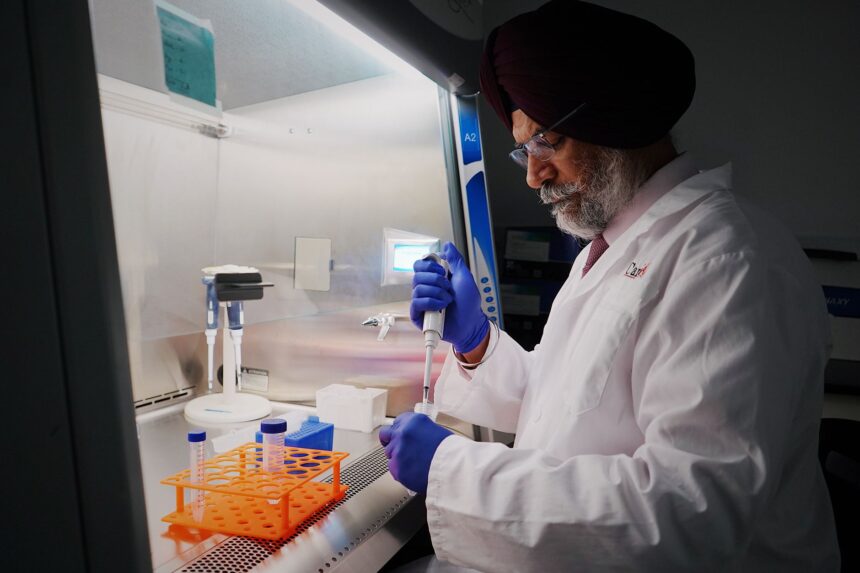
Indigenous health researchers collaborating on community-led study design and data collectionIllustrative image · Photo by World Sikh Organization of Canada on Pexels (Pexels License)
Canadian researchers emphasize the need for Indigenous-led health research approaches to advance reconciliation and address persistent health disparities. The commentary calls for fundamental changes to traditional research methodologies. — Photo by World Sikh Organization of Canada on Pexels (Pexels License)
SHARE
3 min read|582 words
✓ Reviewed by Prof. Giorgi Pkhakadze, MD, MPH, PhD · ORCID 0000-0001-7609-4515

🟠 Moderate Evidence

Contents
    • Key takeaways
      • Indigenous Health Research Transformation Framework
  • Research paradigm shift underway
  • Addressing historical research trauma
  • Implementation challenges and opportunities
    • What this means
  • Frequently asked questions
    • What makes research “Indigenous-led”?
    • How does this approach differ from traditional medical research?
    • What are the barriers to implementing Indigenous-led research?

Canadian researchers are calling for fundamental changes to how health research is conducted with Indigenous communities, emphasizing the need for Indigenous-led approaches to advance reconciliation and address persistent health disparities.

Key takeaways

  • Indigenous-led research methodologies are essential for meaningful reconciliation in Canadian healthcare
  • Traditional research approaches have historically excluded Indigenous perspectives and knowledge systems
  • Partnership models must prioritize Indigenous data sovereignty and community ownership
198 issues
Volume number addressing Indigenous health research in CMAJ commentary

Indigenous Health Research Transformation Framework

Key principles for reconciliation-focused research approaches

Community
Leadership
Data
Sovereignty
Cultural
Safety

Source: CMAJ Commentary, 2024 | Georgian Medical Journal News

Submit Your Paper
GMJ_Submit_Banner

Research paradigm shift underway

The Canadian Medical Association Journal commentary highlights the urgent need for academic institutions and funding bodies to embrace Indigenous research methodologies. This approach moves beyond traditional extractive research models toward collaborative partnerships that respect Indigenous knowledge systems.

Research institutions across Canada are beginning to implement protocols that ensure Indigenous communities maintain control over data collection, analysis, and dissemination. The Canadian Institutes of Health Research has established specific guidelines for Indigenous health research ethics.

Addressing historical research trauma

Decades of research conducted on rather than with Indigenous communities have created lasting mistrust and failed to address core health inequities. The commentary emphasizes that meaningful reconciliation requires acknowledging this history and fundamentally restructuring research relationships.

Indigenous communities have experienced research that extracted knowledge without providing benefits, often reinforcing harmful stereotypes. Current efforts focus on building research capacity within Indigenous communities and ensuring that studies directly address community-identified priorities. Learn more about health policy developments affecting Indigenous populations.

Implementation challenges and opportunities

While the principles of Indigenous-led research are increasingly accepted, implementation faces significant barriers including funding structures, institutional policies, and researcher training gaps. Universities are developing new evaluation criteria that recognize Indigenous knowledge systems as equally valid to Western scientific approaches.

The Natural Sciences and Engineering Research Council of Canada has expanded funding opportunities specifically for Indigenous researchers. These initiatives aim to build research infrastructure that serves Indigenous communities while contributing to broader scientific knowledge. Explore additional global health research developments.

Indigenous-led research represents a fundamental shift from extractive methodologies toward partnership models that respect Indigenous data sovereignty and community priorities

— CMAJ Editorial Team, Canadian Medical Association Journal (CMAJ, 2024)

What this means

For patients: Indigenous patients may benefit from culturally appropriate research that addresses community-specific health concerns and respects traditional healing practices
For clinicians: Healthcare providers should understand how Indigenous-led research can inform culturally safe care delivery and clinical decision-making
For policymakers: Health policy development must incorporate Indigenous research findings and ensure funding mechanisms support community-led investigation priorities

Frequently asked questions

What makes research “Indigenous-led”?

Indigenous-led research means Indigenous communities control the research agenda, methodology, data ownership, and knowledge dissemination. Communities identify research priorities and maintain sovereignty over how findings are used.

How does this approach differ from traditional medical research?

Traditional research often extracts data from communities without meaningful involvement or benefit-sharing. Indigenous-led approaches prioritize community partnerships, cultural protocols, and ensuring research directly serves Indigenous health needs.

What are the barriers to implementing Indigenous-led research?

Key challenges include funding structures designed for Western research models, lack of institutional support, limited Indigenous researcher training opportunities, and insufficient understanding of Indigenous knowledge systems among academic institutions.

The transformation toward Indigenous-led health research represents a critical step in addressing historical injustices while building more effective, culturally responsive healthcare systems. Success will require sustained commitment from institutions, funders, and researchers to genuinely share power and resources with Indigenous communities.

Source: Promouvoir la reconciliation par la recherche [Commentaire]

Was this article helpful?

Disclaimer. This article is health journalism intended for general information and education. It is not medical advice and is not a substitute for professional diagnosis or treatment. Always consult a qualified healthcare provider about your individual circumstances. Full disclaimer →

Related Coverage

WHO Africa Calls for Greater Blood Donation as Critical Shortages Persist Across RegionJul 4, 2026
FDA Issues Safety Alert for Boston Scientific Accolade Pacemakers Over Premature Battery DepletionJul 4, 2026
Trump Administration Proposes Rule to Close Medicare Drug Price Negotiation LoopholeJul 4, 2026
Colorado hospitals reduce stigma in pregnancy substance use care through evidence-based training programJul 3, 2026
PG
Written by
Prof. Giorgi Pkhakadze, MD, MPH, PhD
Editor-in-Chief, GMJ News
Full profile →  ·  ORCID 0000-0001-7609-4515
Medical disclaimer. This article is health journalism intended for general information. It is not medical advice and is not a substitute for consultation with a qualified healthcare professional. Always seek your physician's advice regarding any medical condition.
Medically reviewed by Prof. Giorgi Pkhakadze, MD, MPH, PhD. Spotted an error? Contact the editorial team.

Get the GMJ News digest
Evidence-based health journalism in your inbox. No spam; unsubscribe anytime.
TAGGED:Canadahealth equityIndigenous healthreconciliationresearch ethics
Share This Article
Facebook LinkedIn Bluesky Copy Link Print
GMJ
ByGMJ Policy Desk
Follow:
GMJ Policy Desk is part of GMJ News, the newsroom of the Georgian Medical Journal (gmj.ge), published by the Public Health Institute of Georgia. Every article is editorially reviewed before publication.
Leave a Comment Leave a Comment

Leave a Reply Cancel reply

Your email address will not be published. Required fields are marked *

Submit Your Paper →

Georgia's peer-reviewed open-access medical journal. No APC until January 2027.
Submit Manuscript →
Paraneoplastic Neurologic Syndrome Diagnosed in 65-Year-Old Woman with Small Cell Lung Cancer

A 65-year-old woman with progressive neurological symptoms was diagnosed with paraneoplastic neurologic…

First In Vivo CRISPR Gene Editing Treatment Shows Promise for Rare Blood Disorder

First clinical trial of in vivo CRISPR gene editing for hereditary angioedema…

Hidden Immune Gene Linked to Rare Neurological Movement Disorder

Scientists discovered that CD99L2, a gene previously linked only to immune function,…

Submit Your Paper to GMJ

No APC until January 2027.
Submit Manuscript →

You Might Also Like

Medical professional discussing psychedelic therapy regulations with patient in clinical settingIllustrative image · Photo by Annie Spratt on Unsplash (Unsplash License)
Health PolicyPolicy & Systems

New NEJM Analysis: States Lead Psychedelic Therapy Expansion Despite Federal Restrictions

By
GMJ Policy Desk
02/07/2026
WHO World Health Assembly meeting hall during historic fatty liver disease resolution voteIllustrative image · Liver from a woman who died of puerpal eclampsia Wellcome L0061645.jpg by Mark, Leonard Portal / CC BY 4.0 via Wikimedia Commons (CC BY 4.0)
Health PolicyPolicy & Systems

WHO Adopts Historic Resolution on Fatty Liver Disease as Missing Link in Global NCD Strategy

By
GMJ Policy Desk
16/06/2026
Healthcare workers participating in WHO mhGAP mental health training program in rural Gambia
Global HealthPolicy & Systems

Gambia Trains 25 Community Health Workers in WHO Mental Health Guidelines to Bridge Rural Care Gaps

By
GMJ Policy Desk
24/05/2026
Chart showing rising trend of WHO-detected health emergency events from 2015 to 2024
Global Health

World ‘Moving Backwards’ on Pandemic Preparedness as Disease Outbreaks Surge, GPMB Warns

By
GMJ Policy Desk
19/05/2026
Facebook Twitter Youtube Instagram
Company
  • Privacy Policy
  • Contact US
  • GMJ Journal
  • Submit Manuscript
  • Editorial Team
  • Register at GMJ
  • Terms of Use

Subscribe to GMJ News — Click here

Join Community
© 2026 Georgian Medical Journal (GMJ). Published by the Public Health Institute of Georgia (PHIG). All rights reserved.
Welcome Back!

Sign in to your account

Username or Email Address
Password

Lost your password?

Not a member? Sign Up