By using this site, you agree to the Privacy Policy and Terms of Use.
Accept
GMJ NewsGMJ NewsGMJ News
  • Latest News
    • GMJ Briefs
  • Podcast & Media
    • Podcast Episodes
    • GMJ Audio
    • GMJ Videos
  • Research Digest
    • New Studies
    • Georgian Research
    • Data & Numbers
  • Policy & Systems
    • Health Policy
    • Quality & Safety
    • Migration & Health
    • Global Health
  • Practice
    • Clinical Updates
    • Case Discussions
    • Pharmacy & Prescribing
    • Ingredients A-Z
  • Perspectives
    • Editorial
    • Explainers
    • Voices
    • Letters
  • Health Topics
  • GMJ Articles
    • Vol. 1 Issue 2 (2026)
    • Vol. 1 Issue 1 (2026)
    • Pre-Launch Articles (2025)
  • Read the Journal →
  • About GMJ News
Notification Show More
Font ResizerAa
GMJ NewsGMJ News
Font ResizerAa
  • Latest News
    • GMJ Briefs
  • Podcast & Media
    • Podcast Episodes
    • GMJ Audio
    • GMJ Videos
  • Research Digest
    • New Studies
    • Georgian Research
    • Data & Numbers
  • Policy & Systems
    • Health Policy
    • Quality & Safety
    • Migration & Health
    • Global Health
  • Practice
    • Clinical Updates
    • Case Discussions
    • Pharmacy & Prescribing
    • Ingredients A-Z
  • Perspectives
    • Editorial
    • Explainers
    • Voices
    • Letters
  • Health Topics
  • GMJ Articles
    • Vol. 1 Issue 2 (2026)
    • Vol. 1 Issue 1 (2026)
    • Pre-Launch Articles (2025)
  • Read the Journal →
  • About GMJ News
Follow US
GMJ News > Policy & Systems > Global Health > How H5N1 Found Its Way Into Dairy Cows: New Research Reveals Viral Strategy
Global HealthNew StudiesPolicy & SystemsResearch Digest

How H5N1 Found Its Way Into Dairy Cows: New Research Reveals Viral Strategy

GMJ
Last updated: 12/07/2026 13:30
By
GMJ Policy Desk
Share
9 Min Read
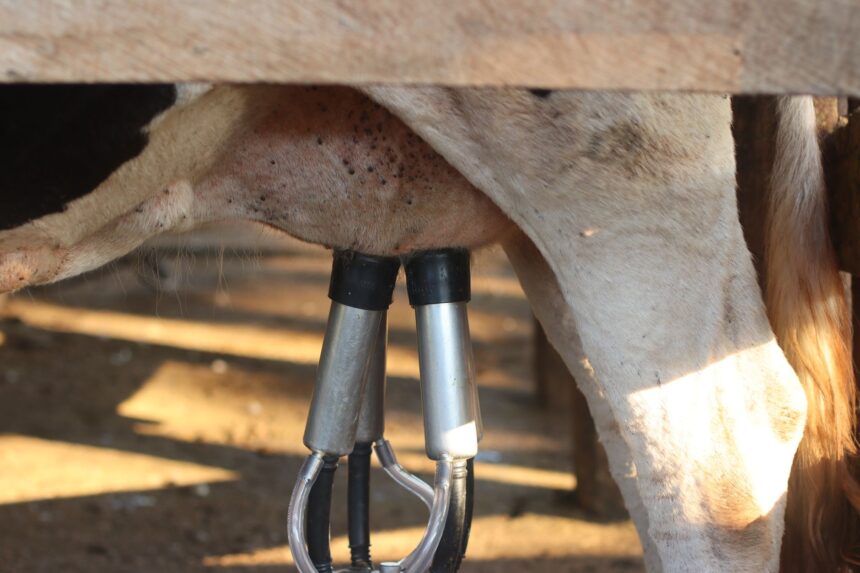
Diagram showing H5N1 viral receptors concentrated in bovine mammary tissue compared to respiratory organsIllustrative image · Photo by Ouça e Relaxe on Pexels (Pexels License)
New research reveals that H5N1 avian influenza selectively infects dairy cattle udders due to high concentrations of viral receptors in mammary tissue. This breakthrough may help scientists predict future zoonotic spillover events and guide surveillance strategies in livestock populations. — Photo by Ouça e Relaxe on Pexels (Pexels License)
SHARE
🎧 Listen to this article · 1,228 words · GMJ Audio
6 min read|1,228 words
✓ Reviewed by GMJ News Editorial Team

🟠 Moderate Evidence

Contents
    • Key takeaways
      • Where H5N1 Receptors Concentrate in Cattle Tissues
  • The Puzzle of Udder-Specific Infection
  • Tissue-Specific Receptor Expression as an Infection Gateway
  • Predicting Future Spillover Events
  • Implications for Surveillance and Public Health Response
    • What this means
  • Frequently asked questions
    • Why does H5N1 prefer cow udders to lungs?
    • Can H5N1 spread from infected milk to humans?
    • How should farms monitor for H5N1 in dairy cattle?

Researchers have identified why H5N1 influenza virus targets dairy cattle’s udders rather than their respiratory tract—a finding that may reshape how scientists monitor and predict zoonotic spillover events. The discovery reveals that viral receptor distribution in mammary tissue creates an unexpected infection pathway, fundamentally altering understanding of how avian influenza can adapt to mammalian hosts.

Key takeaways

  • H5N1 preferentially infects dairy cow udders because viral receptors are concentrated in mammary tissue, not lungs
  • This tissue-specific tropism explains the unusual presentation of bovine H5N1 infection and suggests the virus has adapted to exploit host-specific vulnerabilities
  • Understanding receptor distribution may help predict future zoonotic spillover events and guide surveillance strategies in livestock populations
  • The findings highlight the importance of monitoring non-respiratory manifestations of avian influenza in animals and humans
Mammary tissue tropism
H5N1’s selective affinity for udder tissue represents a departure from classic avian influenza pathology and suggests tissue-specific receptor expression drives viral localization

Where H5N1 Receptors Concentrate in Cattle Tissues

Comparative receptor density across respiratory and mammary tissues

Mammary gland epithelium
High
Tracheal tissue
Moderate
Alveolar tissue
Moderate
Bronchial epithelium

Low

Source: Research findings on H5N1 receptor distribution | Georgian Medical Journal News

Submit Your Paper
GMJ_Submit_Banner

The Puzzle of Udder-Specific Infection

When H5N1 avian influenza began appearing in dairy cattle in 2024, veterinary epidemiologists noted an anomaly: infected cows developed severe mastitis—inflammation of the udder—rather than the respiratory disease typical of avian flu in birds and most mammals. This presentation puzzled researchers because H5N1 has historically targeted the lungs and upper respiratory tract as its primary sites of replication.

🎙️ Related Podcast Episodes
🎧 #54 | GMJ Podcast | The Blueprint of a Medical Journal: Designing an Open-Access Scientific Platform · 19m
🎬 The Blueprint of a Medical Journal | How GMJ Was Built
🎧 #53 | GMJ Podcast | Palliative Care in Georgia — Health System Gaps, Access Barriers, and Policy Implications · 16m
🎬 The Architecture of Migration Health: Inside the GMJ Knowledge Hub | Georgian Medical Journal
🎧 #52 | GMJ Podcast | Health and Migration Knowledge Hub — A Global Resource for Evidence-Based Practice · 17m

The newly published research explains this discrepancy through receptor biology. Influenza viruses, including H5N1, require specific cellular receptors to attach and infect host cells. In birds, the virus binds to alpha-2,3 sialic acid receptors, which are abundant in respiratory epithelium. Humans and terrestrial mammals typically express alpha-2,6 sialic acid receptors, which is why avian flu normally struggles to establish human-to-human transmission. However, dairy cattle mammary tissue appears to possess a unique receptor landscape that facilitates H5N1 binding and replication, according to the research findings on viral tropism.

Tissue-Specific Receptor Expression as an Infection Gateway

The breakthrough centres on understanding that mammalian tissues do not uniformly express the same receptors. While a cow’s lungs may lack the optimal receptor configuration for H5N1 attachment, its mammary gland epithelial cells—which line the milk ducts and alveoli—express high concentrations of receptors that facilitate viral entry. This tissue-specific heterogeneity explains why the virus has adapted to exploit a biological niche that few other respiratory pathogens target with such precision.

This discovery has immediate implications for infection control. Because infected udder tissue sheds high viral loads into milk, dairy cattle with H5N1 present a significant transmission risk through unpasteurized milk and direct contact with infected secretions. The research suggests that conventional respiratory surveillance protocols—which focus on lung tissue and nasal swabs—may miss or delay detection of H5N1 infections that are actively replicating in mammary tissue. For a comprehensive review of epidemiological patterns, see our coverage of emerging zoonotic threats in Global Health.

Predicting Future Spillover Events

Understanding receptor distribution across tissues opens new pathways for predicting how H5N1—and potentially other influenza viruses—might adapt to new hosts. If researchers can map receptor profiles in livestock and companion animal populations, they may be able to identify tissues and species at highest risk before widespread infection occurs. This proactive approach differs fundamentally from reactive surveillance, which typically begins after cases appear.

The research suggests that similar tissue-specific vulnerabilities may exist in other animal species and organs. For instance, if pigs or poultry possess tissues with high concentrations of receptors favourable to H5N1, these could become new infection sites that traditional surveillance misses. The World Health Organization emphasizes the need for enhanced surveillance systems that extend beyond respiratory sites, particularly in agricultural settings where multiple animal species interact with humans.

H5N1’s selective tropism for bovine mammary tissue, driven by concentrated receptor expression, explains the virus’s unusual presentation in dairy cattle and offers a model for predicting tissue-specific spillover in other species.

— Research findings on viral receptor adaptation in mammalian tissues

Implications for Surveillance and Public Health Response

The practical implications of these findings extend across veterinary, agricultural, and public health sectors. Dairy farms must now consider that H5N1 surveillance requires milk testing and udder tissue sampling alongside conventional respiratory swabs. This broadens the diagnostic toolkit but also increases the cost and complexity of monitoring. Additionally, because infected milk can transmit the virus, pasteurization standards and milk handling protocols take on renewed importance for H5N1 prevention, though pasteurization efficacy for H5N1 remains under active investigation.

For clinicians and veterinarians, recognizing that H5N1 may present as mastitis rather than pneumonia is critical for early detection. A cow with acute mastitis that tests negative for bacterial pathogens should raise suspicion for viral infection, particularly in regions with documented H5N1 circulation. This diagnostic reframing requires education and awareness campaigns across farm workers, veterinarians, and dairy processors. Access to curated clinical updates on emerging infections is available through our Clinical Updates section.

What this means

For patients: Consumers and farm workers should be aware that unpasteurized dairy products from infected cattle pose a transmission risk for H5N1. Choosing pasteurized milk and practising hand hygiene when handling animal products remain protective measures.
For clinicians: Healthcare providers should consider H5N1 in the differential diagnosis of acute respiratory illness in patients with recent dairy farm exposure or consumption of unpasteurized dairy. Early testing and antiviral treatment may be warranted when epidemiological context suggests possible exposure.
For policymakers: Governments must strengthen surveillance systems to include non-respiratory sampling from livestock, establish rapid reporting networks for unusual mastitis cases in dairy herds, and coordinate public health response protocols that integrate veterinary epidemiology with human health monitoring.

Frequently asked questions

Why does H5N1 prefer cow udders to lungs?

The virus preferentially infects mammary tissue because of the high concentration of viral receptors (sialic acids) in udder epithelial cells. These receptors facilitate viral attachment and entry far more efficiently than receptors in respiratory tissue, which explains why infected cows develop mastitis rather than pneumonia.

Can H5N1 spread from infected milk to humans?

While unpasteurized milk from infected cattle could theoretically transmit H5N1, pasteurization—heating milk to specific temperatures—inactivates the virus. The risk is substantially reduced for pasteurized dairy products, but unpasteurized or raw milk products carry higher theoretical risk and should be avoided during periods of documented bovine H5N1 circulation.

How should farms monitor for H5N1 in dairy cattle?

Farms should implement a multi-tiered surveillance approach including regular nasal and throat swabs for respiratory monitoring, milk testing for viral presence, and clinical monitoring for unusual mastitis cases that do not respond to standard antibiotic treatment. Rapid reporting of suspected cases to veterinary and public health authorities is essential.

As H5N1 continues to circulate globally, understanding its tissue tropism and receptor preferences will guide the next generation of surveillance, diagnostic, and control strategies. The discovery that mammary tissue serves as an infection site reshapes our conception of how avian influenza can adapt to terrestrial mammals and underscores the critical importance of integrating molecular virology with epidemiological field investigation.

Source: Scientists finally solved how H5N1 bird flu hid in dairy cows

Was this article helpful?

Disclaimer. This article is health journalism intended for general information and education. It is not medical advice and is not a substitute for professional diagnosis or treatment. Always consult a qualified healthcare provider about your individual circumstances. Full disclaimer →

Related Coverage

Why Marine Microalgae? The Original Source of Omega-3 and AstaxanthinAug 20, 2026
Vitamin D3 vs D2: The Full Evidence Behind the Form ChoiceAug 20, 2026
Astaxanthin, the Membrane-Spanning Antioxidant: Why Molecular Shape Is the Whole StoryAug 20, 2026
CoQ10 Declines With Age: The Cellular Energy StoryAug 20, 2026
Explore more on this topic:🧭 Influenza hub🧭 Cervical Cancer hub🧭 Motor Neuron Disease (ALS) hub
🔥 Most read this week
1High-Dose Zinc Supplements May Create Copper Deficiency, Warn Nutrition Experts
2How Coffee Brewing Method Affects Cholesterol: The Science Behind Diterpenes and Filters
3How Coffee and Tea Reduce Iron Absorption: A Mechanism Explained
4Why High-Dose Vitamin B12 Supplements Work Despite Poor Absorption
Related reference
  • Pneumonia · Condition
  • SAMe · Ingredient
PG
Editorial oversight
Prof. Giorgi Pkhakadze, MD, MPH, PhD
Editor-in-Chief, GMJ News
Full profile →  ·  ORCID 0000-0001-7609-4515
Medical disclaimer. This article is health journalism intended for general information. It is not medical advice and is not a substitute for consultation with a qualified healthcare professional. Always seek your physician's advice regarding any medical condition.
Editorial standards. This article was produced under the GMJ News editorial process, with oversight by the GMJ Editorial Board. Our editorial process. Spotted an error? Contact the editorial team.

📬 GMJ Health Digest
Evidence-based medical news, once a week. Free, no spam, unsubscribe anytime.
TAGGED:avian influenzadairy cattleH5N1public healthsurveillanceviral tropismzoonotic spillover
Share This Article
Facebook LinkedIn Bluesky Copy Link Print
GMJ
ByGMJ Policy Desk
Follow:
GMJ Policy Desk is part of GMJ News, the newsroom of the Georgian Medical Journal (gmj.ge), published by the Public Health Institute of Georgia. Every article is editorially reviewed before publication.
Leave a Comment Leave a Comment

Leave a Reply Cancel reply

Your email address will not be published. Required fields are marked *

Submit Your Paper →

Georgia's peer-reviewed open-access medical journal. No APC until January 2027.
Submit Manuscript →
The 25-Hydroxyvitamin D Test: What to Ask For and How to Read Your Result

One blood test defines vitamin D status — if you order the…

CoQ10 and Statins: What Patients on Cholesterol Medication Should Know

Statins save lives — and, as a documented side effect of how…

Why Marine Microalgae? The Original Source of Omega-3 and Astaxanthin

Fish don't make EPA, DHA or astaxanthin — algae do. Why supplement…

Submit Your Paper to GMJ

No APC until January 2027.
Submit Manuscript →

You Might Also Like

Microscopic image of T cells showing HIV-induced cellular transformation from CD4+ to CD8+ phenotype
New StudiesResearch Digest

HIV infection triggers CD4+ T cells to transform into CD8+ cells, Science study reveals

By
GMJ Research Desk
07/06/2026
UK MHRA medical device safety alert notification on government portalIllustrative image · Safety notices - geograph.org.uk - 7495497.jpg by M J Richardson  / CC BY-SA 2.0 via Wikimedia Commons (CC BY-SA 2.0)
Policy & SystemsQuality & Safety

UK Regulators Issue Five Medical Device Safety Alerts in Mid-June 2026

By
GMJ Policy Desk
08/08/2026
Illustration showing plant-rich diet promoting healthy gut bacteria versus processed food diet with inflammatory microbiota shiftsIllustrative image · Photo by Mikhail Nilov on Pexels (Pexels License)
ExplainersNew StudiesPerspectivesResearch Digest

How Diet Shapes Your Gut Microbiome—and Why It Matters for Health

By
GMJ Perspectives Desk
25/07/2026
Global HealthPolicy & Systems

UN Aviation Agency Urges Airlines to Maintain COVID-Era Safety Protocols Amid DRC Ebola Outbreak

By
GMJ Policy Desk
27/05/2026
Facebook Twitter Youtube Instagram
Company
  • Privacy Policy
  • Contact US
  • GMJ Journal
  • Submit Manuscript
  • Editorial Team
  • Register at GMJ
  • Terms of Use

Subscribe to GMJ News — Click here

Join Community
© 2026 Georgian Medical Journal (GMJ). Published by the Public Health Institute of Georgia (PHIG). All rights reserved.
Welcome Back!

Sign in to your account

Username or Email Address
Password

Lost your password?