By using this site, you agree to the Privacy Policy and Terms of Use.
Accept
GMJ NewsGMJ NewsGMJ News
  • Latest News
    • GMJ Briefs
  • The Wire
  • Health Topics
  • Podcast & Media
    • GMJ Audio
    • GMJ Videos
    • Podcast & Media
    • Podcast Episodes
  • GMJ Articles
    • Vol. 1 Issue 3 (2026)
    • Public Health Dictionary — Supplement Edition
    • IAP Legacy Series
    • Read Full Journal (gmj.ge) →
    • Pre-Launch Articles (2025)
    • Vol. 1 Issue 1 (2026)
    • Vol. 1 Issue 2 (2026)
  • Perspectives
    • Editorial
    • Explainers
    • Letters
    • Voices
  • Policy & Systems
    • Global Health
    • Health Policy
    • Migration & Health
    • Quality & Safety
    • Work & Health
  • Dictionary
    • Our Story: 20 Years in the Making
    • Browse A–Z
    • About the Project
    • Contribute a Term
  • Practice
    • Case Discussions
    • Clinical Updates
    • Pharmacy & Prescribing
  • Research Digest
    • Data & Numbers
    • Georgian Research
    • New Studies
  • Read the Journal →
Notification Show More
Font ResizerAa
GMJ NewsGMJ News
Font ResizerAa
  • Latest News
  • The Wire
  • Health Topics
  • Podcast & Media
  • GMJ Articles
  • Perspectives
  • Policy & Systems
  • Dictionary
  • Practice
  • Research Digest
  • Read the Journal →
  • Latest News
    • GMJ Briefs
  • The Wire
  • Health Topics
  • Podcast & Media
    • GMJ Audio
    • GMJ Videos
    • Podcast & Media
    • Podcast Episodes
  • GMJ Articles
    • Vol. 1 Issue 3 (2026)
    • Public Health Dictionary — Supplement Edition
    • IAP Legacy Series
    • Read Full Journal (gmj.ge) →
    • Pre-Launch Articles (2025)
    • Vol. 1 Issue 1 (2026)
    • Vol. 1 Issue 2 (2026)
  • Perspectives
    • Editorial
    • Explainers
    • Letters
    • Voices
  • Policy & Systems
    • Global Health
    • Health Policy
    • Migration & Health
    • Quality & Safety
    • Work & Health
  • Dictionary
    • Our Story: 20 Years in the Making
    • Browse A–Z
    • About the Project
    • Contribute a Term
  • Practice
    • Case Discussions
    • Clinical Updates
    • Pharmacy & Prescribing
  • Research Digest
    • Data & Numbers
    • Georgian Research
    • New Studies
  • Read the Journal →
Follow US
GMJ News > Policy & Systems > Global Health > New Ebola strain spreading in Congo and Uganda lacks approved vaccine, complicating outbreak response
Global Health

New Ebola strain spreading in Congo and Uganda lacks approved vaccine, complicating outbreak response

GMJ
Last updated: 13/09/2026 21:28
By
GMJ Policy Desk
Share
6 Min Read
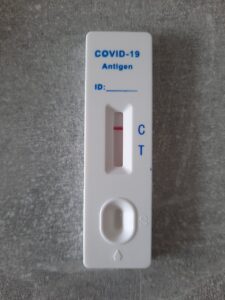
Global health crisis: Ebola laboratory testing and vaccine development urgency
A new Ebola variant circulating in the Democratic Republic of Congo and Uganda is evading standard diagnostic tests, delaying outbreak confirmation and compounding response efforts. No approved vaccine exists for this strain, forcing reliance on labor-intensive epidemiological containment. — Photo: Andy Coffie / Pexels
SHARE
🎧 Listen to this article4:34 min · 649 words · GMJ Audio

Updated 13/09/2026

Contents
  • Diagnostic delay compounds public health risk
  • Vaccine gap leaves health systems without proven prevention tool
  • International coordination faces structural barriers
    • Key takeaways
  • Frequently asked questions
    • How is the Sudan variant genetically different from other Ebola strains?
    • Why do existing Ebola vaccines not protect against all variants?
3 min read|649 words

A newly detected Ebola strain circulating in the Democratic Republic of Congo and Uganda has no approved vaccine, according to reporting from The Conversation. The Sudan variant, which differs from previously circulating strains, has also evaded standard diagnostic tests, delaying confirmation and complicating containment efforts across the affected region.

0
approved vaccines currently available for the Sudan variant of Ebola virus disease

Diagnostic delay compounds public health risk

The Sudan variant evades detection by standard Ebola diagnostic assays, a critical vulnerability in outbreak response, according to The Conversation’s analysis. This genetic divergence meant health authorities in affected regions required additional time to confirm cases and establish the true scale of transmission.

The delayed confirmation has slowed epidemiological investigation and contact tracing efforts. In a disease where early isolation is essential to breaking transmission chains, every day of diagnostic uncertainty increases risk of further spread, particularly in settings with limited laboratory infrastructure.

Submit Your Paper
GMJ_Submit_Banner

Vaccine gap leaves health systems without proven prevention tool

Two vaccines have received regulatory approval for the Zaire variant of Ebola—the most prevalent strain globally—but neither has demonstrated efficacy against Sudan variant infection. Clinical development for Sudan-specific vaccines remains in earlier stages, with no candidate currently approved for human deployment.

🎙️ Related Podcast Episodes
🎧 #16 | WHO Prequalifies New Oral Polio Vaccine to Strengthen Global Eradication Efforts · 20m
🎧 #44 | GMJ Podcast | Infant Formula Contamination — Global Food Safety Failure and the Cereulide Outbreak · 21m
🎧 #23 | WHO: Next-Generation Influenza Vaccines Could Save Millions of Lives · 18m
🎧 #13 | Six Years After COVID-19: Is the World Better Prepared for the Next Pandemic? · 19m
🎧 #8 | WHO Food Safety Surveillance: Strengthening Global Systems to Detect and Prevent Foodborne Diseases · 19m

This vaccine gap is particularly concerning given Sudan variant’s historical mortality rate and the recent emergence of transmission in multiple countries simultaneously. Control efforts must therefore rely entirely on traditional public health measures: rapid case identification, isolation, and careful management of contacts—approaches that require robust healthcare infrastructure not universally available in affected regions.

International coordination faces structural barriers

The World Health Organization has activated regional emergency protocols, but the absence of pre-positioned vaccine supplies and validated rapid diagnostics limits response speed, according to The Conversation.

Uganda and the Democratic Republic of Congo have implemented border screening and case investigation protocols, but neighbouring countries lack the same level of preparedness, creating potential corridors for further dissemination.

The Sudan variant of Ebola currently circulating in Congo and Uganda has no approved vaccine available, and standard diagnostic tests do not reliably detect this strain, creating both a therapeutic gap and an epidemiological blind spot in outbreak control.

— The Conversation, 2024

Key takeaways

  • Zero approved vaccines currently exist for the Sudan variant; two vaccines are licensed only for the Zaire variant.
  • Standard Ebola diagnostic assays fail to detect the Sudan variant, delaying outbreak confirmation and contact tracing.
  • Public health response relies entirely on isolation, case management, and contact investigation without a vaccine prevention option.
  • Regional transmission across Congo and Uganda indicates potential for further spread without rapid diagnostic and vaccine development support.

Frequently asked questions

How is the Sudan variant genetically different from other Ebola strains?

The Sudan variant represents a distinct genetic lineage within the Ebola virus genus that has circulated independently from the Zaire variant for decades. Its genetic differences are sufficient that it evades detection by diagnostic assays designed for other strains, according to The Conversation. This divergence also means immunity generated by Zaire-targeted vaccines does not transfer to Sudan variant protection.

Why do existing Ebola vaccines not protect against all variants?

Both licensed Ebola vaccines (Ervebo and Zabdeno/Dostivali) were developed and tested against the Zaire variant, which is responsible for the majority of documented human outbreaks. Vaccine development requires strain-specific immunogen design; a vaccine effective against one variant must be re-engineered and re-tested for efficacy against a genetically distant variant.

The emergence of a vaccine-resistant Ebola variant in an epidemiologically vulnerable region underscores the urgency of platform-agnostic vaccine development strategies and pre-positioned diagnostic capacity for pathogenic variants of concern. Without rapid progress on both diagnostic validation and vaccine development, containment will depend entirely on behavioural and structural interventions—a historically fragile approach in settings with limited healthcare infrastructure or cross-border mobility.

Source: Ebola strain spreading in Congo and Uganda has no approved vaccine

🗺️ Find certified Georgian healthcare providers: sheniekimi.ge — Georgia Health Map · 998 clinics · 6,600+ doctors · 2,296 pharmacies

Was this article helpful?

Disclaimer. This article is health journalism intended for general information and education. It is not medical advice and is not a substitute for professional diagnosis or treatment. Always consult a qualified healthcare provider about your individual circumstances. Full disclaimer →

Related Coverage

Dementia risk factors vary dramatically by country, USC study of 214,000 adults revealsOct 3, 2026
HIV in Yorkshire and Humber: Annual epidemiological data shows testing gaps and regional disparitiesOct 3, 2026
UK flu and COVID-19 surveillance data to May 2027 shows continued monitoring amid seasonal trendsOct 3, 2026
Two weeks after Venezuela's earthquakes, PAHO flags critical health gaps as response pivots to recoveryOct 3, 2026
Explore more on this topic:🧭 Tuberculosis hub🧭 Vaccines hub🧭 Ebola and Viral Haemorrhagic Fevers hub
🔥 Most read this week
1Animal Protein’s Muscle-Building Edge Disappears When Measured Over Days, Not Hours
2Animal Protein Produces 47% Larger Muscle Protein Synthesis Spike Than Plant Sources, New Research Shows
3Resistance Training Linked to 27% Reduction in Early Death Risk, Large-Scale Review Finds
4High-Intensity Interval Training Alone Preserves Muscle While Reducing Fat in Older Adults
Related reference
  • SAMe · Ingredient

Find certified Georgian healthcare providers at sheniekimi.ge/jandacvis-ruka/

PG
Editorial oversight
Prof. Giorgi Pkhakadze, MD, MPH, PhD
Editor-in-Chief, GMJ News
Full profile →  ·  ORCID 0000-0001-7609-4515
Medical disclaimer. This article is health journalism intended for general information. It is not medical advice and is not a substitute for consultation with a qualified healthcare professional. Always seek your physician's advice regarding any medical condition.
Editorial standards. This article was produced under the GMJ News editorial process, with oversight by the GMJ Editorial Board. Our editorial process. Spotted an error? Contact the editorial team.

📬 GMJ Health Digest
Evidence-based medical news, once a week. Free, no spam, unsubscribe anytime.
TAGGED:Ebolaglobal-healthoutbreak responseSudan variantvaccines
Share This Article
Facebook Whatsapp Whatsapp LinkedIn Telegram Bluesky Copy Link Print
GMJ
ByGMJ Policy Desk
Follow:
GMJ Policy Desk is part of GMJ News, the newsroom of the Georgian Medical Journal (gmj.ge), published by the Public Health Institute of Georgia. Every article is editorially reviewed before publication.
Leave a Comment Leave a Comment

Leave a Reply Cancel reply

Your email address will not be published. Required fields are marked *

Submit Your Paper →

Georgia's peer-reviewed open-access medical journal. No APC until January 2027.
Submit Manuscript →
A 68-Year-Old Man With Chest Pain: Diagnosing Descending Thoracic Aortic Aneurysm

A teaching case in The New England Journal of Medicine describes diagnostic…

Blood Pressure Drug Telmisartan Shown to Enhance Cancer Therapy Efficacy in Early Trials

Preclinical research reveals that telmisartan, a widely prescribed blood pressure medication, significantly…

Yale researchers identify protein pathways driving Parkinson’s disease spread in the brain

Yale researchers have identified two neuron surface proteins that mediate the spread…

Submit Your Paper to GMJ

No APC until January 2027.
Submit Manuscript →

You Might Also Like

Infographic comparing ABO blood group risk in severe Plasmodium falciparum malaria, showing type O protective effectIllustrative image · Photo by Anirudh on Unsplash (Unsplash License)
Global HealthNew StudiesPolicy & SystemsResearch Digest

Blood Type O Shows Lower Risk in Severe Malaria: Updated Meta-Analysis

By
GMJ Policy Desk
31/07/2026
Laboratory researcher examining fungal cultures with agricultural chemicals in backgroundPhoto by James Baltz on Unsplash (Unsplash License)
Global HealthNew StudiesPolicy & SystemsResearch Digest

Common Farm Chemicals May Fuel Deadly Hospital Infections, UK Scientists Warn

By
GMJ Policy Desk
13/06/2026
Air France aircraft on tarmac representing flight diversion due to health protocols
Global HealthPolicy & Systems

Air France Flight Diverts to Canada After Passenger From Ebola-Hit Congo Boards ‘In Error’

By
GMJ Policy Desk
25/05/2026
Botswana health workers celebrating WHO Gold Tier HIV elimination achievement
Global HealthPolicy & Systems

Botswana Becomes First Country to Achieve WHO Gold Tier Status for Eliminating Mother-to-Child HIV Transmission

By
GMJ Policy Desk
10/06/2026
Facebook Twitter Youtube Instagram
Company
  • Privacy Policy
  • Accreditation Canada in Georgia
  • GMJ Journal
  • Submit Manuscript
  • Editorial Team
  • Register at GMJ

Subscribe to GMJ News — Click here

Join Community
© 2026 Georgian Medical Journal (GMJ). Published by the Public Health Institute of Georgia (PHIG). All rights reserved.
Welcome Back!

Sign in to your account

Username or Email Address
Password

Lost your password?