By using this site, you agree to the Privacy Policy and Terms of Use.
Accept
GMJ NewsGMJ NewsGMJ News
  • Latest News
    • GMJ Briefs
  • Podcast & Media
    • Podcast Episodes
    • GMJ Audio
    • GMJ Videos
  • Research Digest
    • New Studies
    • Georgian Research
    • Data & Numbers
  • Policy & Systems
    • Health Policy
    • Quality & Safety
    • Migration & Health
    • Global Health
  • Practice
    • Clinical Updates
    • Case Discussions
    • Pharmacy & Prescribing
    • Ingredients A-Z
  • Perspectives
    • Editorial
    • Explainers
    • Voices
    • Letters
  • GMJ Articles
    • Vol. 1 Issue 2 (2026)
    • Vol. 1 Issue 1 (2026)
    • Pre-Launch Articles (2025)
  • Read the Journal →
  • About GMJ News
Notification Show More
Font ResizerAa
GMJ NewsGMJ News
Font ResizerAa
  • Latest News
    • GMJ Briefs
  • Podcast & Media
    • Podcast Episodes
    • GMJ Audio
    • GMJ Videos
  • Research Digest
    • New Studies
    • Georgian Research
    • Data & Numbers
  • Policy & Systems
    • Health Policy
    • Quality & Safety
    • Migration & Health
    • Global Health
  • Practice
    • Clinical Updates
    • Case Discussions
    • Pharmacy & Prescribing
    • Ingredients A-Z
  • Perspectives
    • Editorial
    • Explainers
    • Voices
    • Letters
  • GMJ Articles
    • Vol. 1 Issue 2 (2026)
    • Vol. 1 Issue 1 (2026)
    • Pre-Launch Articles (2025)
  • Read the Journal →
  • About GMJ News
Follow US
GMJ News > Policy & Systems > Global Health > Common Farm Chemicals May Fuel Deadly Hospital Infections, UK Scientists Warn
Global HealthNew StudiesPolicy & SystemsResearch Digest

Common Farm Chemicals May Fuel Deadly Hospital Infections, UK Scientists Warn

GMJ
Last updated: 13/06/2026 10:46
By
GMJ Policy Desk
Share
5 Min Read
Laboratory researcher examining fungal cultures with agricultural chemicals in backgroundPhoto by James Baltz on Unsplash (Unsplash License)
University of Manchester scientists warn that common agricultural chemicals may be creating drug-resistant fungal pathogens. These resistant fungi could subsequently cause life-threatening infections in vulnerable hospital patients. — Photo by James Baltz on Unsplash (Unsplash License)
SHARE
🎧 Listen to this article4:28 min · 626 words · GMJ Audio
3 min read|626 words
✓ Reviewed by Prof. Giorgi Pkhakadze, MD, MPH, PhD · ORCID 0000-0001-7609-4515

🟡 Preliminary Evidence

Contents
    • Key takeaways
      • Potential Pathways: Farm to Hospital Infections
  • Agricultural Chemicals Under Scrutiny
  • Hospital Infection Risks
  • Implications for One Health Approach
    • What this means
  • Frequently asked questions
    • How do farm chemicals reach hospital patients?
    • Which patients are most at risk?
    • What can be done to prevent this pathway?

Agricultural chemicals commonly used across Britain’s farmlands may be creating drug-resistant fungal pathogens that subsequently cause life-threatening infections in hospitals, according to University of Manchester scientists and public health experts. The researchers warn of a potential crisis linking agricultural practices to healthcare-acquired infections, though the mechanisms remain under investigation.

Key takeaways

  • University of Manchester scientists have identified potential links between farm chemicals and hospital fungal infections
  • Agricultural fungicides may be selecting for drug-resistant pathogens that later infect vulnerable patients
  • The research highlights an overlooked pathway for antimicrobial resistance development outside clinical settings
Rising concern
over farm-to-hospital infection pathway identified by UK researchers

Potential Pathways: Farm to Hospital Infections

How agricultural chemicals may contribute to healthcare-acquired infections

Step 1
Farm chemical exposure
Step 2
Resistance selection
Step 3
Hospital transmission

Source: University of Manchester Research, 2026 | Georgian Medical Journal News

Submit Your Paper
GMJ_Submit_Banner

Agricultural Chemicals Under Scrutiny

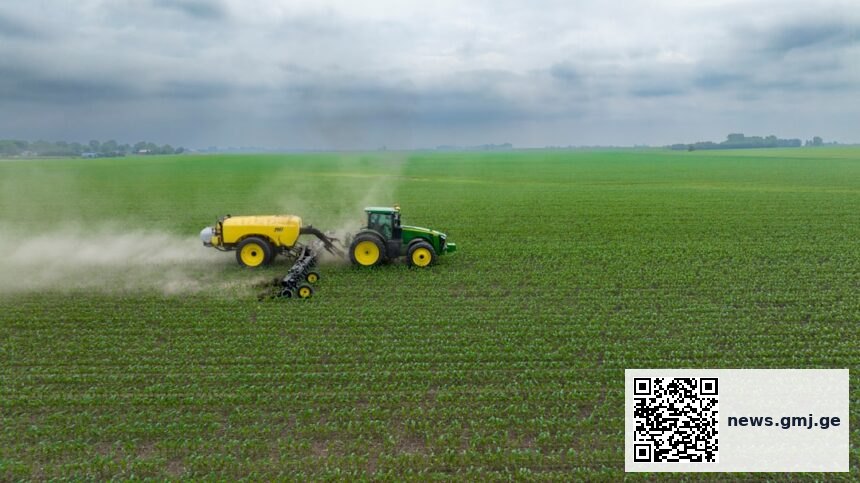
The University of Manchester research team has raised concerns about the widespread use of antifungal chemicals in British agriculture. These compounds, designed to protect crops from fungal diseases, may inadvertently be selecting for resistant fungal strains that can survive both agricultural treatments and clinical antifungal medications.

🎙️ Related Podcast Episodes
🎧 #21 | WHO Issues New Guidance on Novel Snakebite Treatments · 14m
🎧 #12 | WHO and Global Regulators Promote Antibiotic Labelling to Combat Antimicrobial Resistance · 19m

The scientists argue that this represents a previously under-recognized pathway for the development of antimicrobial resistance. Unlike hospital-acquired resistance, which develops under clinical selective pressure, agricultural resistance may be creating pathogens that arrive in healthcare settings already equipped with survival mechanisms. This research adds to growing evidence from our latest studies on environmental sources of drug resistance.

Hospital Infection Risks

Fungal infections in healthcare settings disproportionately affect immunocompromised patients, including those receiving cancer chemotherapy, organ transplant recipients, and individuals with severe underlying medical conditions. According to the World Health Organization, invasive fungal diseases carry mortality rates that can exceed 50% in vulnerable populations.

The University of Manchester researchers suggest that agricultural fungicide use may be pre-selecting for pathogens capable of causing these devastating infections. If confirmed, this would represent a significant public health concern requiring coordinated responses across agricultural and healthcare sectors.

Common farm chemicals may be fueling a looming public health crisis by creating drug-resistant fungal pathogens that subsequently cause deadly hospital infections

— University of Manchester research team (Medical Xpress, 2026)

Implications for One Health Approach

The findings underscore the interconnected nature of agricultural practices and human health outcomes, supporting the WHO’s One Health initiative. This approach recognizes that human, animal, and environmental health are intrinsically linked and require integrated surveillance and intervention strategies.

Current antimicrobial resistance monitoring primarily focuses on clinical settings, with limited systematic surveillance of agricultural environments. The Manchester team’s work suggests this may represent a critical gap in our understanding of how resistance develops and spreads. For more insights on antimicrobial resistance patterns, see our global health coverage.

What this means

For patients: Increased awareness of infection control measures, particularly for immunocompromised individuals in healthcare settings
For clinicians: Consider agricultural exposure history when treating fungal infections and advocate for enhanced infection control protocols
For policymakers: Develop integrated surveillance systems linking agricultural chemical use with healthcare-acquired infection patterns

Frequently asked questions

How do farm chemicals reach hospital patients?

The exact transmission pathways remain under investigation. Resistant fungi may spread through environmental routes, food chains, or healthcare workers who have agricultural exposure.

Which patients are most at risk?

Immunocompromised individuals, including cancer patients, transplant recipients, and those with chronic diseases, face the highest risk from drug-resistant fungal infections.

What can be done to prevent this pathway?

Researchers recommend integrated surveillance systems, responsible agricultural chemical use, and enhanced infection control measures in healthcare settings.

The University of Manchester findings represent an emerging area of research that may reshape how public health authorities approach antimicrobial resistance prevention. As investigations continue, the integration of agricultural and clinical surveillance systems may become essential for protecting vulnerable patients from these potentially deadly infections.

Source: Fungus threatens food and human health, researchers argue

Was this article helpful?

Disclaimer. This article is health journalism intended for general information and education. It is not medical advice and is not a substitute for professional diagnosis or treatment. Always consult a qualified healthcare provider about your individual circumstances. Full disclaimer →

Related Coverage

Novel PET Tracer Detects Blood Clots in Legs and Lungs with Single ScanJun 13, 2026
UK Health Security Agency Updates Vaccination Guidelines for Incomplete Immunisation RecordsJun 13, 2026
Turks and Caicos Becomes Third Caribbean Territory to Eliminate HIV Mother-to-Child TransmissionJun 13, 2026
PAHO Urges Hurricane Preparedness Despite Below-Normal 2026 Season ForecastJun 13, 2026
Related reference
  • Iron · Ingredient
PG
Written by
Prof. Giorgi Pkhakadze, MD, MPH, PhD
Editor-in-Chief, GMJ News
Full profile →
Medical disclaimer. This article is health journalism intended for general information. It is not medical advice and is not a substitute for consultation with a qualified healthcare professional. Always seek your physician's advice regarding any medical condition.
Medically reviewed by Prof. Giorgi Pkhakadze, MD, MPH, PhD. Spotted an error? Contact the editorial team.

Get the GMJ News digest
Evidence-based health journalism in your inbox. No spam; unsubscribe anytime.
TAGGED:agricultural chemicalsantimicrobial resistancefungal infectionshospital infectionsOne Health
Share This Article
Facebook LinkedIn Bluesky Copy Link Print
GMJ
ByGMJ Policy Desk
Follow:
GMJ Policy Desk is part of GMJ News, the newsroom of the Georgian Medical Journal (gmj.ge), published by the Public Health Institute of Georgia. Every article is editorially reviewed before publication.
Leave a Comment Leave a Comment

Leave a Reply Cancel reply

Your email address will not be published. Required fields are marked *

Submit Your Paper →

Georgia's peer-reviewed open-access medical journal. No APC until January 2027.
Submit Manuscript →
Novel PET Tracer Detects Blood Clots in Legs and Lungs with Single Scan

Novel PET radiotracer enables simultaneous detection of deep vein thrombosis and pulmonary…

UK Health Security Agency Updates Vaccination Guidelines for Incomplete Immunisation Records

UK Health Security Agency issues comprehensive vaccination guidance for patients with incomplete…

Turks and Caicos Becomes Third Caribbean Territory to Eliminate HIV Mother-to-Child Transmission

WHO certifies Turks and Caicos Islands for eliminating mother-to-child transmission of HIV…

Submit Your Paper to GMJ

No APC until January 2027.
Submit Manuscript →

You Might Also Like

Pregnant woman taking prenatal vitamins showing iodine supplementation importance
New StudiesResearch Digest

Severe Iodine Deficiency in Early Pregnancy Linked to Lower Verbal Intelligence at Age 15

By
GMJ Research Desk
22/05/2026
Scientific illustration showing eggs and brain health connection with statistical data
New Studies

New Study Links Regular Egg Consumption to 27% Lower Alzheimer’s Risk Over 15 Years

By
GMJ Research Desk
21/05/2026
Digital interface showing AI-powered patient education for cancer diagnosis preparation
New Studies

Pre-consultation AI doctor sessions improve cancer patient understanding and reduce anxiety

By
GMJ Research Desk
19/05/2026
Parent speaking to baby using parentese communication style
New StudiesResearch Digest

Baby Talk Actually Accelerates Language Learning in Infants, Study Reveals

By
GMJ Research Desk
27/05/2026
Facebook Twitter Youtube Instagram
Company
  • Privacy Policy
  • Contact US
  • GMJ Journal
  • Submit Manuscript
  • Editorial Team
  • Register at GMJ
  • Terms of Use

Subscribe to GMJ News — Click here

Join Community
© 2026 Georgian Medical Journal (GMJ). Published by the Public Health Institute of Georgia (PHIG). All rights reserved.
Welcome Back!

Sign in to your account

Username or Email Address
Password

Lost your password?

Not a member? Sign Up