By using this site, you agree to the Privacy Policy and Terms of Use.
Accept
GMJ NewsGMJ NewsGMJ News
  • Latest News
    • GMJ Briefs
  • Podcast & Media
    • Podcast Episodes
    • GMJ Audio
    • GMJ Videos
  • Research Digest
    • New Studies
    • Georgian Research
    • Data & Numbers
  • Policy & Systems
    • Health Policy
    • Quality & Safety
    • Migration & Health
    • Global Health
  • Practice
    • Clinical Updates
    • Case Discussions
    • Pharmacy & Prescribing
    • Ingredients A-Z
  • Perspectives
    • Editorial
    • Explainers
    • Voices
    • Letters
  • GMJ Articles
    • Vol. 1 Issue 2 (2026)
    • Vol. 1 Issue 1 (2026)
    • Pre-Launch Articles (2025)
  • Read the Journal →
  • About GMJ News
Notification Show More
Font ResizerAa
GMJ NewsGMJ News
Font ResizerAa
  • Latest News
    • GMJ Briefs
  • Podcast & Media
    • Podcast Episodes
    • GMJ Audio
    • GMJ Videos
  • Research Digest
    • New Studies
    • Georgian Research
    • Data & Numbers
  • Policy & Systems
    • Health Policy
    • Quality & Safety
    • Migration & Health
    • Global Health
  • Practice
    • Clinical Updates
    • Case Discussions
    • Pharmacy & Prescribing
    • Ingredients A-Z
  • Perspectives
    • Editorial
    • Explainers
    • Voices
    • Letters
  • GMJ Articles
    • Vol. 1 Issue 2 (2026)
    • Vol. 1 Issue 1 (2026)
    • Pre-Launch Articles (2025)
  • Read the Journal →
  • About GMJ News
Follow US
GMJ News > Practice > Clinical Updates > Novel PET Tracer Detects Blood Clots in Legs and Lungs with Single Scan
Clinical UpdatesNew StudiesPracticeResearch Digest

Novel PET Tracer Detects Blood Clots in Legs and Lungs with Single Scan

GMJ
Last updated: 13/06/2026 10:46
By
GMJ Practice Desk
Share
6 Min Read
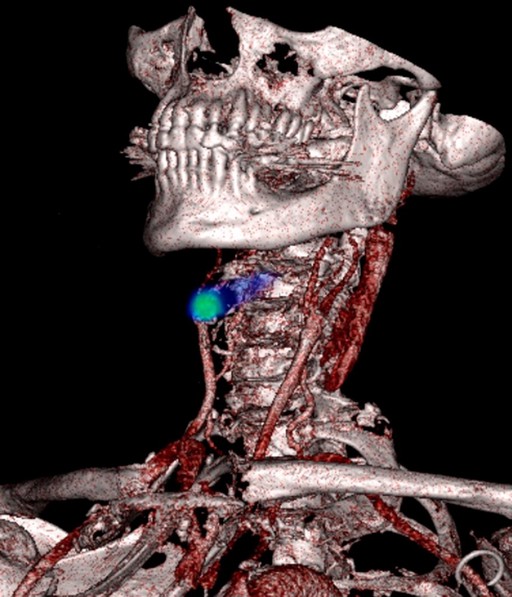
PET scan image showing blood clot detection in legs and lungs using novel radiotracer technology"Advances in stroke treatment" is licensed under CC BY 4.0. To view a copy of this license, visit https://creativecommons.org/licenses/by/4.0/. (CC BY 4.0)
Novel PET radiotracer enables simultaneous detection of deep vein thrombosis and pulmonary embolism in single whole-body scan. Research recognized with 2026 SNMMI Image of the Year award. — "Advances in stroke treatment" is licensed under CC BY 4.0. To view a copy of this license, visit https://creativecommons.org/licenses/by/4.0/. (CC BY 4.0)
SHARE
🎧 Listen to this article5:48 min · 816 words · GMJ Audio
4 min read|816 words
✓ Medically reviewed by Prof. Giorgi Pkhakadze, MD, MPH, PhD · ORCID 0000-0001-7609-4515

🟡 Preliminary Evidence

Contents
    • Key takeaways
      • Venous Thromboembolism: A Major Health Challenge
  • Revolutionary Imaging Technology Shows Promise
  • Clinical Impact and Diagnostic Efficiency
  • Recognition and Future Clinical Applications
    • What this means
  • Frequently asked questions
    • How does this new PET tracer differ from current imaging methods?
    • What are the current challenges in diagnosing blood clots?
    • When might this technology become available for clinical use?

A novel positron emission tomography (PET) radiotracer can simultaneously detect deep vein thrombosis in the legs and identify whether blood clots have migrated to the lungs, according to research presented at the Society of Nuclear Medicine and Molecular Imaging (SNMMI) 2026 Annual Meeting. The breakthrough imaging approach enables whole-body visualization of blood clots in a single scan, potentially revolutionizing diagnosis of venous thromboembolism. The collection of images demonstrating blood clot visualization has been selected as the 2026 SNMMI Henry N. Wagner, Jr., Image of the Year.

Key takeaways

  • New PET radiotracer accurately detects deep vein thrombosis and pulmonary embolism in one scan
  • Whole-body imaging approach may reduce diagnostic time and improve patient outcomes
  • Research findings recognized with prestigious 2026 SNMMI Image of the Year award
Single scan
detection of blood clots throughout the body using novel PET tracer

Venous Thromboembolism: A Major Health Challenge

Annual incidence and mortality impact globally

10 million
Annual VTE cases worldwide
544,000
Deaths annually in EU
30%
PE mortality rate if untreated

Source: European Centre for Disease Prevention and Control, 2022 | Georgian Medical Journal News

Submit Your Paper
GMJ_Submit_Banner

Revolutionary Imaging Technology Shows Promise

The novel PET radiotracer represents a significant advancement in thrombosis detection, addressing current limitations in diagnostic imaging. Traditional approaches typically require separate imaging studies for suspected deep vein thrombosis and pulmonary embolism, potentially delaying treatment decisions. Research presented at the SNMMI meeting demonstrates the tracer’s ability to provide comprehensive visualization of the venous system in a single procedure.

Current diagnostic protocols often involve duplex ultrasound for lower extremity evaluation and computed tomography pulmonary angiography (CTPA) for lung assessment. The Centers for Disease Control and Prevention estimates that venous thromboembolism affects up to 900,000 Americans annually, with pulmonary embolism causing approximately 100,000 to 180,000 deaths per year.

Clinical Impact and Diagnostic Efficiency

The whole-body imaging capability addresses a critical clinical need for patients presenting with symptoms that could indicate either deep vein thrombosis or pulmonary embolism. Emergency department physicians frequently encounter patients with chest pain, shortness of breath, or leg swelling where the source of potential thrombosis remains unclear. A comprehensive single-scan approach could streamline the diagnostic process and reduce radiation exposure compared to multiple imaging studies.

According to the World Health Organization, cardiovascular diseases remain the leading cause of death globally, with thrombotic events contributing significantly to this burden. The novel tracer technology may enable earlier detection and treatment initiation, potentially improving patient outcomes. For more insights into cutting-edge diagnostic technologies, see our New Studies section.

Recognition and Future Clinical Applications

The selection of this research as the 2026 SNMMI Image of the Year underscores its potential clinical significance. The Henry N. Wagner, Jr., Image of the Year award recognizes outstanding contributions to nuclear medicine imaging that demonstrate exceptional scientific merit and clinical relevance.

The imaging approach may prove particularly valuable in complex clinical scenarios where patients present with multiple risk factors for thrombotic disease. This includes hospitalized patients, those with cancer, individuals with inherited thrombophilia, or patients receiving hormone therapy. The published literature on advanced thrombosis imaging continues to evolve, with researchers exploring various molecular targets for improved detection.

The novel PET radiotracer enables simultaneous detection of deep vein thrombosis and pulmonary embolism in a single whole-body scan, potentially transforming diagnostic approaches for venous thromboembolism.

— Research presented at Society of Nuclear Medicine and Molecular Imaging 2026 Annual Meeting

What this means

For patients: Potentially faster diagnosis with single imaging study instead of multiple tests, reducing time to treatment and healthcare facility visits
For clinicians: Comprehensive venous system evaluation in one procedure may improve diagnostic confidence and enable more efficient treatment decisions
For policymakers: Novel imaging technology could reduce healthcare costs and improve resource utilization while maintaining diagnostic accuracy

Frequently asked questions

How does this new PET tracer differ from current imaging methods?

The novel tracer provides whole-body visualization of blood clots in a single scan, unlike current approaches that typically require separate ultrasound for legs and CT scanning for lungs. This comprehensive approach may reduce diagnostic time and improve detection accuracy.

What are the current challenges in diagnosing blood clots?

Current diagnostic protocols often involve multiple imaging studies, which can delay treatment decisions and increase patient radiation exposure. Traditional methods may miss clots in certain locations or require clinical judgment about which body regions to image.

When might this technology become available for clinical use?

While the research shows promising results, the technology requires further clinical validation and regulatory approval before routine clinical implementation. The timeline for availability will depend on additional safety and efficacy studies.

The recognition of this imaging advance highlights the ongoing innovation in nuclear medicine and molecular imaging approaches to thrombotic disease. As research continues to validate the clinical utility of novel PET tracers, the potential for improved patient care through more efficient and comprehensive diagnostic approaches becomes increasingly apparent. This technological advancement represents an important step toward personalized medicine approaches for venous thromboembolism management.

Source: New PET tracer identifies DVT in legs and lungs

Was this article helpful?

Disclaimer. This article is health journalism intended for general information and education. It is not medical advice and is not a substitute for professional diagnosis or treatment. Always consult a qualified healthcare provider about your individual circumstances. Full disclaimer →

Related Coverage

GLP-1 Drugs Show 30% Lower Breast Cancer Risk in Major StudyJun 13, 2026
Common Farm Chemicals May Fuel Deadly Hospital Infections, UK Scientists WarnJun 13, 2026
Oral GLP-1 Drug Achieves 11.3% Weight Loss in Phase 2 TrialJun 13, 2026
AI-Enhanced Scans and Immune-Targeting Drugs Transform Heart Inflammation DetectionJun 13, 2026
Related reference
  • Deep Vein Thrombosis · Condition
  • Pulmonary Embolism · Condition
PG
Written by
Prof. Giorgi Pkhakadze, MD, MPH, PhD
Editor-in-Chief, GMJ News
Full profile →
Medical disclaimer. This article is health journalism intended for general information. It is not medical advice and is not a substitute for consultation with a qualified healthcare professional. Always seek your physician's advice regarding any medical condition.
Medically reviewed by Prof. Giorgi Pkhakadze, MD, MPH, PhD. Spotted an error? Contact the editorial team.

Get the GMJ News digest
Evidence-based health journalism in your inbox. No spam; unsubscribe anytime.
TAGGED:blood clotsdeep vein thrombosisnuclear medicinePET imagingpulmonary embolism
Share This Article
Facebook LinkedIn Bluesky Copy Link Print
GMJ
ByGMJ Practice Desk
Follow:
GMJ Practice Desk is part of GMJ News, the newsroom of the Georgian Medical Journal (gmj.ge), published by the Public Health Institute of Georgia. Every article is editorially reviewed before publication.
Leave a Comment Leave a Comment

Leave a Reply Cancel reply

Your email address will not be published. Required fields are marked *

Submit Your Paper →

Georgia's peer-reviewed open-access medical journal. No APC until January 2027.
Submit Manuscript →
GLP-1 Drugs Show 30% Lower Breast Cancer Risk in Major Study

Large observational study finds women taking GLP-1 drugs like Ozempic and Wegovy…

Common Farm Chemicals May Fuel Deadly Hospital Infections, UK Scientists Warn

University of Manchester scientists warn that common agricultural chemicals may be creating…

UK Health Security Agency Updates Vaccination Guidelines for Incomplete Immunisation Records

UK Health Security Agency issues comprehensive vaccination guidance for patients with incomplete…

Submit Your Paper to GMJ

No APC until January 2027.
Submit Manuscript →

You Might Also Like

Scientific illustration showing multivitamin supplements and aging biomarkers
New StudiesResearch Digest

Daily Multivitamins May Slow Biological Aging and Cognitive Decline, Major Study Finds

By
GMJ Research Desk
24/05/2026
Medical imaging display showing pancreatic cancer vascular invasion assessment with AI assistance
New StudiesResearch Digest

Open-Source AI Tool Improves Pancreatic Cancer Vascular Invasion Assessment Across Multiple Centres

By
GMJ Research Desk
04/06/2026
Medical illustration showing jaw tumour treatment with molecular targeting approach
New StudiesResearch Digest

New Treatment Shows Promise Against Aggressive Jaw Tumour

By
GMJ Research Desk
11/06/2026
Illustration of irisin signalling pathway in multiple sclerosis neuroprotection
New Studies

Exercise Hormone Irisin Shows Promise in Multiple Sclerosis Neuroprotection

By
GMJ Research Desk
21/05/2026
Facebook Twitter Youtube Instagram
Company
  • Privacy Policy
  • Contact US
  • GMJ Journal
  • Submit Manuscript
  • Editorial Team
  • Register at GMJ
  • Terms of Use

Subscribe to GMJ News — Click here

Join Community
© 2026 Georgian Medical Journal (GMJ). Published by the Public Health Institute of Georgia (PHIG). All rights reserved.
Welcome Back!

Sign in to your account

Username or Email Address
Password

Lost your password?

Not a member? Sign Up