By using this site, you agree to the Privacy Policy and Terms of Use.
Accept
GMJ NewsGMJ NewsGMJ News
  • Latest News
    • GMJ Briefs
  • Podcast & Media
    • Podcast Episodes
    • GMJ Audio
    • GMJ Videos
  • Research Digest
    • New Studies
    • Georgian Research
    • Data & Numbers
  • Policy & Systems
    • Health Policy
    • Quality & Safety
    • Migration & Health
    • Global Health
  • Practice
    • Clinical Updates
    • Case Discussions
    • Pharmacy & Prescribing
    • Ingredients A-Z
  • Perspectives
    • Editorial
    • Explainers
    • Voices
    • Letters
  • Health Topics
  • GMJ Articles
    • Vol. 1 Issue 2 (2026)
    • Vol. 1 Issue 1 (2026)
    • Pre-Launch Articles (2025)
  • Read the Journal →
  • About GMJ News
Notification Show More
Font ResizerAa
GMJ NewsGMJ News
Font ResizerAa
  • Latest News
    • GMJ Briefs
  • Podcast & Media
    • Podcast Episodes
    • GMJ Audio
    • GMJ Videos
  • Research Digest
    • New Studies
    • Georgian Research
    • Data & Numbers
  • Policy & Systems
    • Health Policy
    • Quality & Safety
    • Migration & Health
    • Global Health
  • Practice
    • Clinical Updates
    • Case Discussions
    • Pharmacy & Prescribing
    • Ingredients A-Z
  • Perspectives
    • Editorial
    • Explainers
    • Voices
    • Letters
  • Health Topics
  • GMJ Articles
    • Vol. 1 Issue 2 (2026)
    • Vol. 1 Issue 1 (2026)
    • Pre-Launch Articles (2025)
  • Read the Journal →
  • About GMJ News
Follow US
GMJ News > GMJ Briefs > What Clinicians Need to Know: Three Key Findings on Prehospital Whole Blood

What Clinicians Need to Know: Three Key Findings on Prehospital Whole Blood

GMJ
Last updated: 12/08/2026 08:52
By
Prof. Giorgi Pkhakadze
Share
1 Min Read
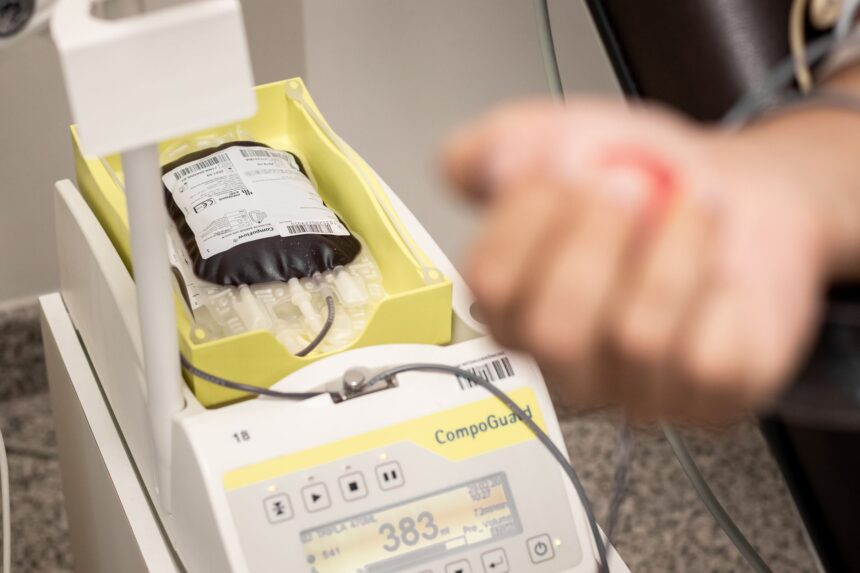
Medical illustration of prehospital trauma resuscitation with whole blood transfusion
Two new randomized trials in the New England Journal of Medicine demonstrate that prehospital whole blood transfusion is safe and effective for severe traumatic hemorrhage. The converging evidence may prompt rapid changes to emergency medical protocols worldwide. — Photo by Lucas Oliveira on Pexels (Pexels License)
SHARE
1 min read|137 words

Two new randomized trials provide actionable evidence for emergency medicine professionals. First, parallel studies demonstrate consistent benefit of prehospital whole blood transfusion for patients with severe traumatic hemorrhage, reinforcing its role in early hemorrhage control. Second, whole blood can be safely administered in the field without unexpected adverse events, making it practical for integration into existing emergency protocols.

Third, and most importantly for health systems: feasibility evaluation of prehospital blood banking programs should now be a priority. Organizations should assess logistical requirements, training needs, and implementation pathways for introducing whole blood protocols in emergency medical services. The evidence base is now sufficiently robust to support protocol revision discussions. Emergency departments and prehospital services should collaborate on standardized approaches to maximize the potential mortality reduction offered by early whole blood transfusion.

Read the full article on GMJ Newsroom.

Was this article helpful?

GMJ Brief · Takeaway

📰 Read the full article: Whole Blood for Severe Trauma: New Evidence Supports Earlier Use in Emergency Care →

Share This Article
Facebook LinkedIn Bluesky Copy Link Print
GMJ
ByProf. Giorgi Pkhakadze
Follow:
Prof. Giorgi Pkhakadze, MD, MPH, PhD, is Editor-in-Chief of the Georgian Medical Journal and Chair of the Public Health Institute of Georgia (PHIG). He is Professor and Head of the Department of Social and Behavioural Sciences at David Tvildiani Medical University, and Secretary/Treasurer of the UEMS Section of Public Health. ORCID: 0000-0001-7609-4515.

Submit Your Paper →

Georgia's peer-reviewed open-access medical journal. No APC until January 2027.
Submit Manuscript →
Mechanism of chemotherapy resistance in ovarian cancer identified—and reversible

Michigan State University researchers have identified a protein mechanism that confers chemotherapy…

Mobile HPV screening aboard river ships reaches cervical cancer care to remote Amazon communities

A mobile point-of-care HPV screening and treatment strategy delivered by river vessels…

Healthy Diet and Exercise Cut Disease Risk Even Without Weight Loss, Major US Study Finds

New analysis of three US cohorts published in The Lancet Regional Health—Americas…

Submit Your Paper to GMJ

No APC until January 2027.
Submit Manuscript →

You Might Also Like

Educational materials and community health workers in Tanzania conducting FGM awareness intervention

Three Essential Lessons from Tanzania’s FGM Intervention: What Global Health Programs Should Know

By
Prof. Giorgi Pkhakadze
07/08/2026
Medical laboratory technician analyzing blood samples for multicancer detection testing

Emerging Multicancer Detection Tests Can Identify 50+ Cancer Types—But Evidence Lags Far Behind

By
Prof. Giorgi Pkhakadze
22/07/2026

PHEIC Declaration: Ebola Cross-Border Transmission DRC-Uganda

By
Prof. Giorgi Pkhakadze
31/05/2026
Laboratory scientist analyzing blood samples for PFAS chemical detection and fingerprinting

What You Need to Know: PFAS Leave Traceable Marks in Your Blood—Here’s What It Means

By
Prof. Giorgi Pkhakadze
11/07/2026
Facebook Twitter Youtube Instagram
Company
  • Privacy Policy
  • Contact US
  • GMJ Journal
  • Submit Manuscript
  • Editorial Team
  • Register at GMJ
  • Terms of Use

Subscribe to GMJ News — Click here

Join Community
© 2026 Georgian Medical Journal (GMJ). Published by the Public Health Institute of Georgia (PHIG). All rights reserved.
Welcome Back!

Sign in to your account

Username or Email Address
Password

Lost your password?

Not a member? Sign Up