By using this site, you agree to the Privacy Policy and Terms of Use.
Accept
GMJ NewsGMJ NewsGMJ News
  • Latest News
    • GMJ Briefs
  • Podcast & Media
    • Podcast Episodes
    • GMJ Audio
    • GMJ Videos
  • Research Digest
    • New Studies
    • Georgian Research
    • Data & Numbers
  • Policy & Systems
    • Health Policy
    • Quality & Safety
    • Migration & Health
    • Global Health
  • Practice
    • Clinical Updates
    • Case Discussions
    • Pharmacy & Prescribing
    • Ingredients A-Z
  • Perspectives
    • Editorial
    • Explainers
    • Voices
    • Letters
  • Health Topics
  • GMJ Articles
    • Vol. 1 Issue 2 (2026)
    • Vol. 1 Issue 1 (2026)
    • Pre-Launch Articles (2025)
  • Read the Journal →
  • About GMJ News
Notification Show More
Font ResizerAa
GMJ NewsGMJ News
Font ResizerAa
  • Latest News
    • GMJ Briefs
  • Podcast & Media
    • Podcast Episodes
    • GMJ Audio
    • GMJ Videos
  • Research Digest
    • New Studies
    • Georgian Research
    • Data & Numbers
  • Policy & Systems
    • Health Policy
    • Quality & Safety
    • Migration & Health
    • Global Health
  • Practice
    • Clinical Updates
    • Case Discussions
    • Pharmacy & Prescribing
    • Ingredients A-Z
  • Perspectives
    • Editorial
    • Explainers
    • Voices
    • Letters
  • Health Topics
  • GMJ Articles
    • Vol. 1 Issue 2 (2026)
    • Vol. 1 Issue 1 (2026)
    • Pre-Launch Articles (2025)
  • Read the Journal →
  • About GMJ News
Follow US
GMJ News > GMJ Briefs > What Clinicians Need to Know: Three Key Insights Reshaping Alzheimer’s Treatment Strategy

What Clinicians Need to Know: Three Key Insights Reshaping Alzheimer’s Treatment Strategy

GMJ
Last updated: 10/08/2026 15:52
By
Prof. Giorgi Pkhakadze
Share
1 Min Read
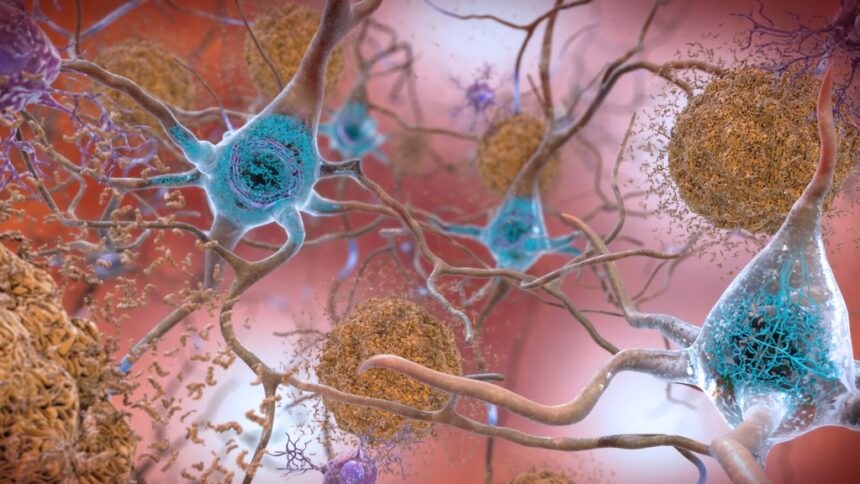
Diagram showing amyloid beta disrupting tau protein function in neurons
New research suggests amyloid beta triggers Alzheimer's disease by disrupting tau protein function rather than directly causing neuronal death. This mechanistic discovery challenges prevailing treatment strategies and may reshape therapeutic development toward combination approaches. — "Beta-Amyloid Plaques and Tau in the Brain" by National Institutes of Health (NIH) is marked with Public Domain Mark 1.0. To view the terms, visit https://creativecommons.org/publicdomain/mark/1.0/. (Public Domain Mark)
SHARE
1 min read|139 words

Three critical insights from recent research warrant immediate attention from clinicians and researchers developing Alzheimer’s therapeutics. First, amyloid beta functions as a pathogenic trigger rather than the primary cause of neurodegeneration, fundamentally reframing disease etiology. Second, tau dysregulation emerges as the critical pathological event that drives recognizable Alzheimer’s brain changes and cognitive decline.

Third, and most practically important: future treatment approaches must target both amyloid-tau interactions and their downstream effects on neuronal integrity, rather than pursuing single-protein strategies. This has direct implications for clinical trial design, drug development prioritization, and therapeutic resource allocation in neurology departments.

For patients and families, this shift suggests that next-generation Alzheimer’s therapies will likely involve combination approaches addressing multiple mechanistic pathways simultaneously. Current amyloid-focused treatments may prove most effective when combined with tau-stabilizing agents, optimizing neuronal protection.

Read the full article on GMJ Newsroom.

Submit Your Paper
GMJ_Submit_Banner

Was this article helpful?

GMJ Brief · Takeaway

📰 Read the full article: Amyloid Beta’s Role in Tau Disruption May Explain Alzheimer’s Pathogenesis, Study Suggests →

Share This Article
Facebook LinkedIn Bluesky Copy Link Print
GMJ
ByProf. Giorgi Pkhakadze
Follow:
Prof. Giorgi Pkhakadze, MD, MPH, PhD, is Editor-in-Chief of the Georgian Medical Journal and Chair of the Public Health Institute of Georgia (PHIG). He is Professor and Head of the Department of Social and Behavioural Sciences at David Tvildiani Medical University, and Secretary/Treasurer of the UEMS Section of Public Health. ORCID: 0000-0001-7609-4515.

Submit Your Paper →

Georgia's peer-reviewed open-access medical journal. No APC until January 2027.
Submit Manuscript →
How Vitamin D Becomes an Antimicrobial Weapon Inside Your Immune Cells

Macrophages actively convert vitamin D into cathelicidin, a potent antimicrobial peptide, when…

Brain’s Energy Demands: Why B Vitamins and Micronutrients Matter for Cognitive Function

The human brain consumes 20% of body energy in adults—rising to 50%…

Actin: The Molecular Engine Powering Cell Movement, Division, and Immune Defense

Actin, comprising ~6% of cellular protein, is a multifunctional molecule enabling muscle…

Submit Your Paper to GMJ

No APC until January 2027.
Submit Manuscript →

You Might Also Like

Scientific research laboratory with charts showing reproducibility statistics and reform initiatives

70% Replication Failure Rate Reveals Scope of Scientific Reproducibility Crisis

By
Prof. Giorgi Pkhakadze
22/07/2026
Researcher using precision equipment to slice tumor tissue samples for cancer analysis

Precision Tumor Slicing Achieves Optimal 1-2mm Sample Thickness for Cancer Analysis

By
Prof. Giorgi Pkhakadze
10/06/2026
Medical illustration showing stem cell-derived heart patch being placed on damaged cardiac tissue

Stem Cell Heart Patches Offer New Treatment Path for Millions with Advanced Heart Failure

By
Prof. Giorgi Pkhakadze
04/06/2026
Clinical trial data showing efficacy of oral GLP-1 medication for type 2 diabetes management

70% of Trial Participants Achieve Dual Efficacy With New Oral GLP-1 Agent

By
Prof. Giorgi Pkhakadze
25/07/2026
Facebook Twitter Youtube Instagram
Company
  • Privacy Policy
  • Contact US
  • GMJ Journal
  • Submit Manuscript
  • Editorial Team
  • Register at GMJ
  • Terms of Use

Subscribe to GMJ News — Click here

Join Community
© 2026 Georgian Medical Journal (GMJ). Published by the Public Health Institute of Georgia (PHIG). All rights reserved.
Welcome Back!

Sign in to your account

Username or Email Address
Password

Lost your password?

Not a member? Sign Up