By using this site, you agree to the Privacy Policy and Terms of Use.
Accept
GMJ NewsGMJ NewsGMJ News
  • Latest News
    • GMJ Briefs
  • Podcast & Media
    • Podcast Episodes
    • GMJ Audio
    • GMJ Videos
  • Research Digest
    • New Studies
    • Georgian Research
    • Data & Numbers
  • Policy & Systems
    • Health Policy
    • Quality & Safety
    • Migration & Health
    • Global Health
  • Practice
    • Clinical Updates
    • Case Discussions
    • Pharmacy & Prescribing
    • Ingredients A-Z
  • Perspectives
    • Editorial
    • Explainers
    • Voices
    • Letters
  • Health Topics
  • GMJ Articles
    • Vol. 1 Issue 2 (2026)
    • Vol. 1 Issue 1 (2026)
    • Pre-Launch Articles (2025)
  • Read the Journal →
  • About GMJ News
Notification Show More
Font ResizerAa
GMJ NewsGMJ News
Font ResizerAa
  • Latest News
    • GMJ Briefs
  • Podcast & Media
    • Podcast Episodes
    • GMJ Audio
    • GMJ Videos
  • Research Digest
    • New Studies
    • Georgian Research
    • Data & Numbers
  • Policy & Systems
    • Health Policy
    • Quality & Safety
    • Migration & Health
    • Global Health
  • Practice
    • Clinical Updates
    • Case Discussions
    • Pharmacy & Prescribing
    • Ingredients A-Z
  • Perspectives
    • Editorial
    • Explainers
    • Voices
    • Letters
  • Health Topics
  • GMJ Articles
    • Vol. 1 Issue 2 (2026)
    • Vol. 1 Issue 1 (2026)
    • Pre-Launch Articles (2025)
  • Read the Journal →
  • About GMJ News
Follow US
GMJ News > GMJ Briefs > What Clinicians Should Know: Finerenone’s Role in Non-Diabetic Kidney Disease Management

What Clinicians Should Know: Finerenone’s Role in Non-Diabetic Kidney Disease Management

GMJ
Last updated: 15/07/2026 22:26
By
Prof. Giorgi Pkhakadze
Share
1 Min Read
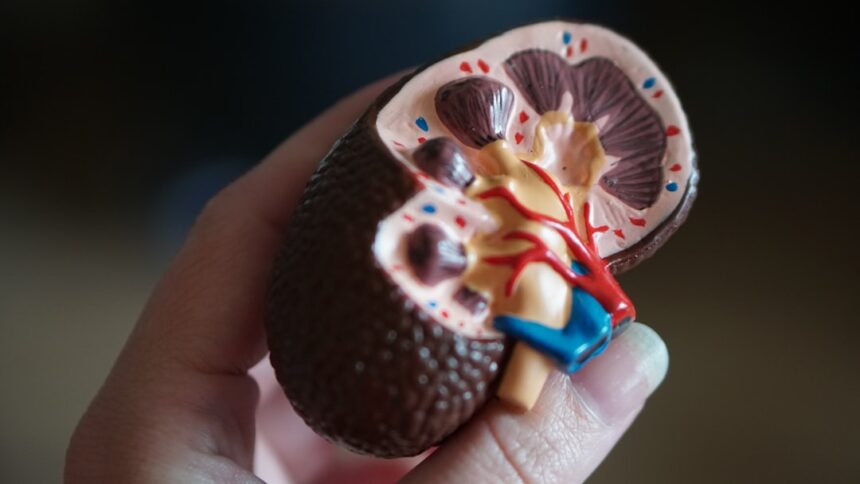
Medical illustration showing kidney and heart protection with finerenone treatment
Finerenone significantly reduces cardiovascular events by 14% in non-diabetic chronic kidney disease patients, according to landmark NEJM trial. The drug offers new cardiovascular protection for millions of previously underserved patients. — Photo by Robina Weermeijer on Unsplash (Unsplash License)
SHARE
1 min read|127 words

The FIND-CKD trial delivers three critical findings for clinical practice. First, finerenone achieves a meaningful 14% reduction in heart attacks and strokes among non-diabetic chronic kidney disease patients, addressing a previously under-treated population. Second, this cardiovascular protection extends consistently across all kidney disease stages and underlying causes, demonstrating broad applicability regardless of disease etiology. Third, the medication’s side effect profile remains manageable with appropriate clinical monitoring, particularly regarding hyperkalemia risk. These findings support finerenone’s addition to standard care protocols that already include ACE inhibitors or angiotensin receptor blockers. Clinicians managing non-diabetic chronic kidney disease patients should consider incorporating finerenone into their therapeutic armamentarium, particularly for those with albuminuria and elevated cardiovascular risk, while ensuring appropriate electrolyte monitoring protocols are in place.

Read the full article on GMJ Newsroom.

Was this article helpful?
GMJ Brief · Takeaway

📰 Read the full article: Finerenone Shows Cardiovascular Benefits in Non-Diabetic Chronic Kidney Disease Patients →

Related reference
  • Chronic Kidney Disease · Condition
  • Stroke · Condition
Share This Article
Facebook LinkedIn Bluesky Copy Link Print
GMJ
ByProf. Giorgi Pkhakadze
Follow:
Prof. Giorgi Pkhakadze, MD, MPH, PhD, is Editor-in-Chief of the Georgian Medical Journal and Chair of the Public Health Institute of Georgia (PHIG). He is Professor and Head of the Department of Social and Behavioural Sciences at David Tvildiani Medical University, and Secretary/Treasurer of the UEMS Section of Public Health. ORCID: 0000-0001-7609-4515.

Submit Your Paper →

Georgia's peer-reviewed open-access medical journal. No APC until January 2027.
Submit Manuscript →
Functional Testing Reshapes Coronary Artery Disease Diagnosis: What Cardiologists Need to Know

Functional physiological testing, particularly fractional flow reserve (FFR), is reshaping how cardiologists…

Trampoline Injuries Rise Among Children: A Case for Vigilance and Prevention

A clinical case report in the New England Journal of Medicine highlights…

High benchmark scores mask critical brittleness in health AI systems, Nature Medicine study reveals

A Nature Medicine study reveals that large language models achieve high scores…

Submit Your Paper to GMJ

No APC until January 2027.
Submit Manuscript →

You Might Also Like

Biotech laboratory with researcher analyzing data representing industry strategic challenges

Key Finding: Biotech Industry Faces Strategic Inflection Point Amid Cost Pressures and Innovation Demands

By
Prof. Giorgi Pkhakadze
28/06/2026
Chart showing Amish population growth projection from 400,000 to 2 million by 2075

Amish Population Surge Demands Urgent Public Health Strategy Shift

By
Prof. Giorgi Pkhakadze
20/06/2026
Chart comparing CAR T efficacy and toxicity rates in smoldering myeloma treatment

CAR T Therapy Delivers Sustained Remissions in Smoldering Myeloma, With Significant Safety Caveats

By
Prof. Giorgi Pkhakadze
19/07/2026
Medical illustration showing hantavirus transmission pathway from rodents to humans

Hantavirus Mortality Rates Reveal Stark Geographic and Syndrome-Based Disparities

By
Prof. Giorgi Pkhakadze
01/07/2026
Facebook Twitter Youtube Instagram
Company
  • Privacy Policy
  • Contact US
  • GMJ Journal
  • Submit Manuscript
  • Editorial Team
  • Register at GMJ
  • Terms of Use

Subscribe to GMJ News — Click here

Join Community
© 2026 Georgian Medical Journal (GMJ). Published by the Public Health Institute of Georgia (PHIG). All rights reserved.
Welcome Back!

Sign in to your account

Username or Email Address
Password

Lost your password?

Not a member? Sign Up