By using this site, you agree to the Privacy Policy and Terms of Use.
Accept
GMJ NewsGMJ NewsGMJ News
  • Latest News
    • GMJ Briefs
  • Podcast & Media
    • Podcast Episodes
    • GMJ Audio
    • GMJ Videos
  • Research Digest
    • New Studies
    • Georgian Research
    • Data & Numbers
  • Policy & Systems
    • Health Policy
    • Quality & Safety
    • Migration & Health
    • Global Health
  • Practice
    • Clinical Updates
    • Case Discussions
    • Pharmacy & Prescribing
    • Ingredients A-Z
  • Perspectives
    • Editorial
    • Explainers
    • Voices
    • Letters
  • Health Topics
  • GMJ Articles
    • Vol. 1 Issue 2 (2026)
    • Vol. 1 Issue 1 (2026)
    • Pre-Launch Articles (2025)
  • Read the Journal →
  • About GMJ News
Notification Show More
Font ResizerAa
GMJ NewsGMJ News
Font ResizerAa
  • Latest News
    • GMJ Briefs
  • Podcast & Media
    • Podcast Episodes
    • GMJ Audio
    • GMJ Videos
  • Research Digest
    • New Studies
    • Georgian Research
    • Data & Numbers
  • Policy & Systems
    • Health Policy
    • Quality & Safety
    • Migration & Health
    • Global Health
  • Practice
    • Clinical Updates
    • Case Discussions
    • Pharmacy & Prescribing
    • Ingredients A-Z
  • Perspectives
    • Editorial
    • Explainers
    • Voices
    • Letters
  • Health Topics
  • GMJ Articles
    • Vol. 1 Issue 2 (2026)
    • Vol. 1 Issue 1 (2026)
    • Pre-Launch Articles (2025)
  • Read the Journal →
  • About GMJ News
Follow US
GMJ News > GMJ Briefs > What Healthcare Providers Need to Know About Sandwich Generation Caregivers

What Healthcare Providers Need to Know About Sandwich Generation Caregivers

GMJ
Last updated: 13/08/2026 15:30
By
Prof. Giorgi Pkhakadze
Share
1 Min Read
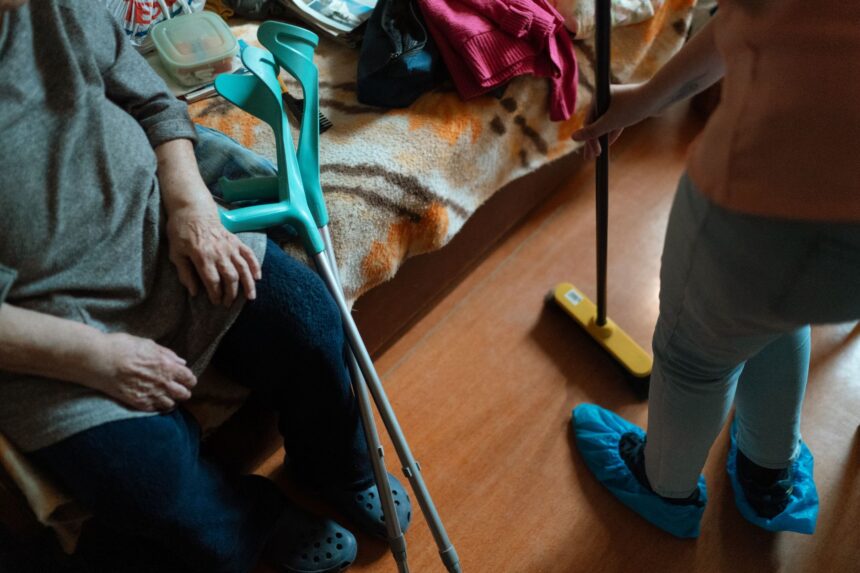
Adult caregiver supporting both child and elderly parent, representing sandwich generation dual caregiving responsibilities
The sandwich generation—adults balancing childcare and elder care—faces mounting stress and fragmented support systems. Healthcare providers and policymakers are beginning to recognize caregiver burden as a critical health equity issue requiring integrated clinical screening and expanded community resources. — Photo by Jsme MILA on Pexels (Pexels License)
SHARE
1 min read|144 words

Clinical practice must recognize the sandwich generation as a high-risk population requiring proactive mental health screening and care coordination. Adults simultaneously managing childcare and elder care demonstrate elevated rates of depression, anxiety, and burnout—yet many healthcare encounters fail to systematically assess caregiving burden or connect patients to available resources.

Three actionable insights emerge from current research: First, mental health screening should explicitly address dual caregiving responsibilities during routine visits. Second, the disparity between those experiencing financial strain (78%) and those accessing formal support (31%) demands expanded insurance coverage and employer programs. Third, integrated care models—where pediatric, geriatric, and mental health services communicate systematically—produce measurable improvements in caregiver outcomes.

Healthcare administrators and policymakers must treat caregiver support as essential clinical infrastructure rather than supplementary services, with dedicated funding and accountability metrics ensuring equitable access across all populations.

Read the full article on GMJ Newsroom.

Submit Your Paper
GMJ_Submit_Banner

Was this article helpful?

GMJ Brief · Takeaway

📰 Read the full article: The Sandwich Generation: Balancing Child and Elder Care in Modern Healthcare →

Share This Article
Facebook LinkedIn Bluesky Copy Link Print
GMJ
ByProf. Giorgi Pkhakadze
Follow:
Prof. Giorgi Pkhakadze, MD, MPH, PhD, is Editor-in-Chief of the Georgian Medical Journal and Chair of the Public Health Institute of Georgia (PHIG). He is Professor and Head of the Department of Social and Behavioural Sciences at David Tvildiani Medical University, and Secretary/Treasurer of the UEMS Section of Public Health. ORCID: 0000-0001-7609-4515.

Submit Your Paper →

Georgia's peer-reviewed open-access medical journal. No APC until January 2027.
Submit Manuscript →
How Alzheimer’s Spreads Through the Brain: Scientists Identify a Protein Culprit

Researchers have identified a common brain protein that transports toxic Tau proteins…

Buruli ulcer in Africa: balancing innovation with pragmatic care delivery

A new Nature Reviews analysis examines how sub-Saharan Africa can balance cutting-edge…

Informal healthcare providers drive untracked antibiotic use across low- and middle-income countries

A scoping review in BMJ Global Health reveals that informal healthcare providers…

Submit Your Paper to GMJ

No APC until January 2027.
Submit Manuscript →

You Might Also Like

Comparative chart showing cafestol content in boiled, French press, espresso, and filtered coffee brewing methods

The 5.4 mg/dL Question: What Your Coffee Filter Actually Does for Your Cholesterol

By
Prof. Giorgi Pkhakadze
30/07/2026
Global HealthPolicy & Systems

WHO Declares Emergency as Ebola Outbreak Spreads Across Central Africa

By
Prof. Giorgi Pkhakadze
31/05/2026
Scientific diagram showing bacterial fermentation of fiber into butyrate in the colon

Rethinking Fiber: Why Bacterial Fermentation Matters More Than Mechanical Action

By
Prof. Giorgi Pkhakadze
03/06/2026
Medical illustration comparing manufactured biotherapeutic capsules to traditional fecal microbiota transplant procedure

Takeaway: Live biotherapeutic matches donor FMT in treating recurrent C. diff infection

By
Prof. Giorgi Pkhakadze
06/07/2026
Facebook Twitter Youtube Instagram
Company
  • Privacy Policy
  • Contact US
  • GMJ Journal
  • Submit Manuscript
  • Editorial Team
  • Register at GMJ
  • Terms of Use

Subscribe to GMJ News — Click here

Join Community
© 2026 Georgian Medical Journal (GMJ). Published by the Public Health Institute of Georgia (PHIG). All rights reserved.
Welcome Back!

Sign in to your account

Username or Email Address
Password

Lost your password?

Not a member? Sign Up