By using this site, you agree to the Privacy Policy and Terms of Use.
Accept
GMJ NewsGMJ NewsGMJ News
  • Latest News
    • GMJ Briefs
  • Podcast & Media
    • Podcast Episodes
    • GMJ Audio
    • GMJ Videos
  • Research Digest
    • New Studies
    • Georgian Research
    • Data & Numbers
  • Policy & Systems
    • Health Policy
    • Quality & Safety
    • Migration & Health
    • Global Health
  • Practice
    • Clinical Updates
    • Case Discussions
    • Pharmacy & Prescribing
    • Ingredients A-Z
  • Perspectives
    • Editorial
    • Explainers
    • Voices
    • Letters
  • GMJ Articles
    • Vol. 1 Issue 2 (2026)
    • Vol. 1 Issue 1 (2026)
    • Pre-Launch Articles (2025)
  • Read the Journal →
  • About GMJ News
Notification Show More
Font ResizerAa
GMJ NewsGMJ News
Font ResizerAa
  • Latest News
    • GMJ Briefs
  • Podcast & Media
    • Podcast Episodes
    • GMJ Audio
    • GMJ Videos
  • Research Digest
    • New Studies
    • Georgian Research
    • Data & Numbers
  • Policy & Systems
    • Health Policy
    • Quality & Safety
    • Migration & Health
    • Global Health
  • Practice
    • Clinical Updates
    • Case Discussions
    • Pharmacy & Prescribing
    • Ingredients A-Z
  • Perspectives
    • Editorial
    • Explainers
    • Voices
    • Letters
  • GMJ Articles
    • Vol. 1 Issue 2 (2026)
    • Vol. 1 Issue 1 (2026)
    • Pre-Launch Articles (2025)
  • Read the Journal →
  • About GMJ News
Follow US
GMJ News > GMJ Briefs > What Healthcare Systems Need to Know: Three Essential Takeaways from UNICEF’s Climate Brief

What Healthcare Systems Need to Know: Three Essential Takeaways from UNICEF’s Climate Brief

GMJ
Last updated: 21/07/2026 13:07
By
Prof. Giorgi Pkhakadze
Share
1 Min Read
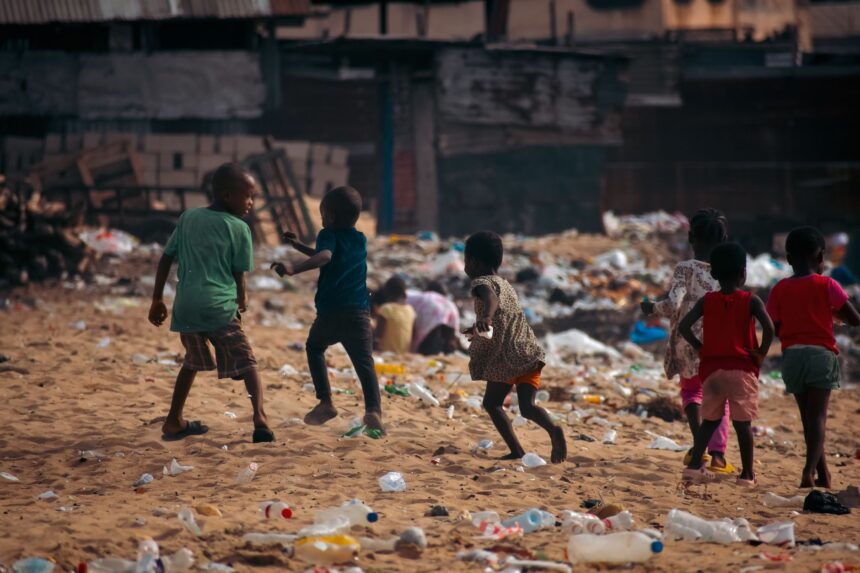
Children in climate-affected area receiving medical care from healthcare workers
UNICEF reports that over 2.2 billion children worldwide face heightened health risks from climate change impacts. Deputy Executive Director Ted Chaiban told the UN Security Council that children's physiological vulnerability makes them disproportionately affected by extreme weather events. — Photo by B. Aristotlè Guweh Jr on Pexels (Pexels License)
SHARE
1 min read|125 words

UNICEF’s testimony to the UN Security Council provides critical guidance for health systems worldwide. First, the scale is unprecedented: 2.2 billion children face climate-related health risks, making this a defining public health challenge of our generation. Second, exposure is nearly universal—89 percent experience extreme heat globally—meaning climate-prepared health infrastructure is essential everywhere, not just in high-risk regions. Third, building climate-resilient health systems has become urgently necessary. This means strengthening healthcare facilities to withstand extreme weather, ensuring supply chain continuity for essential medicines and vaccines, and training healthcare workers to manage climate-related conditions like heat stress and malnutrition. Healthcare leaders should recognize that children’s developing immune systems require proactive, climate-informed medical strategies. Investment in climate resilience is not optional but fundamental to protecting child health outcomes.

Was this article helpful?
GMJ Brief · Takeaway

📰 Read the full article: Climate Crisis Threatens 2.2 Billion Children’s Health and Wellbeing, UNICEF Reports →

Share This Article
Facebook LinkedIn Bluesky Copy Link Print
GMJ
ByProf. Giorgi Pkhakadze
Follow:
Prof. Giorgi Pkhakadze, MD, MPH, PhD, is Editor-in-Chief of the Georgian Medical Journal and Chair of the Public Health Institute of Georgia (PHIG). He is Professor and Head of the Department of Social and Behavioural Sciences at David Tvildiani Medical University, and Secretary/Treasurer of the UEMS Section of Public Health. ORCID: 0000-0001-7609-4515.

Submit Your Paper →

Georgia's peer-reviewed open-access medical journal. No APC until January 2027.
Submit Manuscript →
High-Carbohydrate Breakfast Fails to Boost Glycogen in Well-Trained Cyclists

A new study found that a large carbohydrate breakfast did not increase…

Beyond the Vitamin List: How Nutrients Work as Interconnected Biological Systems

Conventional nutrition presents vitamins and minerals as isolated nutrients, but biochemical evidence…

How Plants Send Electrical Distress Signals After Injury—Using the Same Molecule as Human Nerves

Plants deploy a glutamate-mediated calcium signaling system to detect injury and coordinate…

Submit Your Paper to GMJ

No APC until January 2027.
Submit Manuscript →

You Might Also Like

Medical illustration showing targeted therapy attacking lung cancer cells with EGFR mutations

Three Essential Insights from Sunvozertinib Trial: What Clinicians Need to Know

By
Prof. Giorgi Pkhakadze
10/07/2026

SITUATION BRIEF: Cross-Border Ebola Outbreak – DRC/Uganda

By
Prof. Giorgi Pkhakadze
31/05/2026
Laboratory mice study examining effects of sugar-free versus moderate sugar diets on metabolic health

Study Reveals Paradox: Sugar-Free Diets Associated with Worse Glucose Control

By
Prof. Giorgi Pkhakadze
13/07/2026
Medical research showing weather pattern analysis and headache correlation data visualization

Multi-Institutional Collaboration Reveals Weather Patterns as Significant Headache Triggers

By
Prof. Giorgi Pkhakadze
18/06/2026
Facebook Twitter Youtube Instagram
Company
  • Privacy Policy
  • Contact US
  • GMJ Journal
  • Submit Manuscript
  • Editorial Team
  • Register at GMJ
  • Terms of Use

Subscribe to GMJ News — Click here

Join Community
© 2026 Georgian Medical Journal (GMJ). Published by the Public Health Institute of Georgia (PHIG). All rights reserved.
Welcome Back!

Sign in to your account

Username or Email Address
Password

Lost your password?

Not a member? Sign Up