By using this site, you agree to the Privacy Policy and Terms of Use.
Accept
GMJ NewsGMJ NewsGMJ News
  • Latest News
    • GMJ Briefs
  • Podcast & Media
    • Podcast Episodes
    • GMJ Audio
    • GMJ Videos
  • Research Digest
    • New Studies
    • Georgian Research
    • Data & Numbers
  • Policy & Systems
    • Health Policy
    • Quality & Safety
    • Migration & Health
    • Global Health
  • Practice
    • Clinical Updates
    • Case Discussions
    • Pharmacy & Prescribing
    • Ingredients A-Z
  • Perspectives
    • Editorial
    • Explainers
    • Voices
    • Letters
  • Health Topics
    • Diabetes
    • Cancer
    • Cardiovascular
    • Mental Health
    • Vaccines
    • Supplements
    • Migration & Health
    • Patient Safety & Accreditation
    • Occupational Safety and Health
  • GMJ Articles
    • Vol. 1 Issue 2 (2026)
    • Vol. 1 Issue 1 (2026)
    • Pre-Launch Articles (2025)
  • Read the Journal →
  • About GMJ News
Notification Show More
Font ResizerAa
GMJ NewsGMJ News
Font ResizerAa
  • Latest News
    • GMJ Briefs
  • Podcast & Media
    • Podcast Episodes
    • GMJ Audio
    • GMJ Videos
  • Research Digest
    • New Studies
    • Georgian Research
    • Data & Numbers
  • Policy & Systems
    • Health Policy
    • Quality & Safety
    • Migration & Health
    • Global Health
  • Practice
    • Clinical Updates
    • Case Discussions
    • Pharmacy & Prescribing
    • Ingredients A-Z
  • Perspectives
    • Editorial
    • Explainers
    • Voices
    • Letters
  • Health Topics
    • Diabetes
    • Cancer
    • Cardiovascular
    • Mental Health
    • Vaccines
    • Supplements
    • Migration & Health
    • Patient Safety & Accreditation
    • Occupational Safety and Health
  • GMJ Articles
    • Vol. 1 Issue 2 (2026)
    • Vol. 1 Issue 1 (2026)
    • Pre-Launch Articles (2025)
  • Read the Journal →
  • About GMJ News
Follow US
GMJ News > GMJ Briefs > What You Need to Know: How Cell-Level Aging Changes Disease Prevention

What You Need to Know: How Cell-Level Aging Changes Disease Prevention

GMJ
Last updated: 09/08/2026 05:36
By
Prof. Giorgi Pkhakadze
Share
1 Min Read
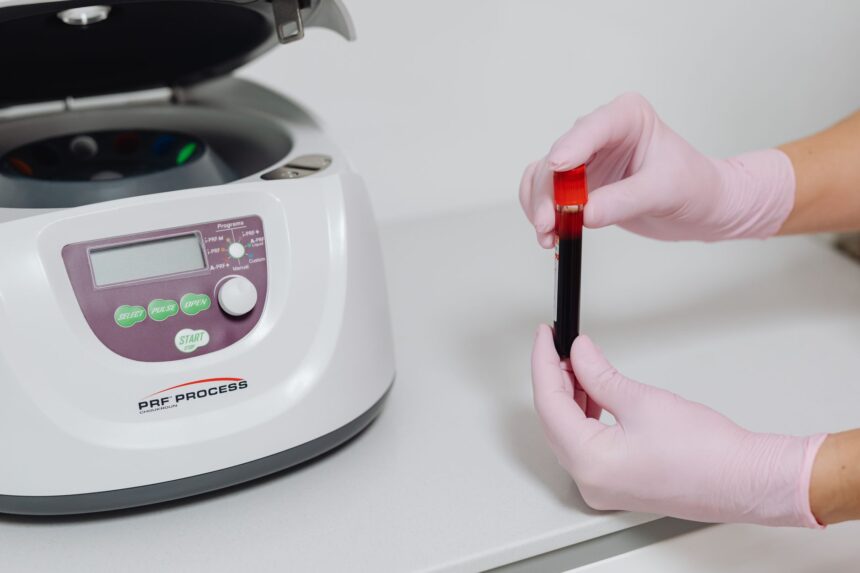
Illustration of plasma proteomics analysis showing protein signatures associated with aging in different cell types
Plasma proteomics can measure biological aging independently in 40+ cell types, with specific aging signatures predicting disease risk more accurately than chronological age. The discovery may enable precision medicine approaches to aging and early disease prevention. — Photo by www.kaboompics.com on Pexels (Pexels License)
SHARE
1 min read|139 words

Understanding cellular aging heterogeneity transforms how we approach health and disease prevention. First, cellular aging is not uniform—different cell types age at markedly different rates within the same individual, meaning your lymphoid cells may be aging faster than your fibroblasts. Second, this differential aging directly predicts disease risk before symptoms appear, enabling doctors to identify high-risk individuals years in advance and implement targeted interventions. Third, a simple blood test measuring plasma protein signatures can soon quantify biological age at the cellular level, replacing reliance on chronological age with objective molecular data. This shift enables truly personalized prevention strategies tailored to individual aging patterns rather than one-size-fits-all approaches. For patients and clinicians alike, this means disease prevention moves from reactive treatment to proactive risk stratification based on your unique cellular aging profile. Read the full article on GMJ Newsroom.

Was this article helpful?

GMJ Brief · Takeaway

📰 Read the full article: Plasma protein signatures reveal how individual cell types age and predict disease risk →

Related reference
  • SAMe · Ingredient
Share This Article
Facebook LinkedIn Bluesky Copy Link Print
GMJ
ByProf. Giorgi Pkhakadze
Follow:
Prof. Giorgi Pkhakadze, MD, MPH, PhD, is Editor-in-Chief of the Georgian Medical Journal and Chair of the Public Health Institute of Georgia (PHIG). He is Professor and Head of the Department of Social and Behavioural Sciences at David Tvildiani Medical University, and Secretary/Treasurer of the UEMS Section of Public Health. ORCID: 0000-0001-7609-4515.

Submit Your Paper →

Georgia's peer-reviewed open-access medical journal. No APC until January 2027.
Submit Manuscript →
Heat stress affects women more severely than men, research suggests

Women experience greater physiological strain during heat exposure than men, driven by…

Federal Judge Blocks Subpoenas Targeting Transgender Patient Records at New York Hospitals

A federal judge temporarily blocked prosecutors from accessing transgender patient medical records…

U.S. Healthcare Spending Surged 7.3% in 2025, Driven by GLP-1 Adoption and Increased Care Utilization

U.S. healthcare spending surged 7.3% to approximately $6 trillion in 2025, driven…

Submit Your Paper to GMJ

No APC until January 2027.
Submit Manuscript →

You Might Also Like

EBOLA OUTBREAK – DRC/UGANDA CROSS-BORDER TRANSMISSION – WHO PHEIC DECLARED

By
Prof. Giorgi Pkhakadze
31/05/2026
Illustration of artificial intelligence analyzing electronic health records for adverse drug event detection

Large Language Models Achieve 88% Accuracy in Adverse Event Detection

By
Prof. Giorgi Pkhakadze
25/07/2026
Medical illustration showing retinal nerve fiber analysis in diabetic eye examination

Blood Protein Model Outperforms Traditional Methods by 17 Percentage Points in Predicting Eye Complications

By
Prof. Giorgi Pkhakadze
20/06/2026
Infographic showing the interconnected biochemical roles of vitamins B12, folate, and B6 in one-carbon metabolism

Announcement: The B-Vitamin Methylation Triad: How B12, Folate, and B6 Work Together in Cardiovascular and Neurological Health

By
Prof. Giorgi Pkhakadze
07/08/2026
Facebook Twitter Youtube Instagram
Company
  • Privacy Policy
  • Contact US
  • GMJ Journal
  • Submit Manuscript
  • Editorial Team
  • Register at GMJ
  • Terms of Use

Subscribe to GMJ News — Click here

Join Community
© 2026 Georgian Medical Journal (GMJ). Published by the Public Health Institute of Georgia (PHIG). All rights reserved.
Welcome Back!

Sign in to your account

Username or Email Address
Password

Lost your password?

Not a member? Sign Up