The United Nations Population Fund (UNFPA) has announced the 2026 UN Population Award recipients, recognising a Senegalese surgeon specialising in obstetric fistula repair and a Burundian foundation focused on vulnerable women and children. The award underscores the critical role of clinical innovation and grassroots organisation in addressing maternal health complications in low-resource settings.
Key takeaways
- A Senegalese surgeon has dedicated his career to repairing obstetric fistula, a debilitating childbirth-related injury affecting women in sub-Saharan Africa
- A Burundian foundation provides integrated maternal and child health support in one of Africa’s most fragile healthcare contexts
- The UN Population Award recognises clinical and organisational excellence in reproductive health in under-resourced regions
UN Population Award: Recognising Reproductive Health Champions
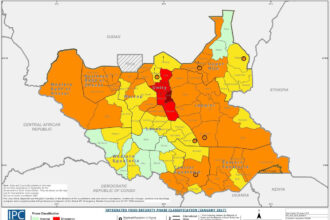
Geographic distribution and focus areas of 2026 award winners in maternal health innovation
Source: United Nations Population Fund (UNFPA), 2026 | Georgian Medical Journal News
Addressing Obstetric Fistula in Sub-Saharan Africa
Obstetric fistula—a devastating childbirth injury causing urinary or faecal incontinence—affects an estimated 2 million women globally, with the highest burden in sub-Saharan Africa, according to the UN Population Fund. The Senegalese surgeon recipient has built a clinical practice dedicated to surgical repair of this condition, restoring continence and social reintegration to women who otherwise face profound stigma and marginalisation. His work exemplifies the clinical innovation required to address preventable maternal morbidity in settings where access to emergency obstetric care remains limited. The repair of obstetric fistula requires specialised surgical expertise and sustained institutional commitment—both of which remain scarce in low-income healthcare systems across West Africa.

The surgeon’s career-long focus on this specific complication reflects a core principle in global reproductive health: that clinicians can drive measurable improvements in maternal dignity and functional outcomes by developing deep specialisation in a single, prevalent complication. His recognition signals to the international health community the value of this targeted approach in regions where maternal morbidity rates remain high.
Burundian Foundation’s Integrated Maternal and Child Health Model
The Burundian foundation recipient operates in one of Africa’s most challenging humanitarian contexts, providing maternal health services, child nutrition support, and health education to vulnerable populations. According to the UN Children’s Fund (UNICEF), Burundi faces severe gaps in maternal and child health coverage, with maternal mortality ratios among the highest globally. The foundation’s integrated model—combining clinical care with community education and social support—addresses both immediate clinical needs and the structural barriers that prevent women from seeking care. This grassroots approach is increasingly recognised as essential for achieving health policy targets in fragile healthcare systems.
The foundation’s work demonstrates that maternal health outcomes in low-resource settings depend not only on clinical capacity but also on trusted community organisations that understand local contexts, cultural barriers, and the interconnection between maternal health and child survival. Such organisations often bridge gaps left by inadequate public health infrastructure.
The Broader Context of Maternal Health Innovation
The UN Population Award recognises that progress in maternal health requires both clinical innovation and organisational commitment operating in concert. According to WHO’s Maternal Health Programme, the burden of preventable maternal morbidity and mortality remains concentrated in low- and middle-income countries, particularly in sub-Saharan Africa. Clinical specialists like the Senegalese surgeon address specific, treatable complications; organisations like the Burundian foundation address systemic access barriers and social determinants of health. Neither approach succeeds in isolation. The award signals the international community’s recognition that sustainable improvement in reproductive health requires investment in both clinical expertise and community-rooted health systems.
The recipients also demonstrate that significant impact can be achieved in resource-constrained settings by clinicians and organisations willing to focus their efforts strategically on populations with the greatest unmet need. This award may encourage similar initiatives across Africa and other low-resource regions.
Two 2026 UN Population Award winners—a Senegalese surgeon specialising in obstetric fistula repair and a Burundian foundation providing integrated maternal and child health services—exemplify the clinical and organisational approaches necessary to address preventable maternal morbidity in sub-Saharan Africa.
— United Nations Population Fund (UNFPA), 2026
What this means
Frequently asked questions
What is obstetric fistula and why is it considered a public health priority?
Obstetric fistula is an abnormal opening between the reproductive tract and the urinary or gastrointestinal tract, usually caused by prolonged or obstructed labour without timely surgical intervention. It results in chronic urinary or faecal incontinence. According to the UN Population Fund, approximately 2 million women are living with untreated obstetric fistula globally, predominantly in sub-Saharan Africa and South Asia. The condition is preventable through access to emergency obstetric care and treatable through specialised surgery, making it a key indicator of healthcare system performance in low-income regions.
How do grassroots health organisations contribute to maternal health outcomes?
Community-based organisations provide integrated services—combining clinical care, health education, and social support—that address barriers to care that hospitals and clinics alone cannot reach. These organisations often have trusted relationships with vulnerable populations, understand cultural contexts, and can address social determinants of health such as poverty, stigma, and limited health literacy. According to WHO, such partnerships are increasingly essential for closing gaps in maternal health coverage in fragile healthcare systems.
What is the UN Population Award and what does it recognise?
The UN Population Award, administered by the United Nations Population Fund (UNFPA), recognises individuals and organisations that have made outstanding contributions to reproductive health, gender equality, and population development. The award highlights innovations, clinical excellence, and sustained commitment to improving the health and dignity of populations, particularly in under-resourced settings.
As global health systems continue to confront the challenge of closing maternal health gaps in low-resource settings, the recognition of these two award winners underscores that progress requires both clinical specialisation and community-rooted health infrastructure. The 2026 UN Population Award celebrates models of maternal health innovation that are achieving measurable improvements in health and dignity for some of the world’s most vulnerable populations. These examples may serve as blueprints for similar initiatives seeking to address preventable maternal morbidity and mortality elsewhere.
Source: Restoring dignity: Senegalese surgeon and Burundian foundation win reproductive health awards
Was this article helpful?
Disclaimer. This article is health journalism intended for general information and education. It is not medical advice and is not a substitute for professional diagnosis or treatment. Always consult a qualified healthcare provider about your individual circumstances. Full disclaimer →
Related Coverage




Editorial standards. This article was produced under the GMJ News editorial process, with oversight by the GMJ Editorial Board. Our editorial process. Spotted an error? Contact the editorial team.