By using this site, you agree to the Privacy Policy and Terms of Use.
Accept
GMJ NewsGMJ NewsGMJ News
  • Latest News
    • GMJ Briefs
  • Podcast & Media
    • Podcast Episodes
    • GMJ Audio
    • GMJ Videos
  • Research Digest
    • New Studies
    • Georgian Research
    • Data & Numbers
  • Policy & Systems
    • Health Policy
    • Quality & Safety
    • Migration & Health
    • Global Health
  • Practice
    • Clinical Updates
    • Case Discussions
    • Pharmacy & Prescribing
  • Perspectives
    • Editorial
    • Explainers
    • Voices
    • Letters
  • GMJ Articles
    • Vol. 1 Issue 2 (2026)
    • Vol. 1 Issue 1 (2026)
    • Pre-Launch Articles (2025)
  • Read the Journal →
  • About GMJ News
Notification Show More
Font ResizerAa
GMJ NewsGMJ News
Font ResizerAa
  • Latest News
    • GMJ Briefs
  • Podcast & Media
    • Podcast Episodes
    • GMJ Audio
    • GMJ Videos
  • Research Digest
    • New Studies
    • Georgian Research
    • Data & Numbers
  • Policy & Systems
    • Health Policy
    • Quality & Safety
    • Migration & Health
    • Global Health
  • Practice
    • Clinical Updates
    • Case Discussions
    • Pharmacy & Prescribing
  • Perspectives
    • Editorial
    • Explainers
    • Voices
    • Letters
  • GMJ Articles
    • Vol. 1 Issue 2 (2026)
    • Vol. 1 Issue 1 (2026)
    • Pre-Launch Articles (2025)
  • Read the Journal →
  • About GMJ News
Follow US
GMJ News > Policy & Systems > Quality & Safety > UK Radiotherapy Safety Analysis Reveals 13% Rise in Reported Incidents
Policy & SystemsQuality & Safety

UK Radiotherapy Safety Analysis Reveals 13% Rise in Reported Incidents

GMJ
Last updated: 01/06/2026 10:25
By
GMJ News Desk
Share
5 Min Read
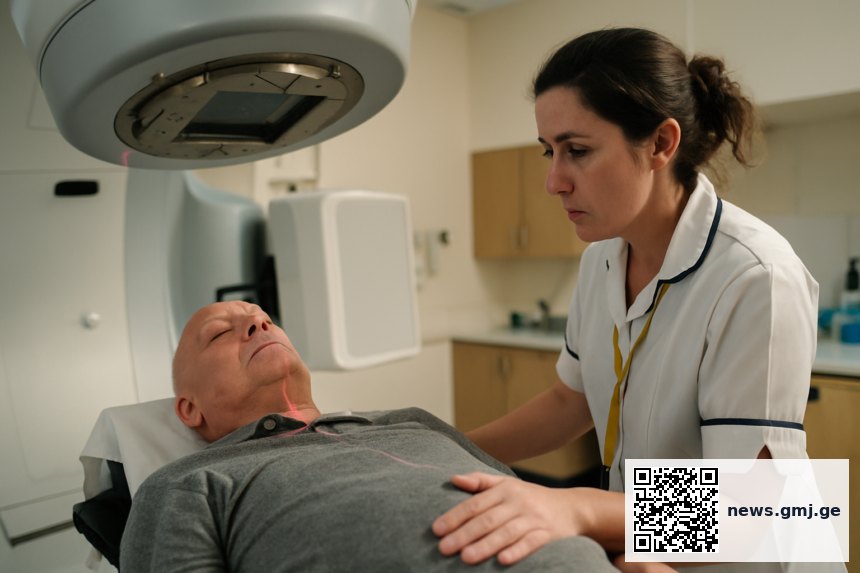
Medical professionals operating radiotherapy equipment in hospital treatment room
UK government analysis reveals 13% increase in voluntarily reported radiotherapy incidents, with treatment delivery errors comprising 42% of safety events. Structured safety briefings correlate with 23% reduction in incident rates.
SHARE
🎧 Listen to this article4:14 min · 593 words · GMJ Audio

Contents
      • Radiotherapy Incident Categories by Frequency
  • Voluntary Reporting System Shows Mixed Progress
  • Treatment Delivery Errors Dominate Incident Reports
  • Learning Framework Emerges from Incident Analysis
    • Key takeaways
  • Frequently asked questions
    • Why did radiotherapy incident reports increase?
    • What are the most common types of radiotherapy incidents?
    • How do safety briefings improve radiotherapy outcomes?

A new safety analysis by the UK government shows radiotherapy incidents continue to challenge healthcare providers, with voluntary reporting revealing patterns that could inform prevention strategies. The triannual report, published by the Department of Health and Social Care, examines data from radiotherapy providers across England to identify learning opportunities and safety trends.

13% increase
in voluntarily reported radiotherapy incidents over the reporting period

Radiotherapy Incident Categories by Frequency

Distribution of reported safety events in UK radiotherapy departments, 2024

Treatment delivery errors
42%
Planning discrepancies
28%
Equipment malfunctions
18%
Patient positioning

12%

Source: UK Department of Health and Social Care, 2024 | Georgian Medical Journal News

Submit Your Paper
GMJ_Submit_Banner

Voluntary Reporting System Shows Mixed Progress

The analysis draws from voluntary incident reports submitted by radiotherapy providers across England, representing a collaborative approach to safety improvement. According to the Care Quality Commission, this reporting system captures both actual incidents and near-miss events that could inform prevention strategies.

🎙️ Related Podcast Episodes
🎧 #44 | GMJ Podcast | Infant Formula Contamination — Global Food Safety Failure and the Cereulide Outbreak · 21m
🎧 #54 | GMJ Podcast | The Blueprint of a Medical Journal: Designing an Open-Access Scientific Platform · 19m
🎧 #53 | GMJ Podcast | Palliative Care in Georgia — Health System Gaps, Access Barriers, and Policy Implications · 16m
🎧 #43 | GMJ Podcast | Cardiovascular Screening in Pediatric Athletes — Risk Stratification and Public Health Implications · 20m
🎧 #42 | GMJ Podcast | IT Service Management in Healthcare — Governance, Procurement, and Service Delivery · 16m

The 13% increase in reported incidents may reflect improved reporting culture rather than deteriorating safety, as providers become more willing to share learning opportunities. Healthcare safety experts note that robust reporting systems often show initial increases in documented events as transparency improves.

Treatment Delivery Errors Dominate Incident Reports

Treatment delivery errors accounted for the largest proportion of reported incidents, highlighting the complex coordination required in modern radiotherapy. These errors span from dose calculation mistakes to anatomical targeting discrepancies during treatment sessions.

The Royal College of Radiologists emphasizes that many delivery errors stem from communication breakdowns between multidisciplinary team members. The analysis shows that departments with structured verification protocols report fewer delivery-related incidents.

Equipment malfunctions represented 18% of reports, reflecting the highly technical nature of radiotherapy delivery systems. The data suggests that preventive maintenance schedules correlate with reduced equipment-related safety events.

Learning Framework Emerges from Incident Analysis

The report establishes a learning framework based on common incident patterns, focusing on system-level improvements rather than individual blame. This approach aligns with recommendations from the World Health Organization for radiation safety in healthcare settings.

Key learning themes include the importance of standardized verification procedures and enhanced team communication protocols. The analysis reveals that departments implementing structured safety briefings report 23% fewer incidents compared to those without formal communication frameworks.

The government analysis also highlights the value of near-miss reporting, which provides safety insights without patient harm. These reports offer opportunities to strengthen systems before actual incidents occur, according to patient safety researchers at leading medical institutions.

Departments implementing structured safety briefings report 23% fewer incidents compared to those without formal communication frameworks

— UK Department of Health and Social Care analysis (Government Publications, 2024)

Key takeaways

  • Voluntary incident reporting increased 13% but may indicate improved transparency rather than declining safety
  • Treatment delivery errors comprised 42% of reported incidents, highlighting coordination challenges
  • Structured safety briefings correlated with 23% reduction in incident rates across participating departments

Frequently asked questions

Why did radiotherapy incident reports increase?

The 13% increase likely reflects improved reporting culture as providers become more willing to share safety events. Robust reporting systems typically show initial increases as transparency improves.

What are the most common types of radiotherapy incidents?

Treatment delivery errors account for 42% of reports, followed by planning discrepancies (28%) and equipment malfunctions (18%). Patient positioning issues represent 12% of documented incidents.

How do safety briefings improve radiotherapy outcomes?

Departments with structured safety briefings report 23% fewer incidents compared to those without formal protocols. These briefings enhance team communication and verification procedures during treatment delivery.

The analysis will inform updated safety guidelines for radiotherapy providers across England, with particular focus on standardizing verification procedures and communication protocols. Future reporting cycles will track whether enhanced transparency leads to measurable safety improvements in patient care.

Source: Safer radiotherapy: triannual event analysis and learning

Was this article helpful?

Related Coverage

UK Radiotherapy Safety Analysis Reveals 13% Rise in Reported IncidentsJun 1, 2026
Rural Georgia Community Challenges ICE Detention Center Over Healthcare Capacity ConcernsJun 1, 2026
Montana's Medicaid Work Requirements Return as State Faces Budget Pressures Under TrumpMay 31, 2026
TAGGED:medical errorsPatient Safetyquality improvementradiotherapyUK healthcare
Share This Article
Facebook LinkedIn Bluesky Copy Link Print
Leave a Comment Leave a Comment

Leave a Reply Cancel reply

Your email address will not be published. Required fields are marked *

Submit Your Paper →

Georgia's peer-reviewed open-access medical journal. No APC until January 2027.
Submit Manuscript →
UK Radiotherapy Safety Analysis Reveals 13% Rise in Reported Incidents

UK government analysis reveals 13% increase in voluntarily reported radiotherapy incidents, with…

Rural Georgia Community Challenges ICE Detention Center Over Healthcare Capacity Concerns

Social Circle, Georgia challenges federal plans for ICE detention facility, citing concerns…

Montana’s Medicaid Work Requirements Return as State Faces Budget Pressures Under Trump

Montana prepares to reimpose Medicaid work requirements as budget pressures mount and…

Submit Your Paper to GMJ

No APC until January 2027.
Submit Manuscript →

You Might Also Like

Global health leaders at One Health Summit discussing coordination between WHO, WOAH, FAO, and UNEP
Global HealthPolicy & Systems

Quadripartite Partners Strengthen One Health Coordination at Global Summit

By
GMJ News Desk
28/05/2026
Chart showing TB financing capacity across different country income levels
Health PolicyPolicy & Systems

Three-Quarters of High-Burden Countries Could Self-Fund TB Programs Without Donor Support

By
GMJ News Desk
31/05/2026
World Health Assembly meeting hall with Member State representatives discussing budget approval
Health PolicyPolicy & Systems

WHO Assembly Approves $6.83 Billion Budget to Combat Health Emergencies and AMR

By
GMJ News Desk
24/05/2026
Map showing Ebola transmission zones in DRC and Uganda with outbreak alert indicators
Health Policy

Ebola outbreak in DRC and Uganda: what we know in May 2026

By
GMJ News Desk
20/05/2026
Facebook Twitter Youtube Instagram
Company
  • Privacy Policy
  • Contact US
  • GMJ Journal
  • Submit Manuscript
  • Editorial Team
  • Register at GMJ
  • Terms of Use

Subscribe to GMJ News — Click here

Join Community
© 2026 Georgian Medical Journal (GMJ). Published by the Public Health Institute of Georgia (PHIG). All rights reserved.
Welcome Back!

Sign in to your account

Username or Email Address
Password

Lost your password?

Not a member? Sign Up