By using this site, you agree to the Privacy Policy and Terms of Use.
Accept
GMJ NewsGMJ NewsGMJ News
  • Latest News
    • GMJ Briefs
  • Podcast & Media
    • Podcast Episodes
    • GMJ Audio
    • GMJ Videos
  • Research Digest
    • New Studies
    • Georgian Research
    • Data & Numbers
  • Policy & Systems
    • Health Policy
    • Quality & Safety
    • Migration & Health
    • Global Health
  • Practice
    • Clinical Updates
    • Case Discussions
    • Pharmacy & Prescribing
    • Ingredients A-Z
  • Dictionary
    • Browse A–Z
    • About the Project
    • Contribute a Term
  • Perspectives
    • Editorial
    • Explainers
    • Voices
    • Letters
  • Health Topics
  • GMJ Articles
    • Vol. 1 Issue 2 (2026)
    • Vol. 1 Issue 1 (2026)
    • Pre-Launch Articles (2025)
  • Read the Journal →
  • About GMJ News
Notification Show More
Font ResizerAa
GMJ NewsGMJ News
Font ResizerAa
  • Latest News
    • GMJ Briefs
  • Podcast & Media
    • Podcast Episodes
    • GMJ Audio
    • GMJ Videos
  • Research Digest
    • New Studies
    • Georgian Research
    • Data & Numbers
  • Policy & Systems
    • Health Policy
    • Quality & Safety
    • Migration & Health
    • Global Health
  • Practice
    • Clinical Updates
    • Case Discussions
    • Pharmacy & Prescribing
    • Ingredients A-Z
  • Dictionary
    • Browse A–Z
    • About the Project
    • Contribute a Term
  • Perspectives
    • Editorial
    • Explainers
    • Voices
    • Letters
  • Health Topics
  • GMJ Articles
    • Vol. 1 Issue 2 (2026)
    • Vol. 1 Issue 1 (2026)
    • Pre-Launch Articles (2025)
  • Read the Journal →
  • About GMJ News
Follow US
GMJ News > GMJ Briefs > Three Critical Actions Health Systems Must Take Before El Niño Peaks

Three Critical Actions Health Systems Must Take Before El Niño Peaks

GMJ
Last updated: 07/07/2026 20:02
By
Prof. Giorgi Pkhakadze
Share
1 Min Read
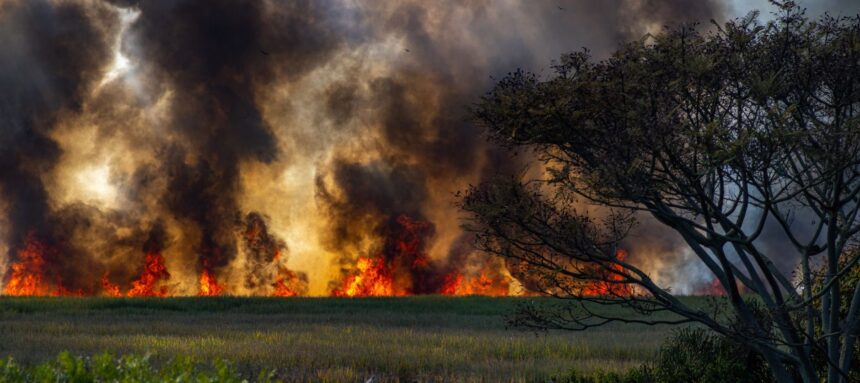
Global temperature map showing El Niño heat impacts and health risk zones
The World Meteorological Organization warns that El Niño conditions will drive above-average temperatures, intensifying heatwaves, droughts, and wildfires through August 2024. Health systems must prepare for increased climate-related health emergencies and heat stress impacts on vulnerable populations. — Photo by Alexandre P. Junior on Pexels (Pexels License)
SHARE
1 min read|115 words

As El Niño conditions intensify through August 2024, health systems must prioritize three critical preparedness measures. First, expect sustained above-average global temperatures that will drive record heatwaves and related health emergencies. Second, prepare for cascading impacts including increased heatwaves, droughts, and wildfire exposure affecting vulnerable populations across multiple regions. Third, implement comprehensive emergency preparedness protocols immediately, including surge capacity planning, heat-illness treatment protocols, and targeted interventions for at-risk communities. Health professionals should establish or strengthen coordination mechanisms with meteorological services to monitor real-time climate conditions and adjust resources accordingly. Proactive planning now will be essential to mitigate preventable deaths and hospitalizations during the peak heat months ahead. Organizations must act decisively to protect public health.

Was this article helpful?

GMJ Brief · Takeaway

📰 Read the full article: WMO Warns El Niño Will Drive Record Heatwaves Through August 2024 →

Share This Article
Facebook LinkedIn Bluesky Copy Link Print
GMJ
ByProf. Giorgi Pkhakadze
Follow:
Prof. Giorgi Pkhakadze, MD, MPH, PhD, is Editor-in-Chief of the Georgian Medical Journal and Chair of the Public Health Institute of Georgia (PHIG). He is Professor and Head of the Department of Social and Behavioural Sciences at David Tvildiani Medical University, and Secretary/Treasurer of the UEMS Section of Public Health. ORCID: 0000-0001-7609-4515.

Submit Your Paper →

Georgia's peer-reviewed open-access medical journal. No APC until January 2027.
Submit Manuscript →
Ethiopia Study Reveals Stakeholder Concerns Over Novel Malaria Treatments

A qualitative study in Ethiopia reveals that health workers and patients view…

Sitafloxacin monotherapy matches doxycycline-rifampicin for brucellosis treatment in landmark trial

A multicenter randomized trial in The Lancet Regional Health – Western Pacific…

Ultra-processed foods linked to higher kidney cancer risk in large US study

A prospective analysis of over 300,000 US adults found that higher consumption…

Submit Your Paper to GMJ

No APC until January 2027.
Submit Manuscript →

You Might Also Like

Arrangement of fatty fish, nuts, whole grains, legumes, and leafy greens on white background

Key Finding: Five Foods Cardiologists Recommend for Men’s Heart Health: Evidence from Clinical Practice

By
Prof. Giorgi Pkhakadze
19/08/2026

🚨 [Clinical Picture] Tularaemia after deer exposure in a vehicular collision

By
Prof. Giorgi Pkhakadze
23/08/2026

🚨 Green earthquake (Magnitude 7.3M, Depth:18.584km) in Mexico 17/07/2026 14:48 UTC, 60 thousand (in MMI>=VII).

By
Prof. Giorgi Pkhakadze
18/07/2026
Illustration of polarization-sensitive optical coherence tomography examining donor liver tissue structure

Real-Time Liver Imaging Set to Revolutionize Transplant Organ Assessment

By
Prof. Giorgi Pkhakadze
16/08/2026
Facebook Twitter Youtube Instagram
Company
  • Privacy Policy
  • Contact US
  • GMJ Journal
  • Submit Manuscript
  • Editorial Team
  • Register at GMJ
  • Terms of Use

Subscribe to GMJ News — Click here

Join Community
© 2026 Georgian Medical Journal (GMJ). Published by the Public Health Institute of Georgia (PHIG). All rights reserved.
Welcome Back!

Sign in to your account

Username or Email Address
Password

Lost your password?