By using this site, you agree to the Privacy Policy and Terms of Use.
Accept
GMJ NewsGMJ NewsGMJ News
  • Latest News
    • GMJ Briefs
  • Podcast & Media
    • Podcast Episodes
    • GMJ Audio
    • GMJ Videos
  • Research Digest
    • New Studies
    • Georgian Research
    • Data & Numbers
  • Policy & Systems
    • Health Policy
    • Quality & Safety
    • Migration & Health
    • Global Health
  • Practice
    • Clinical Updates
    • Case Discussions
    • Pharmacy & Prescribing
    • Ingredients A-Z
  • Dictionary
    • Browse A–Z
    • About the Project
    • Contribute a Term
  • Perspectives
    • Editorial
    • Explainers
    • Voices
    • Letters
  • Health Topics
  • GMJ Articles
    • Vol. 1 Issue 2 (2026)
    • Vol. 1 Issue 1 (2026)
    • Pre-Launch Articles (2025)
  • Read the Journal →
  • About GMJ News
Notification Show More
Font ResizerAa
GMJ NewsGMJ News
Font ResizerAa
  • Latest News
    • GMJ Briefs
  • Podcast & Media
    • Podcast Episodes
    • GMJ Audio
    • GMJ Videos
  • Research Digest
    • New Studies
    • Georgian Research
    • Data & Numbers
  • Policy & Systems
    • Health Policy
    • Quality & Safety
    • Migration & Health
    • Global Health
  • Practice
    • Clinical Updates
    • Case Discussions
    • Pharmacy & Prescribing
    • Ingredients A-Z
  • Dictionary
    • Browse A–Z
    • About the Project
    • Contribute a Term
  • Perspectives
    • Editorial
    • Explainers
    • Voices
    • Letters
  • Health Topics
  • GMJ Articles
    • Vol. 1 Issue 2 (2026)
    • Vol. 1 Issue 1 (2026)
    • Pre-Launch Articles (2025)
  • Read the Journal →
  • About GMJ News
Follow US
GMJ News > GMJ Briefs > What You Need to Know: The Glycine Sleep Pathway

What You Need to Know: The Glycine Sleep Pathway

GMJ
Last updated: 21/08/2026 09:30
By
Prof. Giorgi Pkhakadze
Share
1 Min Read
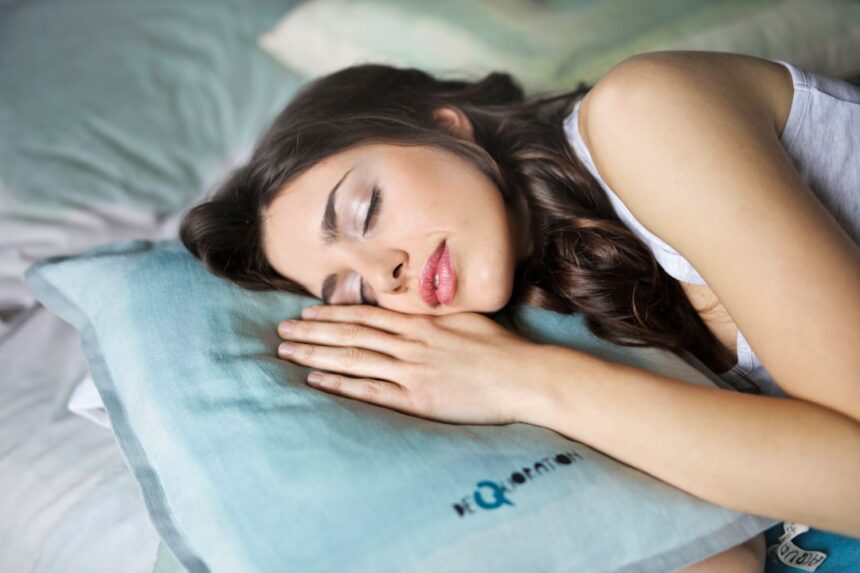
Diagram of glycine thermoregulatory pathway: NMDA receptor → suprachiasmatic nucleus → medial preoptic area → peripheral vasodilation → core temperature drop
Glycine triggers sleep by lowering core body temperature through activation of the suprachiasmatic nucleus and peripheral vasodilation—the same thermoregulatory cascade that naturally precedes sleep onset. Animal studies and human trials confirm this mechanism, showing reduced sleep-onset latency at a cost of nine cents per dose. — Photo by bruce mars on Unsplash (Unsplash License)
SHARE
1 min read|130 words

Understanding how glycine works for sleep can help clinicians and patients make informed treatment decisions. The mechanism unfolds in three key steps: first, glycine binds to NMDA receptors in the suprachiasmatic nucleus, your brain’s master circadian clock; second, this activates peripheral vasodilation, widening blood vessels near the skin; third, the resulting core temperature drop mimics your body’s natural pre-sleep state, initiating sleep without sedation.

This thermoregulatory pathway is not theoretical. Animal studies by Kawai and colleagues confirmed that removing the suprachiasmatic nucleus completely abolished glycine’s sleep and cooling effects. Human trials showed reduced sleep-onset latency and documented next-day fatigue reduction—effects directly correlated to measurable temperature shifts.

For sleep medicine practitioners, this mechanism offers a physiologically grounded, side-effect-free option grounded in circadian neurobiology. Read the full article on GMJ Newsroom.

Was this article helpful?

GMJ Brief · Takeaway

📰 Read the full article: How glycine lowers core body temperature to trigger sleep—a thermostat mechanism →

Related reference
  • Glycine · Ingredient
Share This Article
Facebook LinkedIn Bluesky Copy Link Print
GMJ
ByProf. Giorgi Pkhakadze
Follow:
Prof. Giorgi Pkhakadze, MD, MPH, PhD, is Editor-in-Chief of the Georgian Medical Journal and Chair of the Public Health Institute of Georgia (PHIG). He is Professor and Head of the Department of Social and Behavioural Sciences at David Tvildiani Medical University, and Secretary/Treasurer of the UEMS Section of Public Health. ORCID: 0000-0001-7609-4515.

Submit Your Paper →

Georgia's peer-reviewed open-access medical journal. No APC until January 2027.
Submit Manuscript →
Ethiopia Study Reveals Stakeholder Concerns Over Novel Malaria Treatments

A qualitative study in Ethiopia reveals that health workers and patients view…

Sitafloxacin monotherapy matches doxycycline-rifampicin for brucellosis treatment in landmark trial

A multicenter randomized trial in The Lancet Regional Health – Western Pacific…

Ultra-processed foods linked to higher kidney cancer risk in large US study

A prospective analysis of over 300,000 US adults found that higher consumption…

Submit Your Paper to GMJ

No APC until January 2027.
Submit Manuscript →

You Might Also Like

Scientific illustration showing GPNMB protein interaction between brain cells in Parkinson's disease research

Understanding GPNMB: What the Latest Parkinson’s Research Means for Patients

By
Prof. Giorgi Pkhakadze
14/07/2026
Global HealthPolicy & Systems

WHO Declares Emergency as Ebola Outbreak Crosses DRC-Uganda Border

By
Prof. Giorgi Pkhakadze
31/05/2026
Comparison chart showing thiamine deficiency rates in heart failure patients versus healthy controls

The Hidden Metabolic Crisis: Thiamine Deficiency in Hospitalized Heart Failure Patients

By
Prof. Giorgi Pkhakadze
26/07/2026
Medical illustration showing targeted cancer therapy mechanism

What Patients Need to Know About NHS’s New Platinum-Resistant Ovarian Cancer Treatment

By
Prof. Giorgi Pkhakadze
17/07/2026
Facebook Twitter Youtube Instagram
Company
  • Privacy Policy
  • Contact US
  • GMJ Journal
  • Submit Manuscript
  • Editorial Team
  • Register at GMJ
  • Terms of Use

Subscribe to GMJ News — Click here

Join Community
© 2026 Georgian Medical Journal (GMJ). Published by the Public Health Institute of Georgia (PHIG). All rights reserved.
Welcome Back!

Sign in to your account

Username or Email Address
Password

Lost your password?