By using this site, you agree to the Privacy Policy and Terms of Use.
Accept
GMJ NewsGMJ NewsGMJ News
  • Latest News
    • GMJ Briefs
  • Podcast & Media
    • Podcast Episodes
    • GMJ Audio
    • GMJ Videos
  • Research Digest
    • New Studies
    • Georgian Research
    • Data & Numbers
  • Policy & Systems
    • Health Policy
    • Quality & Safety
    • Migration & Health
    • Global Health
  • Practice
    • Clinical Updates
    • Case Discussions
    • Pharmacy & Prescribing
    • Ingredients A-Z
  • Perspectives
    • Editorial
    • Explainers
    • Voices
    • Letters
  • GMJ Articles
    • Vol. 1 Issue 2 (2026)
    • Vol. 1 Issue 1 (2026)
    • Pre-Launch Articles (2025)
  • Read the Journal →
  • About GMJ News
Notification Show More
Font ResizerAa
GMJ NewsGMJ News
Font ResizerAa
  • Latest News
    • GMJ Briefs
  • Podcast & Media
    • Podcast Episodes
    • GMJ Audio
    • GMJ Videos
  • Research Digest
    • New Studies
    • Georgian Research
    • Data & Numbers
  • Policy & Systems
    • Health Policy
    • Quality & Safety
    • Migration & Health
    • Global Health
  • Practice
    • Clinical Updates
    • Case Discussions
    • Pharmacy & Prescribing
    • Ingredients A-Z
  • Perspectives
    • Editorial
    • Explainers
    • Voices
    • Letters
  • GMJ Articles
    • Vol. 1 Issue 2 (2026)
    • Vol. 1 Issue 1 (2026)
    • Pre-Launch Articles (2025)
  • Read the Journal →
  • About GMJ News
Follow US
GMJ News > GMJ Briefs > WHO Makes Historic Move: Fatty Liver Disease Finally Gets Global Recognition

WHO Makes Historic Move: Fatty Liver Disease Finally Gets Global Recognition

GMJ
Last updated: 23/06/2026 20:26
By
Prof. Giorgi Pkhakadze
Share
1 Min Read
WHO World Health Assembly meeting hall during historic fatty liver disease resolution vote
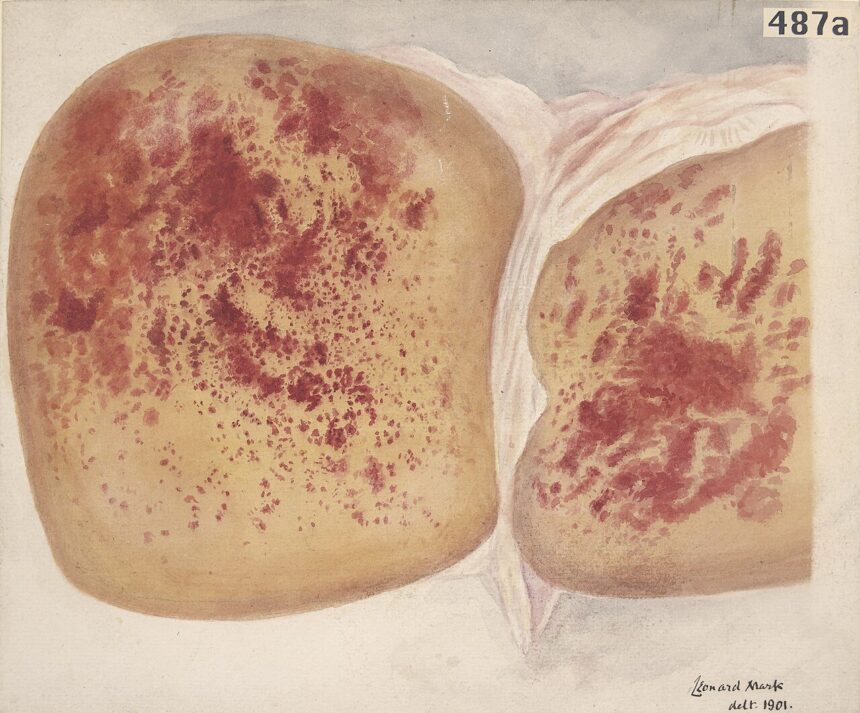
The World Health Assembly has adopted a historic resolution recognizing steatotic liver disease as a critical missing piece in global NCD strategies. The landmark decision affects an estimated 1.5 billion people worldwide. — Liver from a woman who died of puerpal eclampsia Wellcome L0061645.jpg by Mark, Leonard Portal / CC BY 4.0 via Wikimedia Commons (CC BY 4.0)
SHARE
1 min read|166 words

In a landmark decision, the World Health Assembly has adopted its first-ever resolution specifically addressing steatotic liver disease (SLD), acknowledging it as a critical gap in existing noncommunicable disease strategies. This watershed moment elevates fatty liver disease from obscurity to the highest level of international health governance, affecting an estimated 1.5 billion people worldwide.

The resolution represents a significant paradigm shift in global health policy. For decades, SLD has been systematically overlooked despite affecting roughly one in five adults globally, making it one of the most prevalent liver conditions worldwide. The WHO’s formal recognition underscores the urgent need to integrate SLD prevention, diagnosis, and management into existing NCD frameworks and healthcare systems.

This decision signals a renewed commitment to comprehensive noncommunicable disease strategies that extend beyond the traditionally focused “big four” conditions. Member states are now called to strengthen healthcare systems for better detection and management of SLD, marking a pivotal step forward in addressing this long-neglected public health challenge.

Read the full article on GMJ Newsroom.

Submit Your Paper
GMJ_Submit_Banner

Was this article helpful?

GMJ Brief · Announcement

📰 Read the full article: WHO Adopts Historic Resolution on Fatty Liver Disease as Missing Link in Global NCD Strategy →

Share This Article
Facebook LinkedIn Bluesky Copy Link Print
GMJ
ByProf. Giorgi Pkhakadze
Follow:
Prof. Giorgi Pkhakadze, MD, MPH, PhD, is Editor-in-Chief of the Georgian Medical Journal and Chair of the Public Health Institute of Georgia (PHIG). He is Professor and Head of the Department of Social and Behavioural Sciences at David Tvildiani Medical University, and Secretary/Treasurer of the UEMS Section of Public Health. ORCID: 0000-0001-7609-4515.

Submit Your Paper →

Georgia's peer-reviewed open-access medical journal. No APC until January 2027.
Submit Manuscript →
California Hospital Groups Launch Competing Ballot Initiatives on Healthcare Worker Wages

California's healthcare sector faces competing ballot initiatives from worker unions and hospital…

UK Health Security Agency Publishes New Hantavirus Transmission Parameters for Public Health Response

UK Health Security Agency releases comprehensive guidance on hantavirus human-to-human transmission parameters.…

FDA Approves Sanofi’s Teplizumab for Children with Stage 3 Type 1 Diabetes

FDA approves Sanofi's teplizumab for children with stage 3 type 1 diabetes,…

Submit Your Paper to GMJ

No APC until January 2027.
Submit Manuscript →

You Might Also Like

Hospital pharmacy with AI monitoring system interface showing drug dispensing data

Hundreds of Hospitals Use AI Drug Monitoring System That Failed to Detect Fentanyl Theft

By
Prof. Giorgi Pkhakadze
17/06/2026
Medical vial of insulin with syringe representing diabetes treatment access challenges

8.4 Million Type 1 Diabetes Patients Face Treatment Access Barriers

By
Prof. Giorgi Pkhakadze
29/06/2026

PHEIC Declaration: Ebola Outbreak Cross-Border Transmission DRC-Uganda

By
Prof. Giorgi Pkhakadze
31/05/2026
Global HealthPolicy & Systems

Ebola Outbreak Spreads in Eastern DRC as Child Infections Expected to Spike

By
Prof. Giorgi Pkhakadze
15/06/2026
Facebook Twitter Youtube Instagram
Company
  • Privacy Policy
  • Contact US
  • GMJ Journal
  • Submit Manuscript
  • Editorial Team
  • Register at GMJ
  • Terms of Use

Subscribe to GMJ News — Click here

Join Community
© 2026 Georgian Medical Journal (GMJ). Published by the Public Health Institute of Georgia (PHIG). All rights reserved.
Welcome Back!

Sign in to your account

Username or Email Address
Password

Lost your password?

Not a member? Sign Up