By using this site, you agree to the Privacy Policy and Terms of Use.
Accept
GMJ NewsGMJ NewsGMJ News
  • Latest News
    • GMJ Briefs
  • Podcast & Media
    • Podcast Episodes
    • GMJ Audio
    • GMJ Videos
  • Research Digest
    • New Studies
    • Georgian Research
    • Data & Numbers
  • Policy & Systems
    • Health Policy
    • Quality & Safety
    • Migration & Health
    • Global Health
  • Practice
    • Clinical Updates
    • Case Discussions
    • Pharmacy & Prescribing
    • Ingredients A-Z
  • Perspectives
    • Editorial
    • Explainers
    • Voices
    • Letters
  • GMJ Articles
    • Vol. 1 Issue 2 (2026)
    • Vol. 1 Issue 1 (2026)
    • Pre-Launch Articles (2025)
  • Read the Journal →
  • About GMJ News
Notification Show More
Font ResizerAa
GMJ NewsGMJ News
Font ResizerAa
  • Latest News
    • GMJ Briefs
  • Podcast & Media
    • Podcast Episodes
    • GMJ Audio
    • GMJ Videos
  • Research Digest
    • New Studies
    • Georgian Research
    • Data & Numbers
  • Policy & Systems
    • Health Policy
    • Quality & Safety
    • Migration & Health
    • Global Health
  • Practice
    • Clinical Updates
    • Case Discussions
    • Pharmacy & Prescribing
    • Ingredients A-Z
  • Perspectives
    • Editorial
    • Explainers
    • Voices
    • Letters
  • GMJ Articles
    • Vol. 1 Issue 2 (2026)
    • Vol. 1 Issue 1 (2026)
    • Pre-Launch Articles (2025)
  • Read the Journal →
  • About GMJ News
Follow US
GMJ News > Policy & Systems > Health Policy > WHO Adopts Historic Resolution on Fatty Liver Disease as Missing Link in Global NCD Strategy
Health PolicyPolicy & Systems

WHO Adopts Historic Resolution on Fatty Liver Disease as Missing Link in Global NCD Strategy

GMJ
Last updated: 15/06/2026 12:25
By
GMJ Policy Desk
Share
6 Min Read
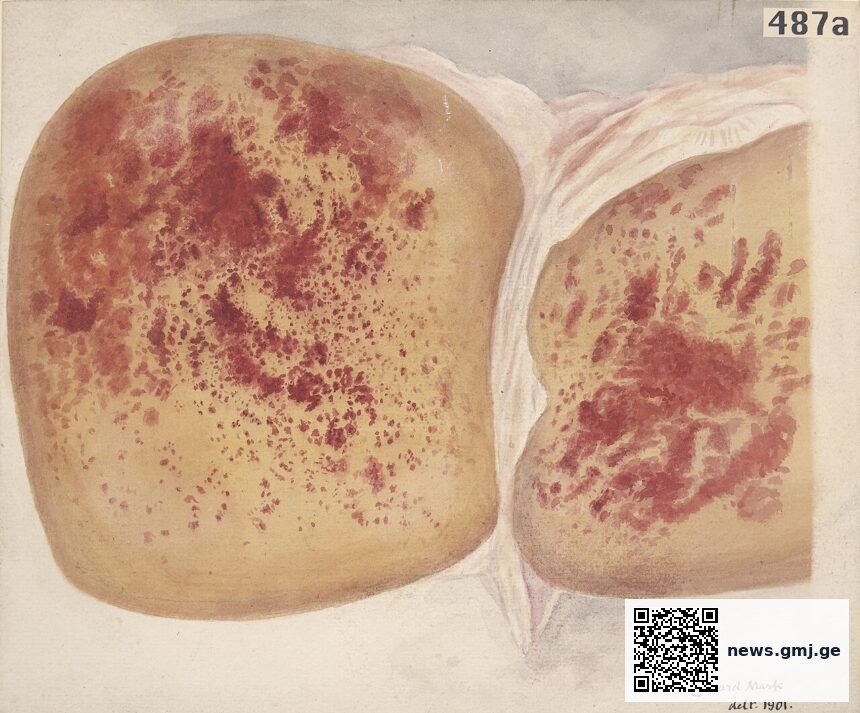
WHO World Health Assembly meeting hall during historic fatty liver disease resolution voteIllustrative image · Liver from a woman who died of puerpal eclampsia Wellcome L0061645.jpg by Mark, Leonard Portal / CC BY 4.0 via Wikimedia Commons (CC BY 4.0)
The World Health Assembly has adopted a historic resolution recognizing steatotic liver disease as a critical missing piece in global NCD strategies. The landmark decision affects an estimated 1.5 billion people worldwide. — Liver from a woman who died of puerpal eclampsia Wellcome L0061645.jpg by Mark, Leonard Portal / CC BY 4.0 via Wikimedia Commons (CC BY 4.0)
SHARE
4 min read|778 words
✓ Reviewed by Prof. Giorgi Pkhakadze, MD, MPH, PhD · ORCID 0000-0001-7609-4515

The World Health Assembly has adopted a landmark resolution recognizing steatotic liver disease (SLD) as a critical “missing piece” in global noncommunicable disease strategies, marking the first time fatty liver disease has received formal attention at the highest level of international health governance.

Contents
    • Key takeaways
      • Global Burden of Major Noncommunicable Diseases
  • Resolution Addresses Critical Gap in NCD Response
  • Healthcare System Strengthening Takes Priority
  • Prevention Strategies Gain International Support
  • Implementation Roadmap for Member States
    • What this means
  • Frequently asked questions
    • What is steatotic liver disease?
    • Why was SLD considered a “missing piece” of NCD strategies?
    • How will this resolution impact healthcare systems?

Key takeaways

  • First WHO resolution specifically addressing fatty liver disease and its integration into NCD frameworks
  • SLD affects an estimated 1.5 billion people globally, making it one of the most common liver conditions worldwide
  • Resolution calls for enhanced surveillance, prevention strategies, and healthcare system strengthening
1.5 billion
people worldwide estimated to be affected by steatotic liver disease

Global Burden of Major Noncommunicable Diseases

Estimated affected population in billions, 2024

1.8b
Diabetes & related conditions
1.5b
Steatotic liver disease
1.3b
Cardiovascular disease

Source: WHO Global Health Observatory, 2024 | Georgian Medical Journal News

Resolution Addresses Critical Gap in NCD Response

The resolution, adopted during the 77th World Health Assembly, formally acknowledges that steatotic liver disease has been systematically overlooked in existing noncommunicable disease frameworks despite its significant global burden. According to WHO estimates, SLD affects approximately 1.5 billion people worldwide, representing roughly one in five adults globally.

Submit Your Paper
GMJ_Submit_Banner

The resolution calls on member states to integrate SLD prevention, diagnosis, and management into existing NCD strategies and health systems. This represents a significant shift from previous approaches that focused primarily on the “big four” NCDs: cardiovascular disease, cancer, diabetes, and chronic respiratory diseases.

🎙️ Related Podcast Episodes
🎧 #30 | GMJ Podcast | Global Health: Why Health Systems Matter · 15m
🎧 #21 | WHO Issues New Guidance on Novel Snakebite Treatments · 14m
🎧 #17 | WHO: Global Population Requiring Trachoma Interventions Falls Below 100 Million · 16m
🎧 #9 Leprosy in 2026: Bridging Medical Cure and Social Inclusion – WHO World Leprosy Day Message · 18m
🎧 #7 | WHO Health Tax Strategy: Sugary Drinks, Alcohol, and the Global Fight Against Noncommunicable Diseases · 21m

Healthcare System Strengthening Takes Priority

Central to the resolution are provisions for strengthening healthcare systems to better detect and manage SLD. The document emphasizes the need for enhanced surveillance systems, improved diagnostic capabilities, and better integration with existing clinical care pathways for metabolic disorders.

The resolution also recognizes the interconnected nature of SLD with other metabolic conditions, particularly type 2 diabetes and obesity. According to recent epidemiological studies, up to 70% of people with type 2 diabetes also have some form of fatty liver disease.

Prevention Strategies Gain International Support

The resolution places significant emphasis on prevention, calling for policies that address the underlying drivers of SLD, including poor diet, physical inactivity, and metabolic dysfunction. Member states are encouraged to develop comprehensive prevention strategies that align with existing obesity and diabetes prevention efforts.

The document also highlights the need for improved public awareness campaigns, noting that many people with SLD remain undiagnosed due to the often asymptomatic nature of early-stage disease. Public health experts estimate that up to 80% of people with fatty liver disease are unaware of their condition.

This resolution represents a turning point in how we approach liver health globally, finally giving steatotic liver disease the attention it deserves within our NCD response frameworks.

— Dr. Tedros Adhanom Ghebreyesus, WHO Director-General (WHA 77 proceedings, 2024)

Implementation Roadmap for Member States

The resolution provides a clear implementation framework for member states, including specific recommendations for policy development, healthcare workforce training, and resource allocation. Countries are encouraged to establish dedicated SLD programs within their existing NCD departments and to allocate appropriate funding for surveillance and treatment programs.

The document also calls for enhanced international collaboration on research and data sharing, recognizing that many low- and middle-income countries lack the resources to establish comprehensive SLD monitoring systems independently.

What this means

For patients: Greater awareness and earlier detection of fatty liver disease, with better integration into routine healthcare
For clinicians: Enhanced guidelines for SLD screening, diagnosis, and management within existing NCD care protocols
For policymakers: Clear framework for integrating SLD prevention and treatment into national health strategies and NCD action plans

Frequently asked questions

What is steatotic liver disease?

SLD, formerly known as non-alcoholic fatty liver disease (NAFLD), is a condition where excess fat accumulates in the liver of people who drink little or no alcohol. It ranges from simple fatty liver to more severe forms that can progress to cirrhosis.

Why was SLD considered a “missing piece” of NCD strategies?

Despite affecting 1.5 billion people globally, SLD was not included in WHO’s traditional “big four” NCDs framework. This resolution formally recognizes its significance and calls for its integration into existing NCD prevention and treatment programs.

How will this resolution impact healthcare systems?

The resolution provides a framework for countries to strengthen their healthcare systems’ capacity to detect, prevent, and manage SLD. This includes improved surveillance, better diagnostic capabilities, and enhanced integration with existing metabolic disease care pathways.

The adoption of this resolution marks a significant milestone in global health governance, potentially paving the way for more comprehensive approaches to liver health within existing NCD frameworks. As member states begin implementing these recommendations, the integration of SLD into national health strategies could substantially improve outcomes for the estimated 1.5 billion people worldwide living with this condition.

Source: Historic WHA Resolution On Fatty Liver Disease Opens Door For Integration Into National NCD Strategies

Was this article helpful?

Disclaimer. This article is health journalism intended for general information and education. It is not medical advice and is not a substitute for professional diagnosis or treatment. Always consult a qualified healthcare provider about your individual circumstances. Full disclaimer →

Related Coverage

Global Temperatures Likely to Set Records Over Next Five Years, WMO WarnsJun 16, 2026
WHO Launches Global Consultation on AI Ethics in Long-Term Care Following China's Massive Healthcare Algorithm DeploymentJun 16, 2026
NHS Review Proposes Ban on Political Badges for Doctors Amid Antisemitism ConcernsJun 16, 2026
RFK Jr. Seeks Access to Americans' Medical Records to Research Vaccine-Autism LinkJun 16, 2026
Related reference
  • Type 2 Diabetes · Condition
  • Obesity · Condition
PG
Written by
Prof. Giorgi Pkhakadze, MD, MPH, PhD
Editor-in-Chief, GMJ News
Full profile →
Medical disclaimer. This article is health journalism intended for general information. It is not medical advice and is not a substitute for consultation with a qualified healthcare professional. Always seek your physician's advice regarding any medical condition.
Medically reviewed by Prof. Giorgi Pkhakadze, MD, MPH, PhD. Spotted an error? Contact the editorial team.

Get the GMJ News digest
Evidence-based health journalism in your inbox. No spam; unsubscribe anytime.
TAGGED:fatty liver diseaseglobal health policynoncommunicable diseasesWHOWorld Health Assembly
Share This Article
Facebook LinkedIn Bluesky Copy Link Print
GMJ
ByGMJ Policy Desk
Follow:
GMJ Policy Desk is part of GMJ News, the newsroom of the Georgian Medical Journal (gmj.ge), published by the Public Health Institute of Georgia. Every article is editorially reviewed before publication.
Leave a Comment Leave a Comment

Leave a Reply Cancel reply

Your email address will not be published. Required fields are marked *

Submit Your Paper →

Georgia's peer-reviewed open-access medical journal. No APC until January 2027.
Submit Manuscript →
Global Temperatures Likely to Set Records Over Next Five Years, WMO Warns

Global temperatures are likely to reach record levels in the next five…

WHO Launches Global Consultation on AI Ethics in Long-Term Care Following China’s Massive Healthcare Algorithm Deployment

WHO launches global consultation on AI ethics standards for long-term care following…

New NEJM Trial Shows Romiplostim Reduces Chemotherapy-Induced Thrombocytopenia Risk

A randomized controlled trial in NEJM shows romiplostim significantly reduces chemotherapy-induced thrombocytopenia…

Submit Your Paper to GMJ

No APC until January 2027.
Submit Manuscript →

You Might Also Like

Healthcare worker using mobile app to report medicine safety issues in Nigeria
Health PolicyPolicy & SystemsQuality & Safety

Nigeria’s NAFDAC Launches Digital Platform to Combat Counterfeit Medicines

By
GMJ Policy Desk
07/06/2026
Healthcare cost savings chart showing medically tailored meal program benefits
Clinical UpdatesHealth PolicyPolicy & SystemsPractice

Medically Tailored Meals Reduce Healthcare Costs by $2,400 Per Person, US Analysis Shows

By
GMJ Practice Desk
04/06/2026
WHO warning graphic showing nicotine pouch adoption rates across global regions, with red alert indicator
Global Health

WHO warns of nicotine pouch epidemic targeting youth as sales surge globally

By
GMJ Policy Desk
19/05/2026
Junior doctors on picket line holding BMA strike banners outside hospital
Health PolicyPolicy & Systems

Junior Doctors in England Launch 16th Strike Over 26% Real-Terms Pay Cuts

By
GMJ Policy Desk
28/05/2026
Facebook Twitter Youtube Instagram
Company
  • Privacy Policy
  • Contact US
  • GMJ Journal
  • Submit Manuscript
  • Editorial Team
  • Register at GMJ
  • Terms of Use

Subscribe to GMJ News — Click here

Join Community
© 2026 Georgian Medical Journal (GMJ). Published by the Public Health Institute of Georgia (PHIG). All rights reserved.
Welcome Back!

Sign in to your account

Username or Email Address
Password

Lost your password?

Not a member? Sign Up