By using this site, you agree to the Privacy Policy and Terms of Use.
Accept
GMJ NewsGMJ NewsGMJ News
  • Latest News
    • GMJ Briefs
  • Podcast & Media
    • Podcast Episodes
    • GMJ Audio
    • GMJ Videos
  • Research Digest
    • New Studies
    • Georgian Research
    • Data & Numbers
  • Policy & Systems
    • Health Policy
    • Quality & Safety
    • Migration & Health
    • Global Health
  • Practice
    • Clinical Updates
    • Case Discussions
    • Pharmacy & Prescribing
    • Ingredients A-Z
  • Perspectives
    • Editorial
    • Explainers
    • Voices
    • Letters
  • Health Topics
  • GMJ Articles
    • Vol. 1 Issue 2 (2026)
    • Vol. 1 Issue 1 (2026)
    • Pre-Launch Articles (2025)
  • Read the Journal →
  • About GMJ News
Notification Show More
Font ResizerAa
GMJ NewsGMJ News
Font ResizerAa
  • Latest News
    • GMJ Briefs
  • Podcast & Media
    • Podcast Episodes
    • GMJ Audio
    • GMJ Videos
  • Research Digest
    • New Studies
    • Georgian Research
    • Data & Numbers
  • Policy & Systems
    • Health Policy
    • Quality & Safety
    • Migration & Health
    • Global Health
  • Practice
    • Clinical Updates
    • Case Discussions
    • Pharmacy & Prescribing
    • Ingredients A-Z
  • Perspectives
    • Editorial
    • Explainers
    • Voices
    • Letters
  • Health Topics
  • GMJ Articles
    • Vol. 1 Issue 2 (2026)
    • Vol. 1 Issue 1 (2026)
    • Pre-Launch Articles (2025)
  • Read the Journal →
  • About GMJ News
Follow US
GMJ News > GMJ Briefs > Zero Transmissions Despite Close Contact: What a New Influenza Study Reveals

Zero Transmissions Despite Close Contact: What a New Influenza Study Reveals

GMJ
Last updated: 10/08/2026 21:29
By
Prof. Giorgi Pkhakadze
Share
1 Min Read
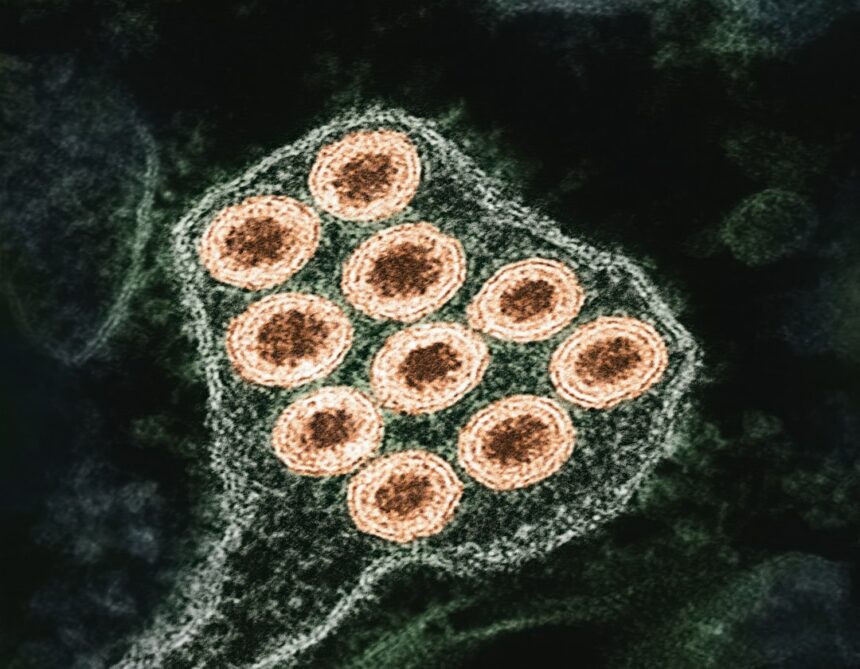
Diagram illustrating influenza transmission mechanisms: viral shedding, aerosol generation, and contact duration
A controlled human challenge–transmission study found that prolonged close contact with influenza-infected individuals did not reliably produce secondary infections, suggesting viral emission intensity rather than proximity duration drives transmission. — Photo by National Institute of Allergy and Infectious Diseases on Unsplash (Unsplash License)
SHARE
1 min read|122 words

In a controlled human challenge–transmission study, researchers observed a striking finding: zero secondary influenza infections occurred among recipients despite prolonged, unprotected close contact with confirmed infected donors. This counterintuitive result challenges the assumption that proximity alone drives influenza spread. The study documented that infected donors exhibited low aerosol viral shedding and infrequent coughing episodes, suggesting that viral emission intensity—not contact duration—may be the critical factor in transmission. The findings have important implications for infection control policies and risk assessment protocols, indicating that individuals with minimal coughing and shedding may pose lower transmission risk regardless of proximity duration. These insights could reshape how healthcare facilities and public health agencies approach influenza prevention strategies. Read the full article on GMJ Newsroom.

Was this article helpful?

GMJ Brief · Key Finding

📰 Read the full article: Close Contact Alone May Not Drive Influenza Transmission, Controlled Study Suggests →

Share This Article
Facebook LinkedIn Bluesky Copy Link Print
GMJ
ByProf. Giorgi Pkhakadze
Follow:
Prof. Giorgi Pkhakadze, MD, MPH, PhD, is Editor-in-Chief of the Georgian Medical Journal and Chair of the Public Health Institute of Georgia (PHIG). He is Professor and Head of the Department of Social and Behavioural Sciences at David Tvildiani Medical University, and Secretary/Treasurer of the UEMS Section of Public Health. ORCID: 0000-0001-7609-4515.

Submit Your Paper →

Georgia's peer-reviewed open-access medical journal. No APC until January 2027.
Submit Manuscript →
NHS Expands Access to Pembrolizumab for Advanced Cervical Cancer

The NHS has approved pembrolizumab, an immune checkpoint inhibitor, for hundreds of…

NHS Emergency Department HIV Testing Identifies 1,953 Previously Undiagnosed Cases Over Four Years

A pioneering NHS programme testing all patients requiring blood draws in emergency…

Hospital-Acquired Infections Rising in UK: Latest Surveillance Data Shows Increases in Dangerous Pathogens

New UK Health Security Agency surveillance data for Q1 2026 reveal trends…

Submit Your Paper to GMJ

No APC until January 2027.
Submit Manuscript →

You Might Also Like

Infographic showing global blood donation statistics and safety improvements by WHO

New Data Shows 85% of Global Blood Donations Are Now Voluntary, Highest Safety Level Ever

By
Prof. Giorgi Pkhakadze
12/07/2026
Illustration of nanotechnology sensors being used for diabetes glucose monitoring

537 Million Diabetes Patients Could Benefit from New Nanotechnology Sensors

By
Prof. Giorgi Pkhakadze
10/06/2026
Clinical UpdatesPolicy & SystemsPracticeQuality & Safety

CDC Issues Alert on Growing Salmonella Outbreaks Linked to Moringa Leaf Products

By
Prof. Giorgi Pkhakadze
03/06/2026

Ebola Cross-Border Transmission: DRC-Uganda PHEIC Declaration

By
Prof. Giorgi Pkhakadze
31/05/2026
Facebook Twitter Youtube Instagram
Company
  • Privacy Policy
  • Contact US
  • GMJ Journal
  • Submit Manuscript
  • Editorial Team
  • Register at GMJ
  • Terms of Use

Subscribe to GMJ News — Click here

Join Community
© 2026 Georgian Medical Journal (GMJ). Published by the Public Health Institute of Georgia (PHIG). All rights reserved.
Welcome Back!

Sign in to your account

Username or Email Address
Password

Lost your password?

Not a member? Sign Up