By using this site, you agree to the Privacy Policy and Terms of Use.
Accept
GMJ NewsGMJ NewsGMJ News
  • Latest News
    • GMJ Briefs
  • Podcast & Media
    • Podcast Episodes
    • GMJ Audio
    • GMJ Videos
  • Research Digest
    • New Studies
    • Georgian Research
    • Data & Numbers
  • Policy & Systems
    • Health Policy
    • Quality & Safety
    • Migration & Health
    • Global Health
  • Practice
    • Clinical Updates
    • Case Discussions
    • Pharmacy & Prescribing
    • Ingredients A-Z
  • Perspectives
    • Editorial
    • Explainers
    • Voices
    • Letters
  • Health Topics
  • GMJ Articles
    • Vol. 1 Issue 2 (2026)
    • Vol. 1 Issue 1 (2026)
    • Pre-Launch Articles (2025)
  • Read the Journal →
  • About GMJ News
Notification Show More
Font ResizerAa
GMJ NewsGMJ News
Font ResizerAa
  • Latest News
    • GMJ Briefs
  • Podcast & Media
    • Podcast Episodes
    • GMJ Audio
    • GMJ Videos
  • Research Digest
    • New Studies
    • Georgian Research
    • Data & Numbers
  • Policy & Systems
    • Health Policy
    • Quality & Safety
    • Migration & Health
    • Global Health
  • Practice
    • Clinical Updates
    • Case Discussions
    • Pharmacy & Prescribing
    • Ingredients A-Z
  • Perspectives
    • Editorial
    • Explainers
    • Voices
    • Letters
  • Health Topics
  • GMJ Articles
    • Vol. 1 Issue 2 (2026)
    • Vol. 1 Issue 1 (2026)
    • Pre-Launch Articles (2025)
  • Read the Journal →
  • About GMJ News
Follow US
GMJ News > Perspectives > Explainers > What Government Food-Safety Registration Actually Means for Supplements
Explainers

What Government Food-Safety Registration Actually Means for Supplements

GMJ
Last updated: 20/08/2026 05:12
By
GMJ Perspectives Desk
Share
3 Min Read
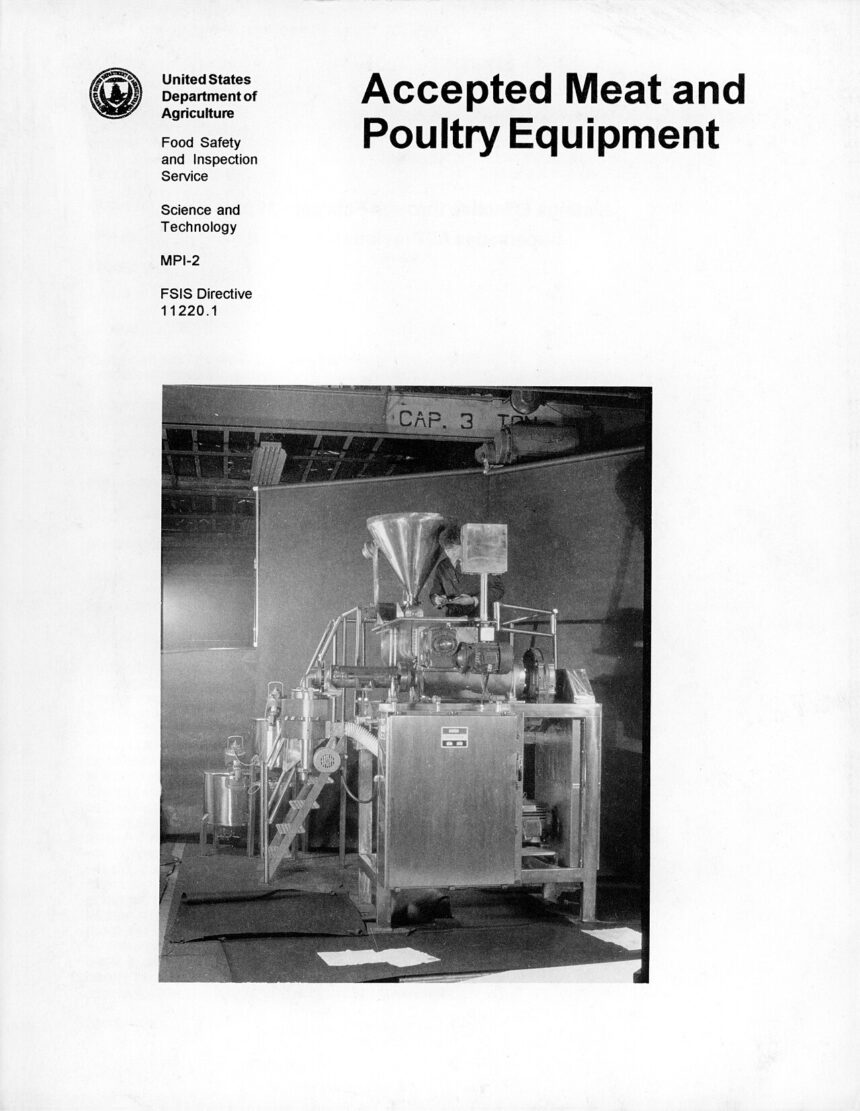
Official food safety registration and inspection
SHARE
🎧 Listen to this article5:07 min · 751 words · GMJ Audio
4 min read|751 words

In most jurisdictions, dietary supplements cannot legally be sold without some form of notification or registration with a national food-safety authority — in Georgia, the National Food Agency; in the EU, notification systems under Regulation (EC) 1924/2006 and national implementations; in the U.S., facility registration with the FDA under the Bioterrorism Act. Understanding what this registration does and does not certify prevents both under- and over-reading the claim.

Contents
  • What the authority actually verifies
  • What registration does not mean
  • Why it still matters
  • Three regulatory philosophies worldwide
  • The recall pathway, step by step
  • What the Georgian notification layer involves
  • Red flags that a product sits outside the system
  • The clinical bottom line
  • Primary sources

What the authority actually verifies

Registration systems generally confirm four things. First, legal accountability: a named legal entity, at a physical address, accepts responsibility for the product and can be inspected, fined or shut down. Second, compositional legality: the declared ingredients appear on permitted lists (or at least not on prohibited ones), and dosages fall within any national maximum limits. Third, labelling compliance: mandatory warnings, ingredient declarations and language requirements are met. Fourth, traceability: the product enters the national system for recalls and adverse-event follow-up — the mechanism the WHO’s food-safety framework considers essential for post-market protection.

What registration does not mean

Registration is not a government endorsement of effectiveness, a laboratory analysis of the actual batch on the shelf, or a GMP audit (which is a separate inspection track in most systems). A registered product with poor manufacturing can pass registration; an excellent product from an unregistered importer cannot legally be sold. The registration answers “is this product legal and traceable here?” — not “is this product good?”

Why it still matters

The practical value is enforcement infrastructure. When independent testing or adverse-event reports flag a problem, the registration file is what lets an authority act within days: identify the importer, freeze distribution, order recalls. Products sold outside the registration system — grey-market imports through parcel services, for instance — sit outside this entire safety net, which is precisely why unregistered supplements dominate national adverse-event statistics in many countries.

Submit Your Paper
GMJ_Submit_Banner

Three regulatory philosophies worldwide

Globally, supplement oversight follows one of three architectures. Notification systems (the EU model and Georgia’s): the operator informs the authority before marketing; the authority may object but need not pre-approve — speed for industry, post-market burden for the state. Registration/pre-market authorisation (much of Asia, the Gulf, Latin America): dossiers reviewed and products licensed before sale — slower, but every product on shelves has passed a desk review. Post-market-only systems (the U.S. for most supplements): no pre-market product filing at all, with facility registration and New Dietary Ingredient notifications as partial exceptions, and enforcement almost entirely reactive. Knowing which philosophy a country runs tells you what its “registered” stamp is actually worth — and why an EU/Georgian notification, though lighter than a licence, still beats the informational vacuum of grey imports.

The recall pathway, step by step

Registration’s real product is speed under failure. A functioning recall runs: laboratory finding or adverse-event signal → authority queries the registration file → importer/manufacturer identified within hours → distribution records pulled (the traceability obligation) → risk-graded decision (public recall vs silent withdrawal) → market sweep and effectiveness checks. The WHO’s INFOSAN network then propagates cross-border alerts, and the EU’s RASFF system publishes them — a public database where anyone can watch what actually gets caught: undeclared pharmaceuticals in “herbal” sexual-enhancement and slimming products dominate the supplement entries year after year. Every step of that chain presupposes a registration file; without it, the process begins as a detective story instead of a database query.

What the Georgian notification layer involves

For Georgia specifically, the operative elements are business-operator registration with the National Food Agency, product notification with Georgian-language labelling before placement on the market, and traceability documentation sufficient for withdrawal. The NFA’s inspection powers attach to registered operators — which is precisely why the parcel-import channel, invisible to the registry, is where compliance problems concentrate.

Red flags that a product sits outside the system

Practical tells: no local-language label or a paper sticker crudely over the original; no named local importer with an address; sold only through social-media accounts or personal shippers; “customs-free” delivery promises; prices dramatically below pharmacy equivalents of the same brand. None of these prove a product is unsafe — they prove that if it is, no recall mechanism can reach you, which for a daily-ingested product is a risk category of its own.

The clinical bottom line

Treat state registration as the floor, not the ceiling: it proves legality, accountability and recall reach. Quality assurance sits on top of it — GMP certification for the manufacturing system, and independent batch testing for the product itself. A trustworthy supplement shows all three layers.

Primary sources

  • WHO: Food safety overview and INFOSAN network
  • U.S. FDA: Dietary Supplements — regulatory framework
  • European Commission: Food supplements regulatory framework

Was this article helpful?

Disclaimer. This article is health journalism intended for general information and education. It is not medical advice and is not a substitute for professional diagnosis or treatment. Always consult a qualified healthcare provider about your individual circumstances. Full disclaimer →

Related Coverage

Vegan, Gluten-Free, Cruelty-Free: What a Manufacturer's Declaration Is WorthAug 20, 2026
Astaxanthin Doses in the Clinic: What 6–12 mg Actually ShowedAug 20, 2026
Vitamin E: Why 9 in 10 Fall Short — and Why the Natural Form Is Retained BetterAug 20, 2026
Rancid Omega-3: What the Peroxide Value Tells YouAug 20, 2026
Explore more on this topic:🧭 Supplements & Nutraceuticals hub🧭 Atrial Fibrillation hub🧭 Leukaemia hub
🔥 Most read this week
1High-Dose Zinc Supplements May Create Copper Deficiency, Warn Nutrition Experts
2L-Theanine Improves Sleep Quality Without Drowsiness, Systematic Review Finds
3How Coffee Brewing Method Affects Cholesterol: The Science Behind Diterpenes and Filters
4How Coffee and Tea Reduce Iron Absorption: A Mechanism Explained
Related reference
  • SAMe · Ingredient
PG
Editorial oversight
Prof. Giorgi Pkhakadze, MD, MPH, PhD
Editor-in-Chief, GMJ News
Full profile →  ·  ORCID 0000-0001-7609-4515
Medical disclaimer. This article is health journalism intended for general information. It is not medical advice and is not a substitute for consultation with a qualified healthcare professional. Always seek your physician's advice regarding any medical condition.
Editorial standards. This article was produced under the GMJ News editorial process, with oversight by the GMJ Editorial Board. Our editorial process. Spotted an error? Contact the editorial team.
📬 GMJ Health Digest
Evidence-based medical news, once a week. Free, no spam, unsubscribe anytime.
Share This Article
Facebook LinkedIn Bluesky Copy Link Print
GMJ
ByGMJ Perspectives Desk
Follow:
GMJ Perspectives Desk is part of GMJ News, the newsroom of the Georgian Medical Journal (gmj.ge), published by the Public Health Institute of Georgia. Every article is editorially reviewed before publication.
Leave a Comment Leave a Comment

Leave a Reply Cancel reply

Your email address will not be published. Required fields are marked *

Submit Your Paper →

Georgia's peer-reviewed open-access medical journal. No APC until January 2027.
Submit Manuscript →
Heat-Related Cardiac Deaths Rise Across All Ages During Extreme Weather, Experts Warn

Cardiac arrests increase during extreme heat across all age groups, challenging the…

AI Integration and Federal Policy Shape Biotech Industry Outlook at BIO 2026

Artificial intelligence and federal regulatory policy dominated discussions at BIO International Convention…

Vegan, Gluten-Free, Cruelty-Free: What a Manufacturer’s Declaration Is Worth

A badge on the box, a signed declaration, and an audited third-party…

Submit Your Paper to GMJ

No APC until January 2027.
Submit Manuscript →

You Might Also Like

Kombucha bottles with different tea varieties showing varying antioxidant levelsIllustrative image · Photo by Markus Winkler on Unsplash (Unsplash License)
ExplainersNew StudiesPerspectivesResearch Digest

Tea Type Dramatically Alters Kombucha’s Chemistry and Antioxidant Power, Study Finds

By
GMJ Perspectives Desk
08/08/2026
Infographic showing L-theanine's effects on brain waves and neurotransmitters: increased alpha waves and GABA, decreased beta waves and glutamateIllustrative image · Photo by Shawn Day on Unsplash (Unsplash License)
ExplainersPerspectives

L-Theanine: How an amino acid shifts brain waves toward calm focus without drowsiness

By
GMJ Perspectives Desk
16/08/2026
Illustration of UV radiation spectrum showing UVA, UVB penetration depths in human skinIllustrative image · Runner with Long-Sleeve Sun Protection (48855587326).jpg by Chris Hunkeler from Carlsbad, California, USA / CC BY-SA 2.0 via Wikimedia Commons (CC BY-SA 2.0)
Clinical UpdatesExplainersPerspectivesPractice

Understanding UV Radiation: What the Science Says About Sun Protection

By
GMJ Practice Desk
04/08/2026
MK-7's multi-day half-life enables once-daily microgram dosing
ExplainersNew Studies

MK-7 vs MK-4: Why Half-Life Decides the Dose

By
GMJ Perspectives Desk
20/08/2026
Facebook Twitter Youtube Instagram
Company
  • Privacy Policy
  • Contact US
  • GMJ Journal
  • Submit Manuscript
  • Editorial Team
  • Register at GMJ
  • Terms of Use

Subscribe to GMJ News — Click here

Join Community
© 2026 Georgian Medical Journal (GMJ). Published by the Public Health Institute of Georgia (PHIG). All rights reserved.
Welcome Back!

Sign in to your account

Username or Email Address
Password

Lost your password?