Pan American Health Organization · 1st edition, 2025 · 29 pages
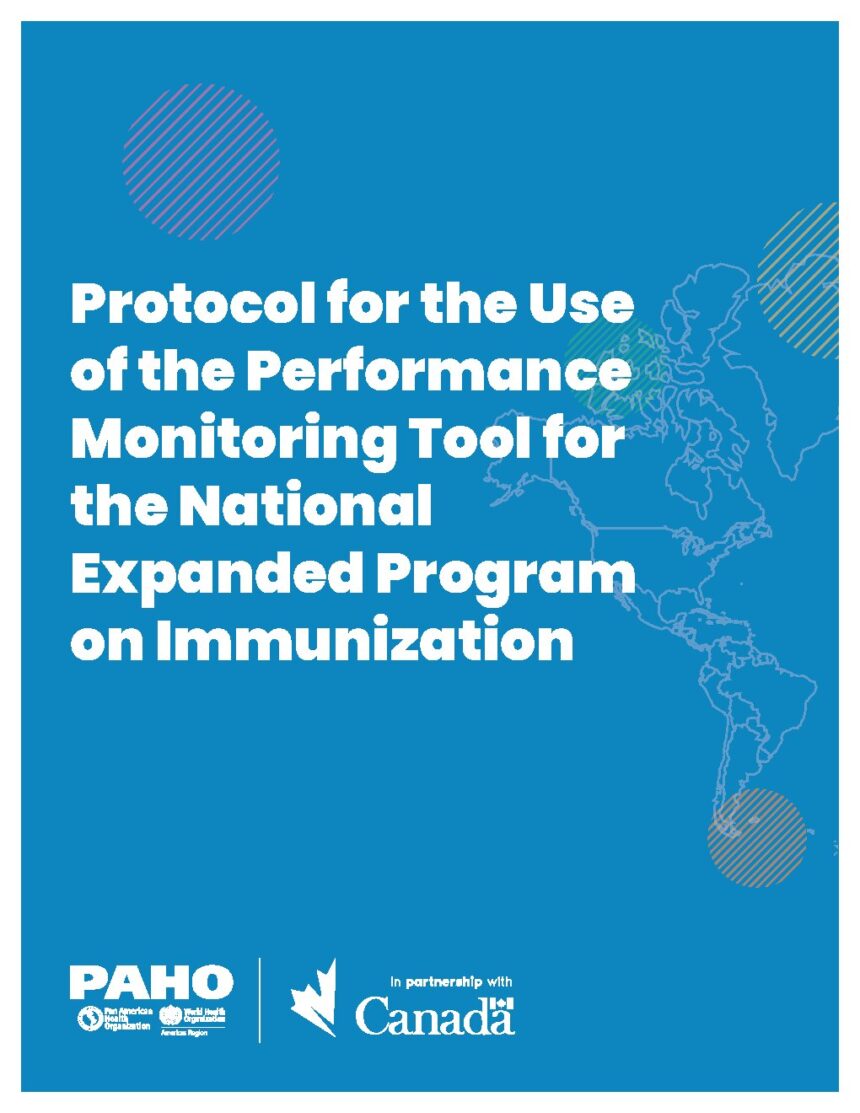
A standardized self-assessment protocol for national immunization programmes using a 14-component, 5-level maturity scale to identify gaps and develop action plans.
- Issuer
- Pan American Health Organization
- Edition
- 1st edition, 2025
- Audience
- National and subnational EPI managers, Ministry of Health officials, PAHO country office staff, immunization programme coordinators
- Evidence
- Expert consensus methodology based on established EPI components and maturity model frameworks
- Reviewed
- 16 Oct 2026 · GMJ
What this guideline says
GMJ summary
This protocol provides a structured methodology for national Expanded Programmes on Immunization (EPI) to conduct comprehensive self-assessments across 14 components including policy, planning, surveillance, human resources, cold chain, vaccine supply, communication, and implementation. The tool uses a five-level maturity scale (from 1-initial/insufficient to 5-optimized/continuously improving) to rate performance in each component.
Implementation occurs in three phases over approximately 12 weeks: preparation (establishing working teams, desk review, situational analysis, and tool adaptation), implementation (conducting self-assessments at national, subnational, and local health facility levels through structured workshops), and follow-up (data analysis, final reporting, and development of a 12-month action plan). The assessment is designed to validate national-level findings through subnational visits to three areas and nine health facilities, though subnational scores inform rather than determine the final national rating.
The protocol was developed by PAHO in response to declining vaccination coverage in the Americas (DPT3 coverage fell to 80% in 2021, the lowest since polio eradication in 1994) and aims to support the Immunization Agenda 2030 by enabling countries to identify weaknesses, prioritize technical cooperation, and implement concrete improvement measures tailored to national contexts.
Key points
For clinicians — doses and thresholds as stated in the guideline
- The tool evaluates 14 EPI components: political priority, planning/scheduling, organization/coordination, epidemiological surveillance, human resources/finance, training/supervision, information systems, cold chain, vaccine supply, evaluation/research, social communication, safe vaccination, implementation, and health facility performance
- Each component is rated on a 5-level maturity scale: 1 (initial/insufficient elements), 2 (available but incomplete or inappropriately used), 3 (routinely implemented with biases), 4 (available, complete, up-to-date, and reliable with minor problems), 5 (optimized with consistent implementation)
- Implementation requires three subnational areas (ideally high, medium, and low risk) and three health facilities per area (high, medium, and low performing) for field validation
- The desk review must cover a five-year period of EPI performance data including coverage trends, surveillance quality indicators (AFP, measles, rubella reporting), and component-specific documentation
- National self-assessment workshops run for five days with simultaneous component-specific sessions, each managed by a facilitation team with defined roles
- Final component scores are calculated as the average of all national-level question scores, rounded to whole numbers using a consistent methodology across all components
- The action plan must specify for each priority: recommendations, actions to move up one performance level, responsible parties, implementation sphere (national/subnational/local), 12-month timeline, financing, special requirements, and progress indicators
- The National Coordination Team (NCT) comprises Ministry of Health representatives, national EPI officials, PAHO country office CIM focal point, and contracted consultants who remain available for four weeks post-assessment to support action plan implementation
Performance Scale for EPI Component Assessment
Table extracted from the guideline
| Level | Category | Description |
|---|---|---|
| 1 | INITIAL (Limited practices) | Insufficient or unavailable elements |
| 2 | INITIAL (Limited practices) | Available elements present problems of completeness, updating, or their use is not appropriate |
| 3 | DEFINED (Competency-based practices) | Available elements are routinely implemented, but there are biases or problems |
| 4 | QUANTITATIVELY MANAGED (Measurable practices) | All items are available, complete, up-to-date, and reliable. There are some biases or problems that can be improved |
| 5 | OPTIMIZED (Practices based on continuous improvement) | All elements are available, complete, up-to-date, reliable, and consistently implemented |
Source: Pan American Health Organization, Protocol for the Use of the Performance Monitoring Tool for the National Expanded Program on Immunization. Reproduced in summary form.
From the guideline
Verbatim
“The purpose of the self-assessment is to identify difficulties and challenges that arise during the performance of each EPI component and, accordingly, to inform actions for continuous improvement plans in the short and medium term.”
Editor’s perspective
Why this matters for Georgia and the region
Prof. Giorgi Pkhakadze, MD, MPH, PhD
Editor-in-Chief, Georgian Medical Journal · Chair, Public Health Institute of Georgia · WHO consultant, health and migration
As someone who has worked with WHO on health systems strengthening, I recognize the value of this structured approach for Georgia's National Immunization Programme, particularly given the documented decline in routine coverage during the COVID-19 pandemic that affected all countries in our region. The 14-component framework aligns well with Georgia's established public health infrastructure, and the five-level maturity scale provides more nuanced assessment than binary checklists we have used in the past. For Georgian colleagues, I would emphasize the importance of honest self-assessment during the national workshops—the tool's value lies not in achieving high scores but in identifying genuine gaps, particularly in cold chain management for our mountainous regions and in integrating lessons from our successful hepatitis C programme into routine immunization communication strategies. The main implementation challenge will be ensuring that the three subnational areas selected for field visits truly represent high, medium, and low performance rather than showcasing only our best-performing regions, as this affects the validity of the entire assessment and the relevance of the resulting action plan.
ORCID 0000-0001-7609-4515 · Perspective written for the GMJ Guidelines Library, 16 Oct 2026
Applicability
Georgia and the South Caucasus
Georgia, which introduced routine rotavirus vaccination in 2013 and operates a comprehensive UHC programme since 2013, can use this protocol to systematically evaluate its National Immunization Programme performance across all components. Given Georgia’s position as a middle-income country with established surveillance systems (evidenced by its hepatitis C elimination programme since 2015), the tool would be particularly valuable for identifying integration gaps between the COVID-19 pandemic response and routine immunization services, assessing cold chain capacity in mountainous regions with dispersed populations, and benchmarking performance against international standards. National programmes in Armenia and Azerbaijan would need to adapt the subnational sampling strategy (three regions, nine facilities) to their smaller geographic footprints, while maintaining the principle of selecting high-, medium-, and low-performing areas to ensure findings accurately reflect national heterogeneity rather than only best-case scenarios.
Questions this guideline answers
Quick answers
How long does the complete assessment process take from start to finish?
The protocol is designed for implementation over approximately 12 weeks (three months), with each of the three phases lasting approximately four weeks. Phase 1 involves preparation and desk review, Phase 2 includes five days of national workshops plus subnational field visits, and Phase 3 covers analysis, reporting, and action plan development. After this period, consultant support continues for four additional weeks to support early action plan implementation.
Do the scores from subnational assessments contribute to the final national rating?
No, the subnational and local-level scores do not contribute directly to the final score. They serve three purposes: validation of national-level information, review of local implementation to confirm and supplement national findings, and providing granular understanding to inform and refine the national-level score. The final component scores are calculated only from the national-level workshop assessments.
How many participants are needed for the national-level workshops?
The workshops require participants differentiated by EPI component, with each five-day assessment period hosting simultaneous component-specific sessions. Key attendees include Ministry of Health representatives, national EPI officials, component specialists (e.g., cold chain managers, surveillance officers, communication staff), and the workshop facilitation team. The exact number varies by component but should include all stakeholders with direct knowledge of that component's implementation.
What happens if there is a significant difference between national and subnational scores for the same component?
When a significant difference exists between national and subnational scores for the same component, the National Coordination Team (NCT) should investigate before finalizing the score to determine which more closely reflects the country's actual situation. If conducted after the national assessment, such differences should be highlighted in the final report. The NCT has discretion to adjust the national score based on subnational evidence that reveals implementation gaps not apparent at the central level.
Related on GMJ
Interconnected resources
Dictionary of Public Health
GMJ News coverage
- Beyond COVID: Why childhood vaccination rates are falling globallySep 2026
- Diphtheria Cases Rise Across Americas: PAHO Calls for Urgent Vaccination PushJul 2026
- Argentine Biochemist Daniela Hozbor Advances Global Pertussis Vaccine ResearchJun 2026
- Tetanus cases in England rise amid vaccination coverage gaps, public health data revealsOct 2026
Quality & accreditation
Other guidelines on this topic
- Control of diphtheria and pertussis: Field guide
- Technical guide on the use of maternal vaccine and long-acting monoclonal antibodies against respiratory syncytial virus to protect infants
- Guidelines for surveillance of congenital rubella syndrome in the Region of the Americas
- Global standards for quality health care services for adolescents
- Framework for monitoring and evaluation of childhood cancer: CureAll Americas compendium of standardized indicators
- Issuer
- Pan American Health Organization
- Type
- Procedures, manuals, guidelines
- Edition
- 1st edition, 2025
- Status
- Current
- Published
- 2025-05-09
- Languages
- Available in English; original published in English
- Scope
- National Expanded Programmes on Immunization in the WHO Region of the Americas
- Audience
- National and subnational EPI managers, Ministry of Health officials, PAHO country office staff, immunization programme coordinators
- Pages
- 29
- Licence
- CC BY-NC-SA 3.0 IGO
- ISBN
- 978-92-75-12876-3 (PDF)
- Evidence
- Expert consensus methodology based on established EPI components and maturity model frameworks
- Next review
- Not specified
- Record history
- Created 16 Oct 2026 · updated 16 Oct 2026 · next check Apr 2027
Pan American Health Organization. Protocol for the use of the Performance Monitoring Tool for the National Expanded Program on Immunization. Washington, D.C.: PAHO; 2025.GMJ Guidelines Library records are original summaries written by the GMJ editorial team from the issuer’s published document and reviewed by a physician. They do not replace the full guideline. The document is the copyright of its issuer and is linked, not hosted. Spotted an error or a newer edition? Tell the Guidelines Desk.
Was this article helpful?