By using this site, you agree to the Privacy Policy and Terms of Use.
Accept
GMJ NewsGMJ NewsGMJ News
  • Latest News
    • GMJ Briefs
  • Podcast & Media
    • Podcast Episodes
    • GMJ Audio
    • GMJ Videos
  • Research Digest
    • New Studies
    • Georgian Research
    • Data & Numbers
  • Policy & Systems
    • Health Policy
    • Quality & Safety
    • Migration & Health
    • Global Health
  • Practice
    • Clinical Updates
    • Case Discussions
    • Pharmacy & Prescribing
    • Ingredients A-Z
  • Perspectives
    • Editorial
    • Explainers
    • Voices
    • Letters
  • GMJ Articles
    • Vol. 1 Issue 2 (2026)
    • Vol. 1 Issue 1 (2026)
    • Pre-Launch Articles (2025)
  • Read the Journal →
  • About GMJ News
Notification Show More
Font ResizerAa
GMJ NewsGMJ News
Font ResizerAa
  • Latest News
    • GMJ Briefs
  • Podcast & Media
    • Podcast Episodes
    • GMJ Audio
    • GMJ Videos
  • Research Digest
    • New Studies
    • Georgian Research
    • Data & Numbers
  • Policy & Systems
    • Health Policy
    • Quality & Safety
    • Migration & Health
    • Global Health
  • Practice
    • Clinical Updates
    • Case Discussions
    • Pharmacy & Prescribing
    • Ingredients A-Z
  • Perspectives
    • Editorial
    • Explainers
    • Voices
    • Letters
  • GMJ Articles
    • Vol. 1 Issue 2 (2026)
    • Vol. 1 Issue 1 (2026)
    • Pre-Launch Articles (2025)
  • Read the Journal →
  • About GMJ News
Follow US
GMJ News > Research Digest > New Studies > Placenta Accreta Spectrum Research Challenges Traditional Understanding of High-Risk Pregnancy Condition
New StudiesResearch Digest

Placenta Accreta Spectrum Research Challenges Traditional Understanding of High-Risk Pregnancy Condition

GMJ
Last updated: 23/06/2026 18:42
By
GMJ Research Desk
Share
6 Min Read
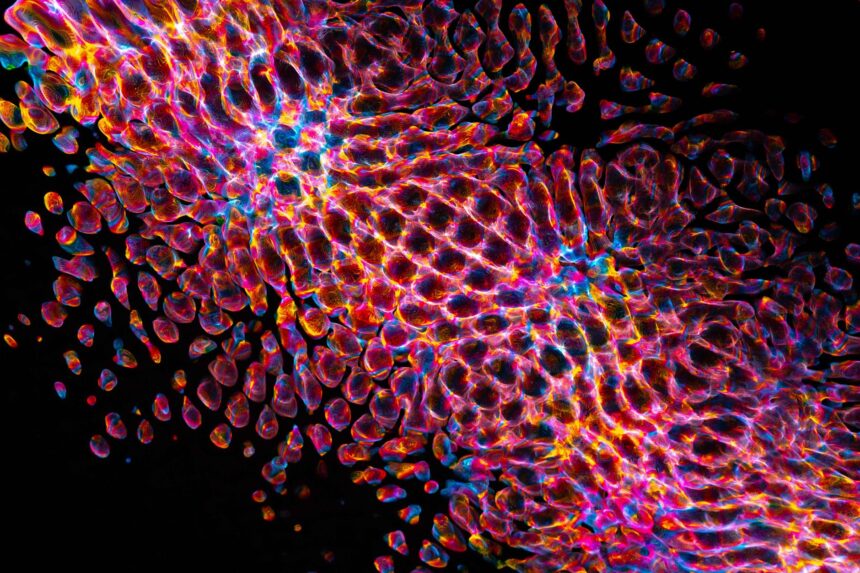
Medical illustration showing placenta accreta spectrum condition in pregnancyIllustrative image · Photo by Merlin Lightpainting on Pexels (Pexels License)
New research published in PLOS Medicine challenges fundamental assumptions about placenta accreta spectrum, a life-threatening pregnancy complication. The study argues that current understanding of the condition's mechanisms may be fundamentally flawed. — Photo by Merlin Lightpainting on Pexels (Pexels License)
SHARE
4 min read|730 words
✓ Medically reviewed by Prof. Giorgi Pkhakadze, MD, MPH, PhD · ORCID 0000-0001-7609-4515

🟠 Moderate Evidence

Contents
    • Key takeaways
      • Study at a Glance
      • Placenta Accreta Spectrum: A Condition Requiring Redefinition
  • Traditional Understanding Under Scientific Scrutiny
  • Implications for Clinical Practice and Patient Safety
  • Redefining Disorder Classification and Management
    • What this means
  • Frequently asked questions
    • What is placenta accreta spectrum?
    • Why is the traditional understanding being challenged?
    • How might this affect patient care?

New research published in PLOS Medicine is challenging fundamental assumptions about placenta accreta spectrum (PAS), a potentially life-threatening pregnancy complication affecting thousands of women globally. The perspective article by Dr. Eric Jauniaux and colleagues argues that current understanding of this condition’s underlying mechanisms may be fundamentally flawed, necessitating a complete reassessment of how clinicians diagnose and manage the disorder.

Key takeaways

  • Emerging evidence challenges traditional pathophysiological understanding of placenta accreta spectrum
  • Current diagnostic and management approaches may need fundamental revision based on new research
  • The condition involves abnormal placental attachment that can cause severe maternal bleeding

Study at a Glance

Source PLOS Medicine
Study type Perspective article
Authors Jauniaux, Bartels, Afshar
Population Pregnant women with PAS
Focus Global maternal health
21st century
era requiring redefinition of placenta accreta spectrum disorder

Placenta Accreta Spectrum: A Condition Requiring Redefinition

Key areas where traditional understanding is being challenged

Definition
Needs revision
Diagnosis
Under review
Management
Critical reassessment

Source: PLOS Medicine, 2024 | Georgian Medical Journal News

Submit Your Paper
GMJ_Submit_Banner

Traditional Understanding Under Scientific Scrutiny

The research team, led by Dr. Eric Jauniaux from University College London, presents compelling evidence that long-held beliefs about placenta accreta spectrum pathophysiology may be incorrect. According to the PLOS Medicine perspective, this reassessment could fundamentally alter how obstetricians approach one of pregnancy’s most dangerous complications.

🎙️ Related Podcast Episodes
🎧 #41 | GMJ Podcast | Hydrochemical Stability and Radiobiology of Tskaltubo Mineral Water — Clinical and Scientific Evaluation · 17m
🎧 #45 | GMJ Podcast | Tskaltubo Mineral Baths in Osteoarthritis — Microcirculation, Erythrocytes, and Clinical Effects · 18m
🎧 #39 | GMJ Podcast | Acne and Metabolic Dysfunction — Insulin Resistance, IGF-1, and Clinical Implications · 15m
🎧 #38 | GMJ Podcast | Acne and Metabolic Dysfunction — Insulin Resistance, IGF-1, and Clinical Implications · 21m
🎧 #24 | WHO Releases Updated Health Inequality Data Repository and Equity Toolkit · 21m

Placenta accreta spectrum occurs when the placenta attaches too deeply into the uterine wall, making delivery extremely dangerous due to potential for severe hemorrhage. The condition has historically been understood through specific pathophysiological frameworks that the authors now argue require revision. For more insights on maternal health research, visit our New Studies section.

Implications for Clinical Practice and Patient Safety

The perspective article raises critical questions about current diagnostic protocols and management strategies used in hospitals worldwide. Helena C. Bartels and Yalda Afshar, co-authors of the study, emphasize that outdated understanding could be compromising patient care and safety outcomes.

The timing of this research is particularly significant given rising cesarean delivery rates globally, which are associated with increased PAS risk in subsequent pregnancies. The World Health Organization continues to monitor maternal mortality trends, with conditions like PAS remaining significant contributors to pregnancy-related deaths.

Redefining Disorder Classification and Management

The authors argue that the medical community’s approach to PAS classification needs comprehensive revision. This perspective challenges clinicians to reconsider fundamental assumptions about the condition’s development, progression, and optimal treatment protocols.

Such paradigm shifts in medical understanding are not unprecedented, but they require careful validation through controlled studies and clinical trials. The research highlights the importance of evidence-based medicine in continuously refining our understanding of complex obstetric conditions. Additional clinical research updates are available in our Clinical Updates section.

Emerging evidence challenges our long-held pathophysiological understanding of placenta accreta spectrum, necessitating critical reassessment of definition, diagnosis, and management approaches

— Dr. Eric Jauniaux and colleagues, University College London (PLOS Medicine, 2024)

What this means

For patients: Women with previous cesarean deliveries should discuss PAS risks with their healthcare providers and ensure care at facilities equipped for high-risk deliveries
For clinicians: Obstetric teams may need to reassess current PAS protocols and stay updated on evolving evidence regarding optimal diagnostic and management strategies
For policymakers: Healthcare systems should ensure adequate resources for high-risk obstetric care and support research into improved PAS understanding and treatment

Frequently asked questions

What is placenta accreta spectrum?

Placenta accreta spectrum is a serious pregnancy complication where the placenta attaches too deeply to the uterine wall. This can cause severe bleeding during delivery and may require specialized surgical management to ensure maternal safety.

Why is the traditional understanding being challenged?

New research suggests that the pathophysiological mechanisms underlying PAS may be different from what medical textbooks have traditionally taught. This emerging evidence indicates that current diagnostic and treatment approaches may need significant revision.

How might this affect patient care?

If the traditional understanding is indeed flawed, revised approaches to diagnosis and management could improve patient outcomes and safety. However, any changes to clinical practice will require careful validation through additional research and clinical studies.

This research represents a significant moment in obstetric medicine, where fundamental assumptions about a life-threatening condition are being scientifically challenged. The medical community will need to carefully evaluate this evidence and conduct additional studies to validate new understanding of placenta accreta spectrum. Such paradigm shifts, while initially controversial, often lead to improved patient care and better clinical outcomes when properly validated through rigorous scientific investigation.

Source: Placenta accreta spectrum in the 21st century: Challenging dogma and redefining disorder

Was this article helpful?

Disclaimer. This article is health journalism intended for general information and education. It is not medical advice and is not a substitute for professional diagnosis or treatment. Always consult a qualified healthcare provider about your individual circumstances. Full disclaimer →

Related Coverage

Different Ways of Measuring Multiple Chronic Diseases Yield Vastly Different Results, UK Biobank Study ShowsJul 4, 2026
Early Vasopressors Versus Fluid Resuscitation in Septic Shock: Major Trial Challenges Standard PracticeJul 4, 2026
Dopamine Agonist Pramipexole Shows Promise for Anhedonia in Depression TrialJul 3, 2026
General AI Models Outperform Specialized Clinical Tools in Medical BenchmarksJul 3, 2026
PG
Written by
Prof. Giorgi Pkhakadze, MD, MPH, PhD
Editor-in-Chief, GMJ News
Full profile →  ·  ORCID 0000-0001-7609-4515
Medical disclaimer. This article is health journalism intended for general information. It is not medical advice and is not a substitute for consultation with a qualified healthcare professional. Always seek your physician's advice regarding any medical condition.
Medically reviewed by Prof. Giorgi Pkhakadze, MD, MPH, PhD. Spotted an error? Contact the editorial team.
Get the GMJ News digest
Evidence-based health journalism in your inbox. No spam; unsubscribe anytime.
TAGGED:Maternal Healthmedical researchobstetricsplacenta accretapregnancy complications
Share This Article
Facebook LinkedIn Bluesky Copy Link Print
GMJ
ByGMJ Research Desk
Follow:
GMJ Research Desk is part of GMJ News, the newsroom of the Georgian Medical Journal (gmj.ge), published by the Public Health Institute of Georgia. Every article is editorially reviewed before publication.
Leave a Comment Leave a Comment

Leave a Reply Cancel reply

Your email address will not be published. Required fields are marked *

Submit Your Paper →

Georgia's peer-reviewed open-access medical journal. No APC until January 2027.
Submit Manuscript →
Different Ways of Measuring Multiple Chronic Diseases Yield Vastly Different Results, UK Biobank Study Shows

UK Biobank study of 474,397 adults reveals multimorbidity prevalence estimates vary 35-fold…

Early Vasopressors Versus Fluid Resuscitation in Septic Shock: Major Trial Challenges Standard Practice

Landmark NEJM trial shows early vasopressor therapy is as effective as aggressive…

Dopamine Agonist Pramipexole Shows Promise for Anhedonia in Depression Trial

Randomized trial shows pramipexole significantly reduces anhedonia symptoms in depression patients. The…

Submit Your Paper to GMJ

No APC until January 2027.
Submit Manuscript →

You Might Also Like

Scientific illustration showing glutamate signaling pathway in plant leaves after injury
New Studies

Plants Send Electrical SOS Signals Using Human Neurotransmitter Glutamate

By
GMJ Research Desk
22/05/2026
Microscopic brain tumor tissue sample being analyzed by AI diagnostic systemIllustrative image · Photo by Tima Miroshnichenko on Pexels (Pexels License)
New StudiesResearch Digest

AI System Diagnoses 100+ Brain Tumor Subtypes in Minutes With 95% Accuracy

By
GMJ Research Desk
25/06/2026
Fluorescent microscopy image showing muscle cells with green nuclei and red membranes during fusion process
New Studies

Scientists Capture Muscle Cell Fusion in Real-Time for First Time

By
GMJ Research Desk
22/05/2026
Children laughing during therapeutic play session showing brain development benefits
New StudiesResearch Digest

Laughter Therapy Builds Brain Resilience in Children, New Research Shows

By
GMJ Research Desk
28/05/2026
Facebook Twitter Youtube Instagram
Company
  • Privacy Policy
  • Contact US
  • GMJ Journal
  • Submit Manuscript
  • Editorial Team
  • Register at GMJ
  • Terms of Use

Subscribe to GMJ News — Click here

Join Community
© 2026 Georgian Medical Journal (GMJ). Published by the Public Health Institute of Georgia (PHIG). All rights reserved.
Welcome Back!

Sign in to your account

Username or Email Address
Password

Lost your password?

Not a member? Sign Up