


Home › Topics › Obsessive-Compulsive Disorder (OCD)
Obsessive-Compulsive Disorder (OCD)
GMJ News knowledge hub · last reviewed October 2026 · Georgian Medical Journal
SummaryStatisticsGlossaryGMJ newsFAQDocumentsOrganizationsResearch
Obsessive-compulsive disorder (OCD) — characterised by recurrent, ego-dystonic obsessions (intrusive thoughts causing marked anxiety) and compulsions (repetitive behaviours aimed at reducing anxiety) — affects approximately 2-3% of the global population (approximately 200 million people) and is ranked by WHO as one of the 10 most disabling conditions in the world in terms of reduced quality of life (WHO). OCD spans a vast spectrum — from contamination fears and handwashing rituals to intrusive thoughts of harm, religious obsessions, and symmetry compulsions. Exposure and response prevention (ERP) therapy and SSRIs (sertraline, fluvoxamine, clomipramine) are the evidence-based first-line treatments.
Key messages
2-3% globally — WHO ranks in top 10 most disabling
OCD affects approximately 2-3% of the global population (approximately 190-200 million people) and is ranked by WHO as one of the 10 most disabling conditions in the world in terms of lost years of healthy life.
Ego-dystonic obsessions and compulsions
OCD is characterised by ego-dystonic obsessions (intrusive, unwanted thoughts causing marked anxiety — recognised by the person as irrational) and compulsions (repetitive mental or physical acts performed to reduce anxiety). The obsessions are NOT pleasurable; they cause distress.
ERP is the gold-standard psychotherapy
Exposure and response prevention (ERP) — a specialised CBT — is the gold standard psychological treatment for OCD, with approximately 65-80% response rates. ERP involves deliberately triggering obsessions and then resisting the compulsive response, gradually reducing anxiety through habituation.
SSRIs and clomipramine
High-dose SSRIs (sertraline, fluoxetine, fluvoxamine, paroxetine, escitalopram) and clomipramine (the most effective — a TCA) are the pharmacological treatments. Higher doses and longer treatment duration (12+ weeks) are required than for depression.
Treatment gap is large
Despite highly effective treatments existing, approximately 57% of people with OCD receive no treatment. Average time from symptom onset to correct diagnosis and treatment is approximately 11-17 years. OCD is frequently misdiagnosed as anxiety disorder, depression or psychosis.
Deep brain stimulation for severe OCD
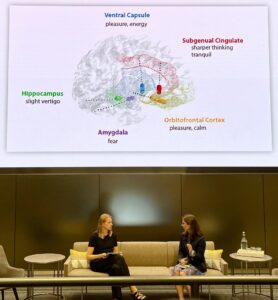
DBS (deep brain stimulation) targeting the anterior limb of the internal capsule or nucleus accumbens received FDA humanitarian device exemption for treatment-resistant OCD — the first non-psychiatric-medication brain stimulation treatment for OCD.
Key statistics
OCD obsession types — approximate frequency in clinical populations (%)
Source: Published OCD phenomenology data. Most patients have multiple obsession types.
Glossary of key terms
Latest GMJ coverage

Serotonin and Heart Valve Disease: Columbia Study Links SSRIs to Accelerated Mitral Regurgitation
03/10/2026
How Neurotransmitters Shape Behaviour: The Science Behind Brain Chemistry
03/08/2026

How neurotransmitters control your mood, sleep, and focus: a primer on brain chemistry
23/07/2026

The Chemical Language of the Brain: How Neurotransmitter Balance Shapes Mental Health
21/05/2026
Third Electrode Pair Improves Deep Brain Stimulation Precision in Mouse Study
29/06/2026

Blood Pressure Drug Telmisartan Shown to Enhance Cancer Therapy Efficacy in Early Trials
03/10/2026
Frequently asked questions 12 Q&A — structured for Google featured snippets and AI discovery
Knowledge hub: guidelines, conventions and reports
Organizations working in migration and health
Related health topics
Mental healthAnxiety disordersAutism (OCD overlap)BDD overlapComorbid substance useTrauma/PTSD
About this hub. Produced by the GMJ News Editorial Team as a public-good service. Every statistic is linked to its primary source. Documents are preserved in the GMJ Repository with full attribution. Georgian Medical Journal · Contact the editorial team