


Home › Topics › Substance Use and Addictions
Substance Use and Addictions
GMJ News knowledge hub · last reviewed September 2026 · Georgian Medical Journal
SummaryStatisticsGlossaryGMJ newsFAQDocumentsOrganizationsResearch
Substance use disorders affect an estimated 35.6 million people globally with drug use disorders and are responsible for 1.18 million opioid overdose deaths per year — a burden driven by the global opioid crisis, illicit fentanyl, and the massive unmet need for treatment in all world regions (WHO/UNODC). Alcohol use disorders (covered separately by GMJ News) and tobacco (separately covered) compound the substance use burden. The WHO ATLAS on Substance Use Disorders and evidence-based harm reduction strategies — needle and syringe programmes, opioid agonist therapy, naloxone distribution — save lives when implemented.
Key messages
35.6 million with drug use disorders
35.6 million people globally have drug use disorders — yet only 1 in 8 receives treatment. The opioid crisis, illicit fentanyl contamination and the global methamphetamine surge are driving deaths to record levels (UNODC).
Opioid overdose — 1.18 million deaths/year
Opioid use disorders and overdose cause approximately 1.18 million deaths per year — predominantly from illicit opioids (heroin, illicit fentanyl) in North America and from prescribed opioid overuse elsewhere (WHO/UNODC 2022).
Harm reduction saves lives
Evidence-based harm reduction — needle and syringe programmes (NSP), opioid agonist therapy (OAT, methadone/buprenorphine), naloxone distribution and drug consumption rooms — significantly reduces overdose deaths, HIV and HCV transmission, and mortality.
Treatment gap
Only 1 in 8 people with drug use disorders receives treatment globally. Barriers include: criminalisation of drug use; stigma; limited treatment services; and high cost. WHO recommends decriminalisation of personal drug use as a prerequisite for effective public health responses.
UNODC World Drug Report
The UNODC World Drug Report — published annually — is the most comprehensive global assessment of drug use, trafficking and policy. The 2023 report documented 292 million drug users globally (a 23% increase over a decade) and record drug supply.
Alcohol and tobacco
Alcohol and tobacco use disorders are separately covered in dedicated GMJ News hubs. This hub focuses on illicit and pharmaceutical drug use disorders — predominantly opioids, stimulants (amphetamines, cocaine), cannabis and sedatives.
Key statistics
Drug users globally by substance type (millions) — UNODC 2023 World Drug Report
Source: UNODC World Drug Report 2023. Cannabis dominates by users; opioids dominate by deaths.
Glossary of key terms
Latest GMJ coverage

Online Alcohol Intervention Reduces Drinking in Older Adults by 30% in Australian Trial
21/05/2026

Adverse Childhood Experiences in Rural India: Why Western Frameworks Fall Short
21/09/2026

Teen Drug Use and Binge Drinking Linked to Severe Mental Health Crisis
08/07/2026

Colorado hospitals reduce stigma in pregnancy substance use care through evidence-based training program
03/07/2026

Enhanced Games ‘Steroid Olympics’ Launch Amid Medical and Ethical Concerns
19/06/2026
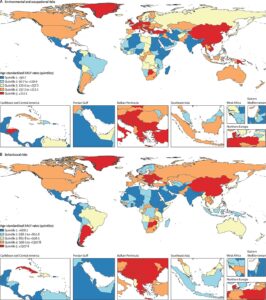
Corrected Global Data on Substance Use Burden Across 204 Countries Reveals Shifting Patterns
09/07/2026
Frequently asked questions 12 Q&A — structured for Google featured snippets and AI discovery
Knowledge hub: guidelines, conventions and reports
Organizations working in migration and health
Related health topics
HIV/AIDSHepatitis (HCV)Mental healthAlcoholTobaccoSuicide prevention
About this hub. Produced by the GMJ News Editorial Team as a public-good service. Every statistic is linked to its primary source. Documents are preserved in the GMJ Repository with full attribution. Georgian Medical Journal · Contact the editorial team