


Poliomyelitis
GMJ News knowledge hub · last reviewed September 2026 · Georgian Medical Journal
SummaryStatisticsGlossaryGMJ newsFAQDocumentsOrganizationsResearch
Poliomyelitis — once one of the most feared childhood diseases, paralysing hundreds of thousands each year — is on the verge of global eradication: wild poliovirus cases have fallen from 350,000 in 1988 to fewer than 10 per year in only two remaining endemic countries (WHO). The Global Polio Eradication Initiative (GPEI) — the largest internationally coordinated public health programme in history — has reached more than 2.5 billion children. The final challenge is eliminating transmission in the last reservoirs and controlling vaccine-derived poliovirus outbreaks.
Key messages
Near-eradication
Wild poliovirus cases have fallen from 350,000 per year in 1988 to fewer than 10 per year — a 99.9% reduction. Only Pakistan and Afghanistan remain endemic. The Global Polio Eradication Initiative (GPEI) has covered 2.5 billion children.
Final mile is the hardest
Eradicating the last pockets of wild poliovirus in remote, conflict-affected areas of Pakistan and Afghanistan requires extraordinary logistical and security challenges. Vaccine-derived poliovirus (VDPV) has also emerged as an additional challenge in under-immunised populations globally.
Two vaccine types
Two vaccine types are used: oral polio vaccine (OPV) — live attenuated, provides intestinal immunity, easy to administer, used in campaigns; and inactivated polio vaccine (IPV) — injectable, cannot cause vaccine-derived virus, used in routine immunisation. IPV is now recommended for at least one dose in all national schedules.
VDPV — the new challenge
In populations with low OPV coverage, the attenuated vaccine virus can circulate and revert to neurovirulence — causing vaccine-derived poliovirus (VDPV) outbreaks. VDPV outbreaks are now more common globally than wild poliovirus outbreaks, requiring novel OPV2 (nOPV2) campaigns.
Legacy of eradication
Eradicating polio will save future generations from a permanently crippling disease and make billions of dollars available from vaccine campaigns for other health priorities — an argument for maintaining GPEI investment even as cases approach zero.
Surveillance essential
Acute flaccid paralysis (AFP) surveillance — monitoring all children with sudden limb weakness — is the global system for detecting poliovirus circulation. Stool samples from AFP cases are tested in WHO-accredited laboratories. Environmental surveillance (sewage testing) detects silent circulation.
Key statistics
Wild poliovirus cases globally 1988-2023 — WHO/GPEI
Source: Global Polio Eradication Initiative. 99.9% reduction since 1988 launch.
Glossary of key terms
Latest GMJ coverage
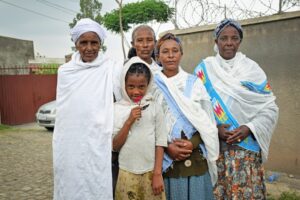
Vaccination coverage in Ethiopia remains low, with most children missing timely immunisation
21/09/2026
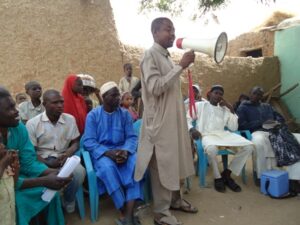
Nigeria’s Polio Campaign Reaches 33,000 Settlements, Vaccinating 1.2 Million Children in May 2026
10/08/2026
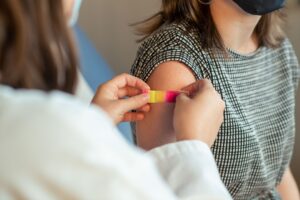
Beyond COVID: Why childhood vaccination rates are falling globally
16/09/2026

One child dies daily in Gaza despite ceasefire, UNICEF warns of humanitarian collapse
16/09/2026

Novel Prime-and-Pull Vaccine Strategy Shows Promise Against Genital Herpes in Preclinical Models
17/08/2026

UK childhood vaccination coverage holds steady at high levels, latest quarterly data shows
14/08/2026
Frequently asked questions 12 Q&A — structured for Google featured snippets and AI discovery
Knowledge hub: guidelines, conventions and reports
Organizations working in migration and health
Related health topics
VaccinesChild healthMeaslesNewborn healthAMRUHC
About this hub. Produced by the GMJ News Editorial Team as a public-good service. Every statistic is linked to its primary source. Documents are preserved in the GMJ Repository with full attribution. Georgian Medical Journal · Contact the editorial team